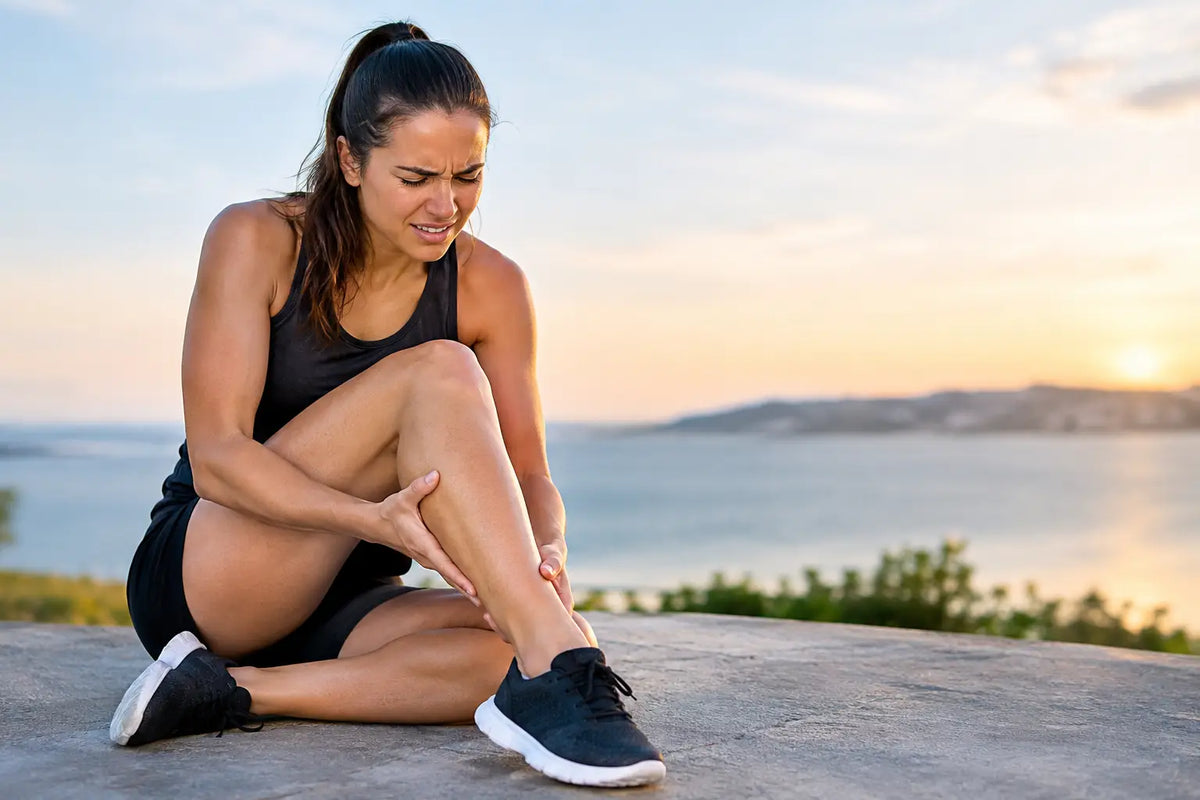
A calf locking up halfway through a race. A period cramp that makes standing at your desk feel impossible. A sudden foot spasm that pulls you out of sleep. Cramp science starts with a simple truth: cramping is not a character flaw, and it is not always solved by drinking another bottle of water.
Your body is sending a signal that has become too intense, too fast, or too persistent. The right response depends on the type of cramp, what triggered it, and what you need to do next. For an athlete, that may mean getting back in the game. For someone with menstrual cramps, it may mean getting through class, work, training, or a night out without losing the day to pain.
What Cramp Science Says Is Happening
A cramp is a sudden, involuntary contraction. The muscle, or in the case of menstrual cramps the uterus, tightens when you did not ask it to. That contraction can be brief and annoying or sharp enough to stop movement entirely.
For skeletal muscle cramps, the newer understanding goes beyond the old "you need electrolytes" explanation. Hydration and mineral balance can matter, especially during long efforts in heat or when fluid losses are significant. But many people cramp while well hydrated, and many finish hard workouts without cramping despite sweat loss.
The more complete explanation looks at the neuromuscular system: the conversation between nerves and muscles. Muscles contract when nerves tell them to contract. They relax when the system receives enough inhibitory signaling to turn that contraction down. When fatigue, intensity, unfamiliar exertion, heat, or muscle overload disrupts that balance, the signal can become overexcited. The result is a muscle that seizes instead of releasing.
That is why a cramp can hit a trained athlete in the closing miles of an event, or a weekend warrior during a movement their body has not practiced enough. The issue is often not just what is in the water bottle. It is the nerve-to-muscle control system under pressure.
Menstrual cramps are different, but pain still has a signal pathway
Menstrual cramps involve the uterus rather than a calf or hamstring. During menstruation, the body produces prostaglandins, compounds that encourage uterine contractions to help shed the uterine lining. Higher prostaglandin activity can mean stronger contractions, reduced blood flow to uterine tissue, and more pain.
That does not make the experience less physical or less disruptive. It means the solution should respect the biology involved. Some people need medical evaluation for severe, worsening, or unusual period pain, especially when it interferes with life month after month. Conditions such as endometriosis, fibroids, or other gynecological concerns deserve real attention, not dismissal.
For everyday menstrual cramping, the goal is still immediate: calm the pain response and get your life back.
Why Water and Electrolytes Do Not Always Stop a Cramp
Electrolytes are essential. Sodium, potassium, calcium, and magnesium all play roles in fluid balance, nerve transmission, and muscle function. If you are dehydrated, under-fueled, sweating heavily, or replacing fluids poorly, correcting that gap is smart performance practice.
But electrolytes work on a broader timeline. They support the conditions your body needs to function well. They are not always a fast off-switch for a cramp already in progress.
Think about the pattern. If cramps show up late in hard competition, after repeated sprints, on steep climbs, or during a long effort at an unfamiliar pace, fatigue and neuromuscular overload may be leading the problem. If night cramps arrive even though you drink plenty of fluids, hydration alone may not explain them either.
Cramp science does not tell you to ignore hydration. It tells you not to put every cramp into the same box. Build your hydration and fueling plan before activity. Then have a fast response ready for the moment the muscle starts to tighten.
The Fast-Response Idea: Target the Signal
When a cramp is active, stretching can help. Slowing down can help. Gentle movement, changing position, and massage can help. Yet anyone who has cramped in the middle of a race, game, presentation, or sleep knows those options are not always enough, and they are rarely convenient.
A nerve-focused approach is built for that gap. Rather than waiting for fluid absorption or relying only on a pill to mask discomfort, it aims to influence the nerve signaling involved in the cramp response. That is the principle behind Neuromuscular Efficiency (NME™): supporting the body’s ability to restore a more controlled relationship between nerve input and muscle output.
CrampsAWAY uses patented, food-grade oral formulas designed to work on contact with the tongue, providing NME™ support when cramps threaten to take over. The formulas are hormone-free and made for people who want a portable option without the drowsiness, stomach upset, or brain fog they may associate with conventional pain medication.
For athletes, the practical value is simple: respond fast and protect your momentum. For menstrual cramp sufferers, it is about staying present for work, school, plans, and training instead of arranging life around pain.
How to Use Cramp Science Before the Cramp Hits
Fast relief matters, but prevention still earns its place. The strongest strategy is not choosing one or the other. It is preparing well and carrying a response you trust.
Start by paying attention to your pattern. Athletes should note when cramps occur, which muscles are involved, the intensity and duration of the session, heat conditions, pacing, and whether the activity was new or unusually demanding. A cramp that appears only at maximal intensity points to a different preparation issue than one that happens at rest.
Training specificity matters. If you cramp late in races, your body may need more exposure to race-like fatigue in training. If hills trigger calf cramps, gradual hill work and calf conditioning may be more useful than simply adding another supplement. Build load progressively, especially after time off, illness, or a change in sport.
For menstrual cramps, track the timing, severity, flow, and symptoms across several cycles. This can help you plan ahead and spot changes worth discussing with a clinician. Gentle movement may feel good for some people, while others need rest. There is no prize for forcing yourself through severe pain.
Sleep also deserves attention. Night cramps can be connected to muscle fatigue, prolonged positions, certain medications, health conditions, or no obvious trigger at all. Regular mobility, appropriate training recovery, and a clinician’s guidance for frequent or severe episodes can make a meaningful difference.
When a Cramp Needs More Than a Quick Fix
Most occasional cramps are not dangerous. Still, recurring symptoms deserve respect. Talk with a healthcare professional if cramps are severe, frequent, associated with weakness or swelling, begin after starting a medication, or do not improve with reasonable self-care.
For menstrual symptoms, seek care if pain suddenly changes, becomes progressively worse, causes missed school or work, occurs outside your period, or comes with unusually heavy bleeding, fever, or other concerning symptoms. You deserve answers, not the message that painful periods are simply something to endure.
For athletes, repeated cramping may be a performance clue. It can reveal a pacing problem, a conditioning gap, inadequate recovery, heat acclimation needs, or a fueling issue. Treat it as useful feedback, then build a smarter plan.
A cramp may arrive without warning, but your response does not have to be improvised. Know your triggers, train for the demands ahead, respect the signals your body sends, and keep fast, practical support within reach. Pain does not get to decide whether you finish strong.

Share:
Cramp Lozenges Versus Pain Pills: Choose Fast Relief
Do Period Formulas Work for Fast Cramp Relief?