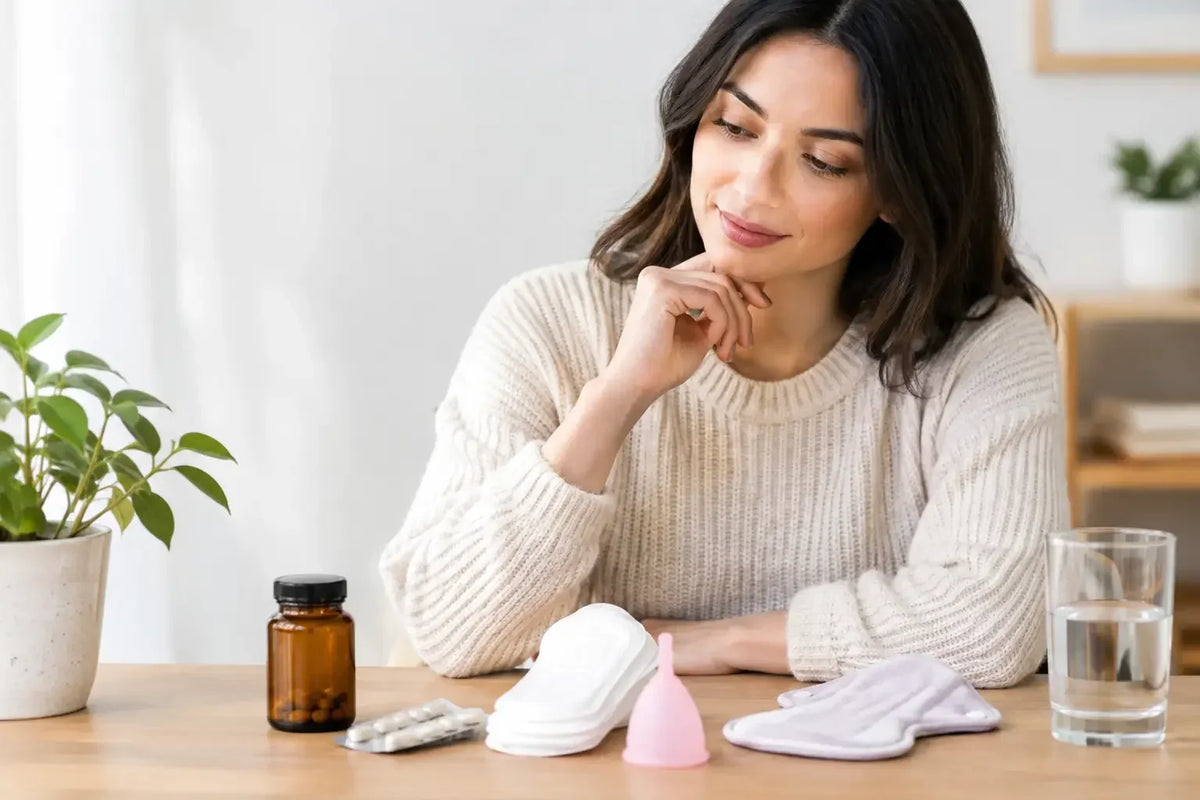
A cramp does not care that you have a presentation at 9, a lab at noon, or a long run planned after work. When period pain hits hard, the goal is not to simply endure it. The goal is to choose hormone-free period support that helps you stay in motion without asking you to trade your focus, comfort, or sense of control.
Hormone-free support is not one single solution. It can mean changing your daily habits, using heat strategically, addressing pain with a clinician, or keeping a fast-acting cramp option in your bag. The right choice depends on what your symptoms feel like, how quickly they escalate, and what you need your body to do that day.
Start With What Is Actually Disrupting Your Period
Period support should match the problem in front of you. If your discomfort is mild and predictable, rest, heat, gentle movement, and a consistent routine may be enough to take the edge off. But if cramps regularly pull you out of class, make you cancel plans, interrupt sleep, or leave you curled up on the bathroom floor, you need a plan built for more than getting by.
Pay attention to timing. Do cramps build slowly over a day, or do they arrive suddenly and demand an immediate response? Notice where you feel them, how long they last, and whether they come with heavy bleeding, nausea, fatigue, bowel changes, or pain that spreads into your back and legs. A few cycles of notes can make your pattern much clearer.
This is not about obsessing over every symptom. It is about refusing to be caught off guard. The more clearly you understand your cramp pattern, the easier it is to choose support that is practical when life is moving fast.
What Hormone-Free Period Support Should Deliver
A hormone-free option should earn its place in your routine. Start with the outcomes that matter most to you: speed, portability, ingredient comfort, reliability, or the ability to stay mentally sharp. Someone managing cramps between college classes may prioritize a discreet, pocket-ready solution. Someone who trains, works on their feet, or travels may need support that does not require a couch, a heating pad, or waiting an hour to see if it helps.
Look closely at the trade-offs. Some approaches can be comforting but are difficult to use outside the house. Others may be convenient yet leave you dealing with drowsiness, stomach upset, or brain fog. Hormone-free does not automatically mean every option is right for every body, either. Read the label, follow directions, and consider existing conditions, medications, allergies, and pregnancy status when making decisions.
The strongest plan is usually layered. Build habits that support your cycle, then keep an immediate option available for the moment cramps try to take over your day.
Ask whether the support acts fast enough
When cramps are already intense, slow relief can feel like no relief at all. Heat, stretching, hydration, and rest can be valuable parts of a broader routine, but they may not be realistic when you are walking into an exam or trying to finish a shift.
For fast cramp support, focus on how the product is designed to work. Many conventional approaches aim to mask discomfort after digestion and absorption. A food-grade oral formula designed to work upon contact with the tongue takes a different route: it is intended to address the nerve signals involved in cramping quickly.
That distinction matters. Menstrual cramps are not a character test. You do not win anything by waiting until the pain becomes unbearable. Keep your support where you can reach it before the day gets derailed.
Choose ingredients you feel good using
Ingredient transparency is a baseline, not a bonus. A brand should clearly explain what is in its formula, how to use it, and who should speak with a healthcare professional before trying it. Be cautious with vague blends, oversized promises without a mechanism, or labels that make it hard to understand what you are taking.
For people avoiding synthetic hormones and conventional pain medication, food-grade ingredients can offer a more aligned path. That does not mean “natural” should replace good judgment. If you have severe symptoms, a known medical condition, or a history of reactions to ingredients, bring those details to a qualified clinician or pharmacist.
Choose Hormone-Free Period Support That Fits Your Real Life
The best product is not the one that sounds best on a shelf. It is the one you will actually use at the right moment. If your cramps hit at school, keep support in your backpack. If they arrive during a commute, put it in your work tote. If the first day of your cycle is consistently rough, place it where you get ready in the morning.
Convenience changes outcomes because it shortens the gap between the first sign of a cramp and taking action. Small packets, clear dosing directions, and a formula that does not require water can make the difference between powering through a meeting and losing the whole afternoon.
CrampsAWAY For Her is one hormone-free option built around that reality. Its patented, food-grade formula is designed to work upon contact with the tongue through Neuromuscular Efficiency (NME™), supporting the nerve-to-muscle communication involved in cramping rather than simply asking you to wait for relief. For people who want a portable, non-drowsy alternative to hormones or pain pills, that approach can be a meaningful fit.
Keep Prevention in the Plan, Not as the Whole Plan
A regular sleep schedule, enough food, movement, and stress management can all support how you feel across your cycle. Heat may relax tight muscles. Gentle walking or mobility work may help some people feel less locked up. Tracking your cycle can also help you prepare before your toughest day arrives.
Still, prevention is not a promise that cramps will never happen. Bodies are not machines, and cycles can shift with stress, travel, training load, illness, or life changes. Do not blame yourself when a carefully planned month still includes a painful period. Build prevention habits because they support you, then keep immediate relief ready because real life is unpredictable.
Know when cramps need medical attention
Hormone-free support can be part of smart self-care, but severe or changing pain deserves attention. Talk with a healthcare professional if cramps are suddenly worse than usual, interfere with everyday life despite your usual strategies, occur outside your period, or come with unusually heavy bleeding, fever, fainting, or pain during sex. Conditions such as endometriosis, fibroids, adenomyosis, and pelvic infections can require evaluation and treatment beyond an over-the-counter wellness routine.
Advocating for yourself is part of period support. Bring notes about your symptoms, timing, and what you have already tried. Clear details help make the conversation more productive.
Your period may be monthly, but losing days to cramps does not have to be your monthly routine. Choose support that respects your body, meets the speed of your life, and gives you a real chance to keep your plans when cramps show up.

Share:
How to manage cramps during workouts fast
Best Period Relief for Travel That Keeps You Moving