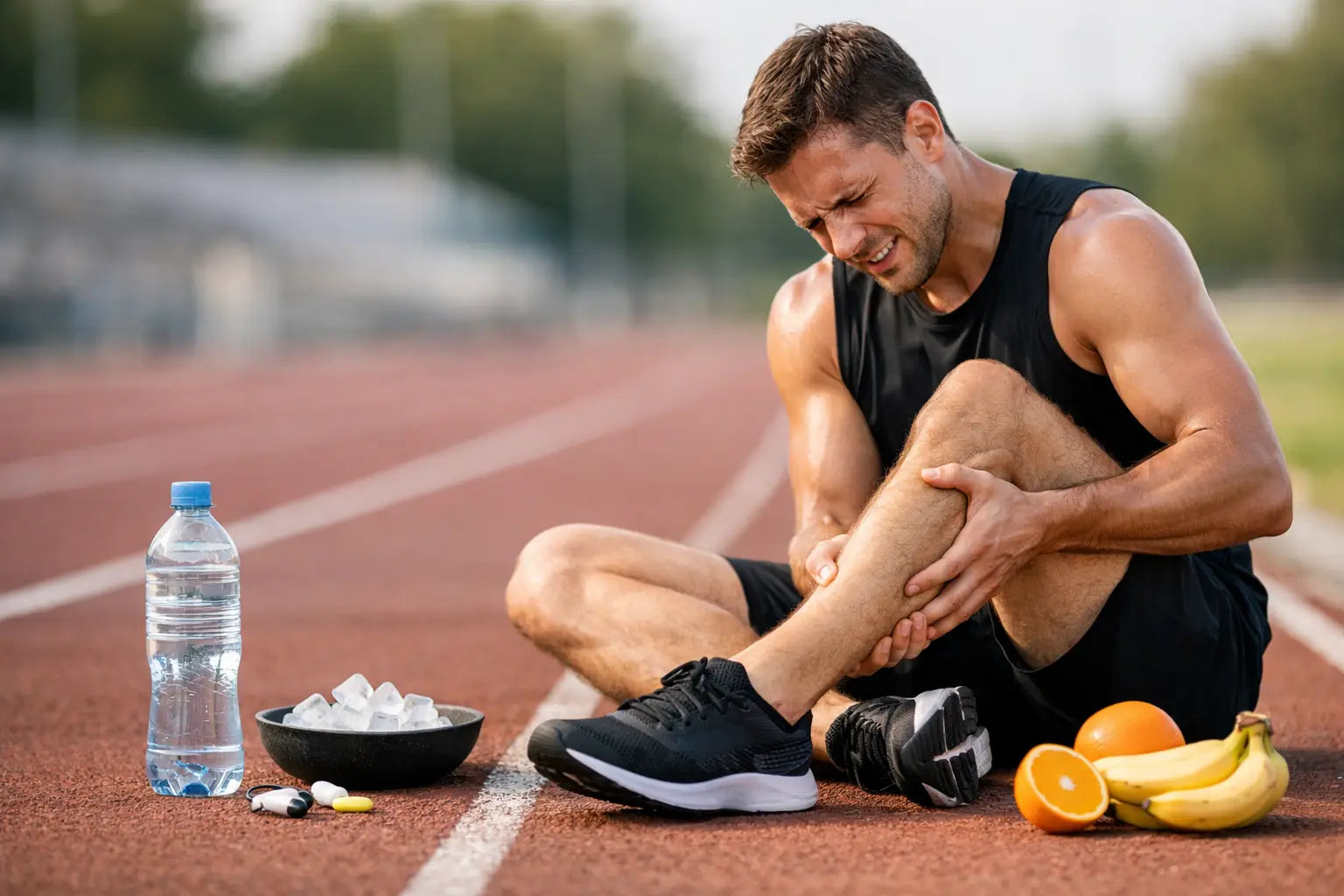
A calf cramp at mile 20, a hamstring lockup on the final sprint, or a foot that curls during a crucial set can change the outcome in seconds. Learning how to prevent muscle cramps for athletes is not about crossing your fingers, chugging water at the last minute, or accepting cramps as part of competing. It is about preparing the nervous system and muscles for the exact demands of your sport.
Cramps are not a character flaw. They are a performance problem. And when they hit, they can take away your stride, your confidence, and your finish. The good news: athletes can reduce their risk with a plan that goes beyond old-school advice.
Why Athletes Cramp When It Matters Most
Exercise-associated muscle cramps often show up when fatigue is high and the stakes are higher. A hard effort can temporarily disrupt the communication between nerves and muscle fibers. The muscle receives signals that make it contract, but it does not receive enough of the signals that tell it to relax. The result is a sudden, painful, involuntary contraction.
This is why cramps frequently strike late in a race, during a long shift on the field, after repeated jumps, or near the end of a demanding workout. The muscle is tired, the nervous system is under pressure, and the pace may have exceeded what your training prepared you to sustain.
Hydration and electrolytes still matter for overall performance, particularly in heat or during long events. But they are not the whole story. Plenty of well-hydrated athletes cramp, and plenty of athletes with normal electrolyte intake cramp when a muscle is pushed beyond its conditioning. Treating every cramp as a sodium emergency can distract from the bigger issue: neuromuscular fatigue.
How to Prevent Muscle Cramps for Athletes Before Race Day
The best cramp-prevention strategy begins well before the starting gun. Your body needs repeated exposure to the intensity, duration, terrain, and conditions you expect on event day.
Train for the pace you plan to hold
A race pace that feels manageable for 30 minutes may be too aggressive for two hours. A football player may look sharp in early drills but cramp during late-game repeated sprints. A cyclist may feel strong on flat roads but cramp on the final climb after a day of riding.
Build sport-specific fatigue resistance. If your event includes hills, train hills. If it includes stop-start acceleration, practice repeat efforts with realistic recovery. If it will be hot, allow time for gradual heat acclimation. The goal is not to make every session miserable. It is to make race-day demands familiar enough that your muscles are not shocked by them.
Progress volume and intensity deliberately. A sudden jump in mileage, a new high-rep strength program, or a hard competition after time off can leave muscles underprepared. Consistency beats heroic training blocks followed by exhaustion.
Strengthen the muscles that usually fail first
Your cramp history is useful information. Runners may struggle with calves, hamstrings, feet, or quads. Cyclists often notice calves, hamstrings, and hip flexors. Court athletes may cramp in calves, feet, and adductors after repeated explosive movement.
Train the weak link with controlled strength work and enough recovery to adapt. Calf raises, hamstring work, single-leg stability, hip strength, and foot conditioning can improve your ability to maintain form under fatigue. The right exercises depend on your sport and injury history, so focus on movement quality rather than endlessly adding reps.
Mobility can help when a joint is restricted or a muscle is routinely overloaded, but stretching alone is not a complete prevention plan. A flexible calf can still cramp if it has not been conditioned for repeated high-force work.
Practice your fueling and hydration plan
Underfueling makes hard efforts feel harder. When carbohydrate availability drops, perceived effort rises, form can break down, and fatigue arrives faster. That creates conditions where cramps become more likely.
For longer or high-intensity sessions, practice taking in the carbohydrates and fluids you will use in competition. Do it during training, not for the first time at an event. The amount depends on your body size, sweat rate, duration, weather, and sport, so avoid copying someone else's plan blindly.
Replace fluid losses sensibly, especially during heat exposure. If you are a heavy or salty sweater, sodium may deserve special attention. But do not overdrink plain water to the point that you feel bloated or unwell. The target is a practical, tested plan that supports performance without upsetting your stomach.
Control the Pace Before the Cramp Controls You
Many cramps are a pacing problem disguised as bad luck. Athletes get excited, chase a competitor, surge up a hill, or try to hold a speed that their preparation cannot yet support. The muscle pays for that decision later.
Start with discipline. In endurance events, keep the first segment within the effort you trained for, even if others go out faster. In team sports, manage repeated maximal efforts when possible and use breaks to reset breathing and mechanics. In the gym, do not let fatigue turn every rep into a sloppy grind.
Pay attention to early warning signs: twitching, a tightening calf, an unusually stiff foot, or a hamstring that feels like it is about to grab. Backing off briefly, changing position, and restoring control can keep a warning from becoming a full lockup. That is not weakness. It is smart performance management.
What to Do When a Muscle Starts to Cramp
When a cramp hits, stop forcing the movement that triggered it. Gently lengthen the affected muscle, use controlled pressure or massage if it helps, and take a moment to regain normal breathing. A runner with a calf cramp may need to walk, straighten the knee, and pull the toes upward. A hamstring cramp may respond better to gradual knee extension and a reduced stride.
Do not aggressively yank on the muscle. A cramped muscle is already under stress, and forceful stretching can create more pain or strain. Once the cramp releases, return cautiously. If it returns immediately, your best performance decision may be to reduce intensity rather than try to power through.
For athletes who need portable, on-the-spot support, CrampsAWAY Sport/PRO is a food-grade oral formula designed to work upon contact with the tongue by supporting Neuromuscular Efficiency (NME™), targeting the nerve signals involved in cramping rather than relying on slow hydration alone. Its NSF Certified for Sport status also gives tested athletes and teams added confidence when avoiding banned substances matters.
Recovery Is Part of Cramp Prevention
A cramp-prone athlete does not always need more grit. Sometimes they need more recovery. Hard training without adequate sleep, calories, rest days, and recovery between demanding sessions leaves the nervous system and muscles less ready to perform.
After a hard event, restore fluids, eat enough carbohydrate and protein, and give overloaded muscles time to settle. Light movement can feel better than total inactivity, but another all-out session is rarely the answer when your legs are still carrying deep fatigue.
Track when cramps occur. Note the muscle, training load, temperature, sleep quality, pre-event meal, fluids, pace, and how far into the session the cramp began. Patterns become clear quickly. If cramps always arrive after a fast opening mile, the solution is different than cramps that occur only in extreme heat or after poor sleep.
When Cramping Needs Medical Attention
Most exercise cramps are temporary, but recurrent or unusual cramping deserves a closer look. Talk with a qualified health professional if cramps happen at rest, repeatedly wake you at night, come with significant weakness or swelling, persist after activity, or are associated with new medications or a medical condition.
Seek urgent care for severe muscle pain with dark urine, major swelling, confusion, fainting, chest symptoms, or signs of heat illness. Those are not problems to solve with a quick stretch and a tougher mindset.
Your next event does not need to be a negotiation with your calves, hamstrings, or feet. Train specifically, fuel intentionally, respect fatigue, and have a fast response ready. When pressure rises, your body should be free to do what you trained it to do: keep moving forward.

Share:
Instant Menstrual Cramp Relief That Safely Keeps You Moving
Period Pain Without Birth Control: Relief Options