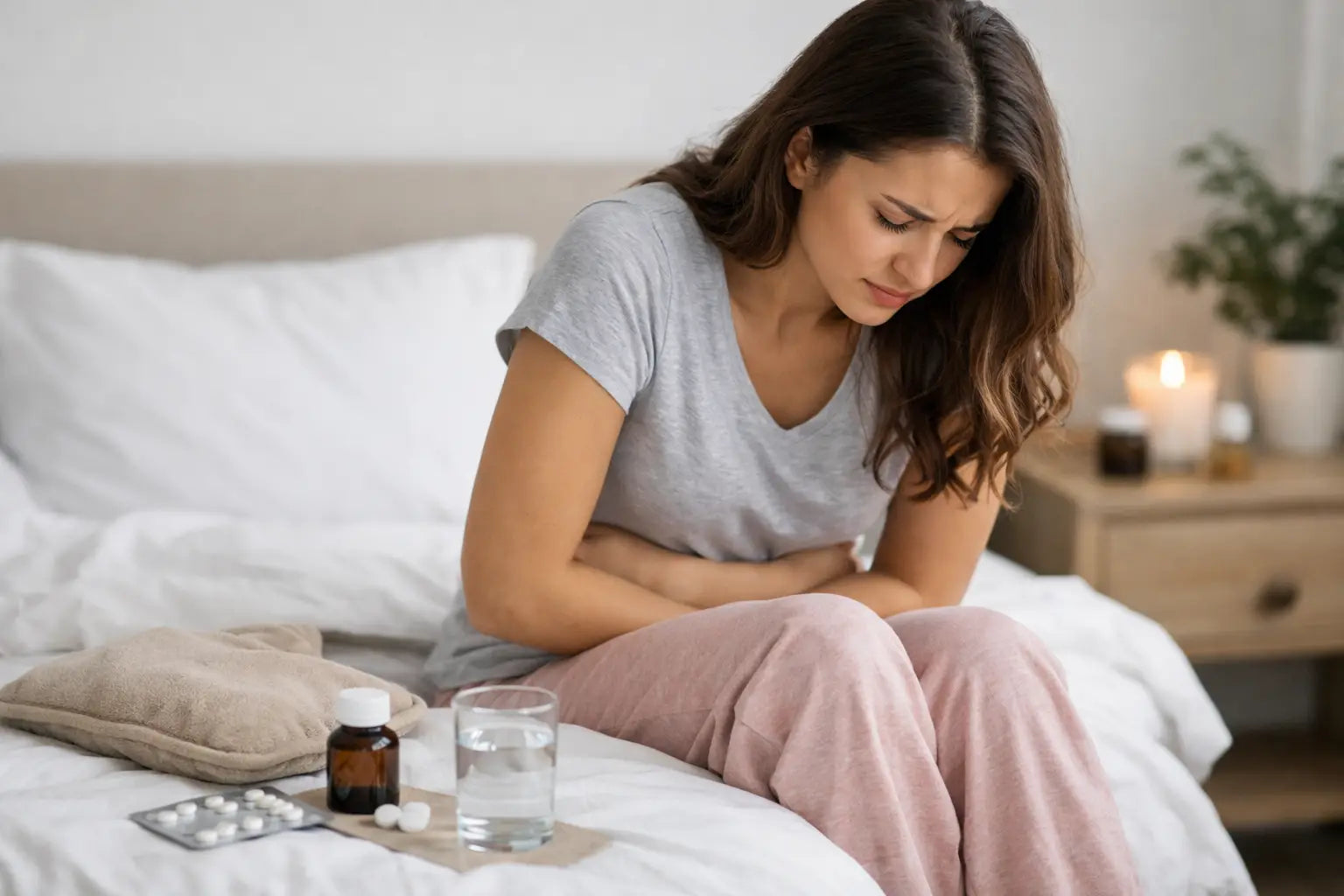
A period should not force you to cancel plans, miss class, sit out training, or white-knuckle your way through a workday. If you want period pain without birth control, you have options. Hormonal contraception can be useful for some people, but it is not the only path to cramp relief - and it is not the right fit for everyone.
Whether you want to avoid hormones, have had side effects, are trying to conceive, or simply want more control over how you manage your cycle, the goal is the same: get relief that lets you keep moving.
Why period cramps can hit so hard
Menstrual cramps happen when the uterus contracts to shed its lining. Your body makes prostaglandins, hormone-like chemicals that trigger those contractions. Higher prostaglandin activity is often linked with stronger contractions, more inflammation, and more pain.
That is why cramps can feel bigger than an inconvenience. The pain may spread into your lower back or thighs. It can come with nausea, diarrhea, headaches, fatigue, or that drained feeling that makes every normal task feel like extra work.
Birth control can reduce cramps for some people by changing ovulation and the uterine lining. But relief is not all-or-nothing. You can build a non-hormonal plan around what actually works for your body, your schedule, and your symptoms.
Period pain without birth control starts with timing
Waiting until pain is at full volume makes cramps harder to manage. If your cycle is fairly predictable, start your relief routine when the first signs appear: pelvic tightness, a dull backache, fatigue, spotting, or that familiar sense that your period is about to begin.
Track your cycle for two or three months. Note when cramps start, how long they last, what the pain feels like, and what helps. This is not busywork. It gives you a better chance of acting early and gives your clinician useful information if pain becomes more severe.
Use heat when you need fast, low-effort comfort
A heating pad, heat wrap, or hot water bottle on the lower abdomen can relax tight muscles and make cramping more manageable. Heat is especially practical when you need relief without adding another pill to your day.
Use a comfortable temperature, not a scorching one, and protect your skin with a layer of clothing or a cover. A warm shower or bath can help, too, particularly when lower-back tension is part of the problem.
Keep your body moving - gently or intensely, depending on the day
Movement can sound unrealistic when you are curled up with cramps. But a short walk, easy cycling, mobility work, or gentle yoga can reduce stiffness and improve circulation. The key is not forcing a perfect workout. It is giving your body a chance to loosen up.
For active people, cycle-aware training can be a smart strategy. On lighter-symptom days, continue your normal training if you feel good. On high-pain days, switch the goal from performance to recovery: walk, stretch, use heat, hydrate, and protect tomorrow's momentum. Skipping one hard session is not losing ground.
Non-hormonal pain relief has trade-offs
Over-the-counter nonsteroidal anti-inflammatory drugs, often called NSAIDs, can reduce prostaglandins and may help menstrual cramps. They work best for many people when taken early, following the package directions. However, they are not a casual solution for everyone.
NSAIDs can irritate the stomach and may not be appropriate if you have a history of ulcers, kidney disease, certain heart conditions, take blood thinners, or have been told to avoid them. Acetaminophen may be an option for some people, but it works differently and may not relieve cramping as effectively. A pharmacist or clinician can help you choose based on your health history and other medications.
Do not stack medications or exceed label dosing in pursuit of a pain-free day. More is not better. It can turn a cramp problem into a stomach, liver, or kidney problem.
Consider a fast, hormone-free cramp tool
If pills leave you with stomach upset, brain fog, or a solution that feels too slow for real life, consider a portable, hormone-free cramp product as part of your plan. CrampsAWAY For Her is a food-grade oral formula designed to support neuromuscular efficiency and address the nerve signals involved in cramping, rather than relying on synthetic hormones.
A product like this is not a replacement for medical care when symptoms are severe or changing. But for people who need a convenient option at school, at work, on the road, or before training, having a non-hormonal tool ready can mean less time waiting for the day to pass.
Food, fluids, and supplements: helpful support, not magic
Hydration matters for overall well-being, especially if your period brings diarrhea, sweating, or reduced appetite. But drinking a gallon of water will not necessarily stop uterine cramps. Menstrual cramps are not simply proof that you are dehydrated or low on electrolytes.
Aim for regular meals with protein, fiber-rich carbohydrates, and colorful produce. A steady meal pattern can help prevent the shaky, low-energy feeling that makes pain harder to tolerate. If bloating is a big issue, reducing heavily salted foods and carbonated drinks around your period may help you feel more comfortable.
Some people explore magnesium, vitamin B1, omega-3s, or herbal products for cramps. The evidence varies, doses matter, and supplements can interact with medications. Talk with a clinician before adding a supplement, especially if you are pregnant, have a medical condition, or take prescription medication. “Natural” does not automatically mean risk-free or effective.
Build a plan that works beyond your bathroom floor
The best cramp routine is one you can actually use when you are tired, late, or trying to show up for something that matters. Keep your supplies where life happens: your bag, desk, car, locker, or gym kit.
Your plan might include a heat patch, water, a snack, comfortable underwear, your preferred over-the-counter medication if it is safe for you, and a hormone-free relief option. The point is preparation, not perfection. Cramps are disruptive enough without having to scramble for what you need.
Also give yourself permission to be specific about support. Ask a roommate to pick up groceries. Block a lighter meeting schedule if you can. Wear the clothes that do not put pressure on your abdomen. Protecting your energy is not weakness. It is a practical response to a recurring physical demand.
When period pain needs medical attention
Severe period pain is common, but it should not automatically be dismissed as something you have to endure. Sometimes painful periods are caused by conditions such as endometriosis, adenomyosis, fibroids, pelvic inflammatory disease, or ovarian cysts. These conditions can require more than at-home relief.
Make an appointment with a gynecologist or qualified clinician if your cramps are getting worse, interfere with school or work despite treatment, begin suddenly after years of manageable periods, occur outside your period, or come with unusually heavy bleeding. Heavy bleeding can mean soaking through a pad or tampon every hour for several hours, passing large clots, or feeling dizzy, short of breath, or faint.
Seek urgent care for sudden severe pelvic pain, pain with fever or vomiting, fainting, possible pregnancy, or pain that feels dramatically different from your normal cycle. Trust the change in your body. You know what your normal feels like.
You deserve relief that fits your life
Choosing period pain relief without birth control does not mean choosing to tough it out. It means getting clear about your options, acting early, and using tools that support your body without compromising your priorities. Your period may be recurring, but losing days to cramps does not have to be your routine.

Share:
How to Prevent Muscle Cramps for Athletes
Food Grade Cramp Relief Ingredients Explained