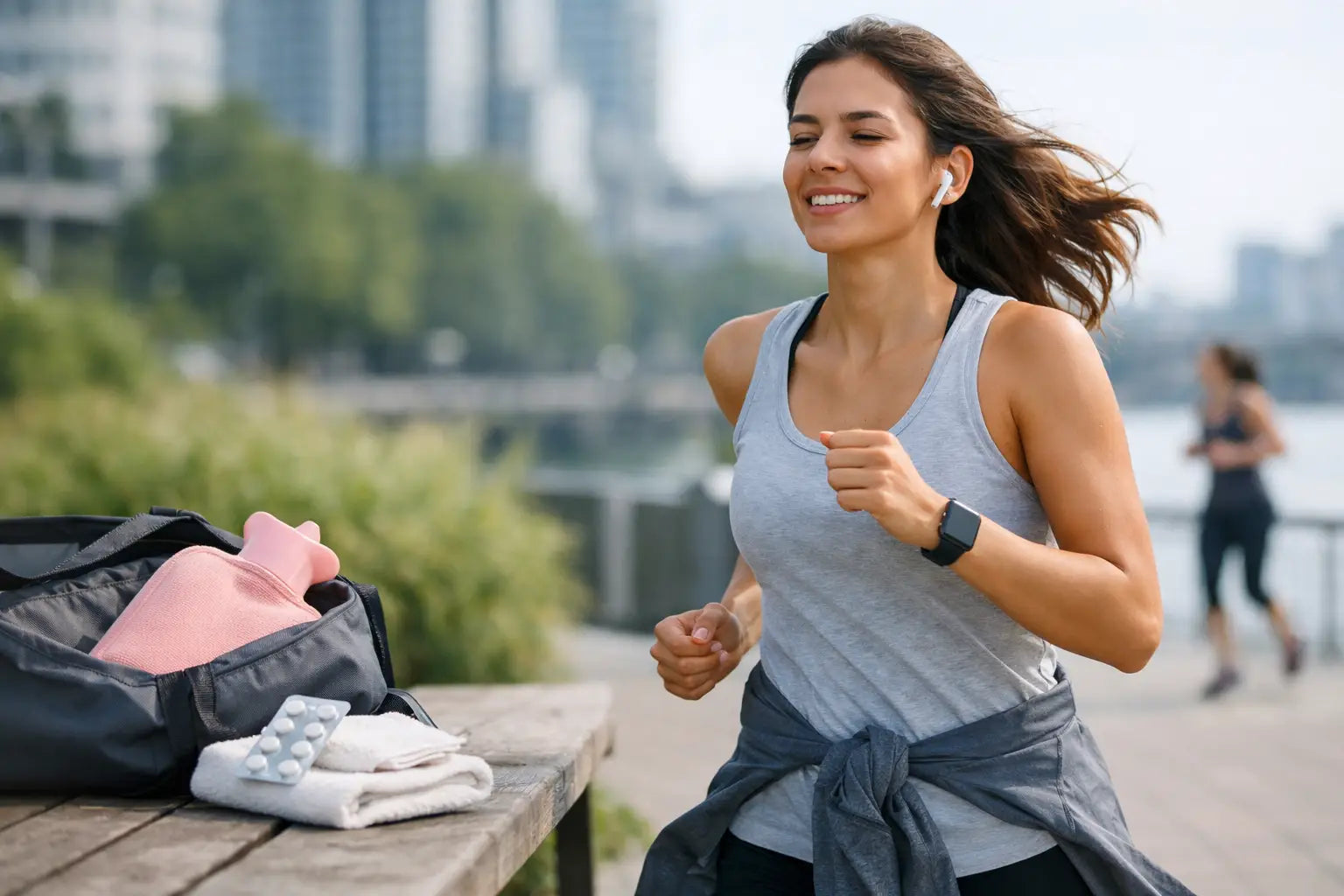
A cramp should not get the final say on your day. But when period cramps hit hard, they can turn a class, a meeting, a long drive, or a workout into something you have to survive instead of simply do. The goal is not to “tough it out.” The goal is reliable relief that helps you stay in control of your body and your momentum.
Why period cramps can feel so intense
Period cramps happen when the uterus contracts to shed its lining. Chemical messengers called prostaglandins help trigger those contractions. Higher prostaglandin activity can mean stronger contractions, more inflammation, and more pain. That is why cramps may feel like a deep ache for one person and a sharp, radiating pain through the lower abdomen, back, hips, or thighs for another.
The timing can be frustratingly predictable. Pain often starts just before bleeding or within the first day of a period, when you may already be managing fatigue, bloating, headaches, nausea, or a packed schedule. For some people, symptoms ease after a day or two. For others, they can stop plans for several days every month.
Pain is personal, but disruption is measurable. If cramps regularly make you miss school, call out of work, skip training, or cancel plans, that is not a minor inconvenience. It is a signal to take your relief strategy seriously.
Fast comfort starts with a plan
There is no single answer that works for every body, every cycle, or every level of pain. What helps may depend on when you start, how severe the cramps are, whether you can take certain medications, and what you need to do that day. Building a practical plan before your period arrives gives you better odds of staying ahead of the pain.
Heat can be useful for many people. A heating pad, warm bath, or heat wrap may relax tight muscles and bring comfort when you need to sit through a lecture or work from home. Gentle movement can also help. An easy walk, mobility work, or low-intensity stretching may feel better than staying completely still, especially if your back and hips are tense.
Over-the-counter anti-inflammatory pain relievers can reduce cramp pain for some people when used as directed and when medically appropriate. They are not the right fit for everyone, particularly people with certain stomach, kidney, bleeding, or medication-related concerns. If you are unsure, ask a clinician or pharmacist what is safe for you.
Sleep, regular meals, and hydration support your overall resilience too, but they should not be framed as a cure-all. You did not cause severe cramping by failing to drink enough water or by missing one workout. Period pain deserves solutions, not blame.
When you need relief without losing your edge
For teens, students, professionals, and active adults, the real issue is often speed and practicality. You may not have time to wait out a long routine, lie down with a heating pad, or push through side effects that leave you groggy, nauseated, or unfocused.
That is why some people look for non-hormonal, food-grade options designed to address the neuromuscular side of cramping. CrampsAWAY For Her uses its patented NME™ approach, which is designed to support the nerve signals involved in muscle cramping rather than simply masking discomfort. The format is portable, hormone-free, and built for the moments when you need to get through a shift, a practice, a presentation, or a full day without letting cramps dictate the pace.
The right option is the one that matches your needs and health history. Natural does not automatically mean appropriate for every person, and fast relief should never replace medical evaluation when symptoms are severe or changing. Still, you deserve choices beyond accepting pain as part of being productive.
A smarter way to prepare for your cycle
Cramps are easier to manage when you stop treating each month like a surprise. Track your cycle for a few months and note when pain begins, how long it lasts, where you feel it, and what actually improves it. A simple note on your phone can reveal useful patterns: perhaps your pain peaks on day one, exercise helps on day two, or cramps worsen after poor sleep.
Keep your preferred tools where you will need them. That could mean having a heat wrap at your desk, comfortable clothes ready at home, and a portable relief option in your backpack, car, or gym bag. Preparation is not overreacting. It is how you protect your time.
If you train regularly, adjust with intention instead of writing off movement entirely. A hard interval session may not feel realistic during your worst cramp hours, while an easy walk, mobility session, or lower-intensity workout may support your mood and circulation. Some athletes prefer rest. Others feel better moving. Listen to the feedback from your body, not pressure to perform at 100 percent every day of the month.
When period cramps need medical attention
Common menstrual cramps can be painful, but severe or worsening pain deserves a conversation with a qualified clinician. Conditions such as endometriosis, fibroids, adenomyosis, pelvic inflammatory disease, or ovarian cysts can cause symptoms that feel different from typical cramps. Getting checked is not being dramatic. It is advocating for your health.
Make an appointment if cramps suddenly become much worse, persist beyond the first few days of bleeding, or fail to improve with the strategies that usually help. Also seek care for heavy bleeding, pain during sex, pain between periods, fever, fainting, vomiting, unusual discharge, or pain that interferes with everyday life month after month.
Urgent symptoms need urgent attention. Severe sudden pelvic pain, especially alongside dizziness, fainting, shoulder pain, heavy bleeding, or a possible pregnancy, should be evaluated promptly. Do not try to power through warning signs.
You do not have to normalize lost days
There is a difference between having a period and surrendering your calendar to it. Your cycle may require adjustments, rest, and extra care. That is normal. Losing your ability to learn, work, travel, train, or show up for yourself every month should not be treated as inevitable.
Start with what is practical: know your pattern, keep relief within reach, use the options that work for your body, and speak up when the pain changes or becomes too much. Period cramps may be common, but they do not get to decide what you are capable of today.

Share:
NSF Certified Cramp Supplements for Athletes
Muscle Cramp Supplements That Make Sense