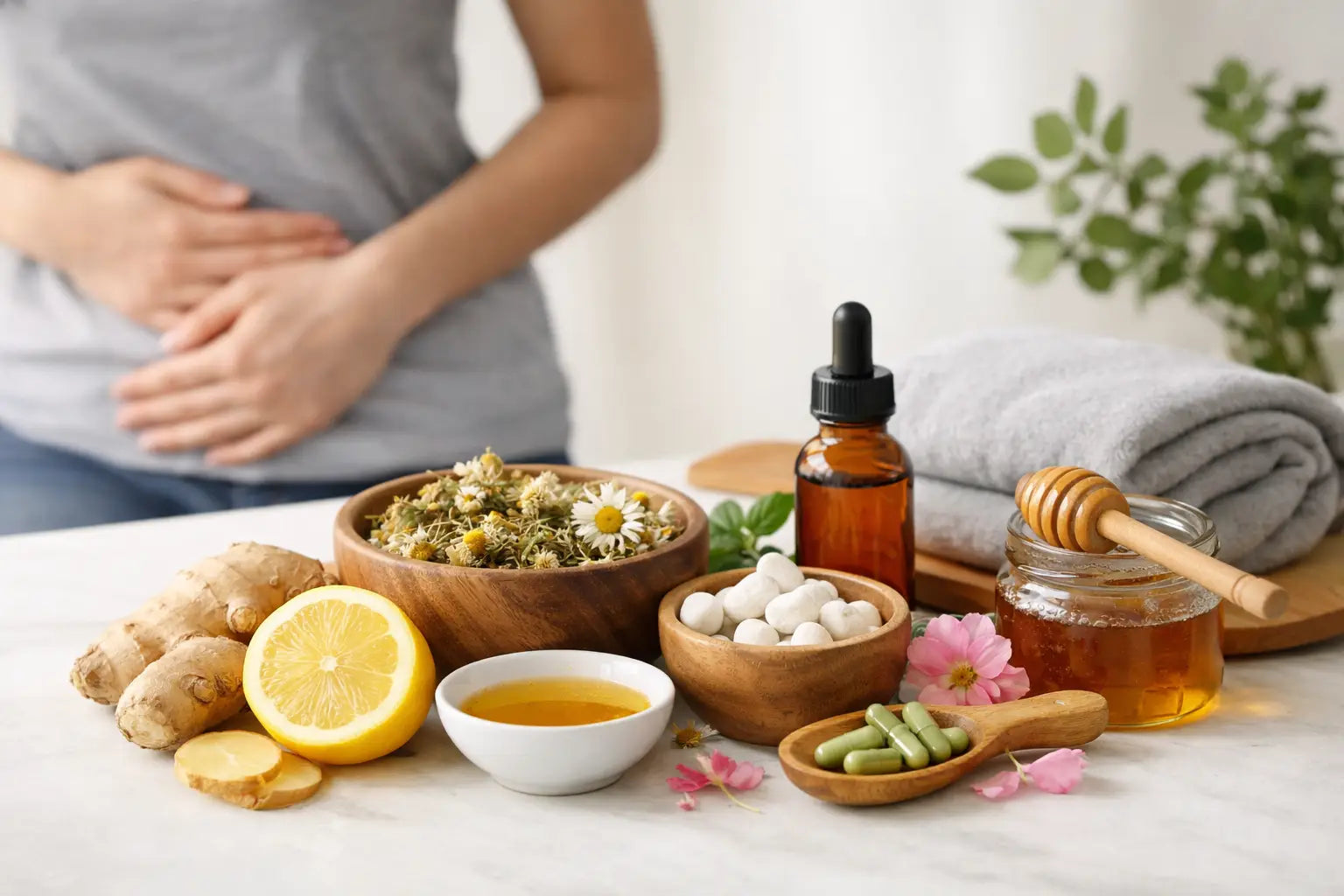
A cramp can change the entire day in minutes. One moment you are headed to class, work, practice, or bed. The next, you are calculating whether you can make it through without another dose of pain medicine. Natural alternatives to ibuprofen for cramps can give you more options - especially if you want relief without relying on medication that may upset your stomach, leave you feeling off, or simply fail to act fast enough.
The right choice depends on the type of cramp, how severe it is, and what you need to do next. Some approaches support your body over time. Others are better when a cramp is already demanding your full attention.
Why look beyond ibuprofen?
Ibuprofen is a nonsteroidal anti-inflammatory drug, or NSAID. For many people, it can reduce menstrual-cramp pain by lowering prostaglandins, compounds involved in uterine contractions and inflammation. But it is not the right fit for everyone, every cycle, or every situation.
Frequent NSAID use can be hard on the stomach and may not be advised for people with certain kidney, heart, bleeding, or digestive conditions. It can also interact with medications. Even when you can take it safely, waiting for a pill to kick in is not always compatible with a meeting, a race, a long drive, or the middle of the night.
You deserve a cramp plan that does more than ask you to sit out and wait.
Natural alternatives to ibuprofen for cramps that help now
Use heat to relax tight tissue
Heat is one of the most dependable non-drug tools for menstrual cramps. A heating pad, heat wrap, or warm bath can relax tense muscles and increase local blood flow. For many people, it is most useful when applied early, before pain has built into a full-body distraction.
Heat is practical, but it has limits. You need access to it, and it can be inconvenient under a uniform, at school, or during training. Keep the temperature comfortable, protect your skin, and do not fall asleep on a high-heat setting.
Try gentle movement instead of bracing against the pain
When cramps hit, intense exercise may be the last thing you want. But gentle movement can reduce stiffness and help your nervous system shift out of a guarded, tense state. A short walk, easy cycling, hip-opening mobility, or a few minutes of slow stretching may take the edge off.
For menstrual cramps, focus on movements that feel relieving rather than punishing. Child's pose, a supported forward fold, and gentle pelvic tilts can be useful starting points. If movement makes pain sharper, stop. Pushing through severe pain is not a toughness test.
Use slow breathing to lower the tension response
Pain often creates a loop: the cramp makes you tense, the tension makes the experience feel bigger, and your breathing becomes shallow. Slow, controlled breathing will not erase every cramp, but it can reduce that escalation.
Try breathing in for four counts and out for six to eight counts for two to five minutes. Keep your shoulders down and jaw relaxed. This is a portable tool for a desk, a locker room, or a plane seat when heat and rest are not available.
Consider ginger for menstrual-cramp support
Ginger has been studied for menstrual discomfort and may help some people manage pain when used around the start of a period. It is not an instant rescue tool, and results vary. Think of it as a supportive option, not a guaranteed replacement for a strategy that reliably works for you.
Ginger can cause heartburn or digestive discomfort in some people and may not be appropriate with certain blood-thinning medications. If you are pregnant, managing a health condition, or taking prescriptions, ask a clinician or pharmacist before adding concentrated supplements.
Address muscle cramps through the nervous system
Muscle cramps during a run, game, workout, or night of sleep are often blamed entirely on dehydration or low electrolytes. Hydration matters for overall performance, especially in heat. But it does not explain every cramp, and drinking more water in the middle of a severe spasm does not reliably stop it.
Many exercise-related cramps involve fatigued muscles and overexcited nerve signals. That is why a strategy focused on neuromuscular signaling can make more sense than waiting on a slow electrolyte drink. CrampsAWAY uses food-grade oral formulas designed to activate Neuromuscular Efficiency, or NME™, upon contact with the tongue, helping interrupt the nerve signals behind cramping without hormones or conventional pain medication.
For athletes, this distinction matters. A cramp is not just uncomfortable. It can end a shift, wreck a race plan, or turn a strong finish into survival mode.
What helps prevent cramps before they take over
The best natural approach is often a layered one. You may need a fast-response tool for the moment pain arrives and a few consistent habits that lower the odds of being blindsided.
For menstrual cramps, track your cycle and notice when pain usually begins. Starting heat, gentle movement, sleep protection, and your preferred non-medication strategy before symptoms peak may make the day more manageable. Regular aerobic activity can also help some people experience less severe period pain over time, although it is not a quick fix during a brutal cramp.
For muscle cramps, build training load gradually. Sudden jumps in mileage, intensity, hill work, or heat exposure can overload a muscle that has not adapted yet. Prioritize recovery, adequate fueling, and fluids matched to your sweat losses. If you routinely cramp late in workouts, your pacing and fatigue threshold may be just as relevant as your hydration plan.
Magnesium gets a lot of attention, particularly for night cramps and period symptoms. It may help people who have a true deficiency, but it is not a universal cramp cure. Taking more than you need can cause diarrhea and other digestive issues. Food sources such as leafy greens, beans, nuts, seeds, and whole grains are a sensible place to start, while supplements deserve a conversation with a clinician if cramps are frequent or severe.
Choose based on the moment, not hype
Natural does not automatically mean fast, risk-free, or effective for every body. A warm bath may be perfect for a quiet evening but useless on the sideline before the final quarter. Ginger may fit a proactive menstrual-care routine but not the urgent need to stop a calf cramp during a 10K.
Build a plan around your real life. Keep a portable option in your bag, use heat when you have access to it, and practice recovery habits when you are not in pain. The goal is not to prove you can tolerate cramps without help. The goal is to stay in control of your body, your schedule, and your performance.
When cramps need medical attention
Do not dismiss pain that is new, extreme, or getting worse. For menstrual cramps, seek medical guidance if pain regularly causes you to miss school, work, or normal activities; if bleeding is unusually heavy; if pain occurs outside your period; or if over-the-counter approaches no longer help. Conditions such as endometriosis, fibroids, ovarian cysts, and pelvic infections can cause symptoms that deserve evaluation.
For muscle cramps, get care if cramps are persistent, severe, paired with swelling or weakness, occur after a medication change, or come with dark urine, fever, chest symptoms, confusion, or signs of heat illness. A cramp that will not release is not something to shrug off.
You do not have to organize your life around the next dose, the nearest heating pad, or the fear that your body will quit on you. Choose tools that fit the moment, listen when your symptoms change, and keep moving toward the plans that matter to you.

Share:
How Nerve Signals Trigger Muscle Cramps in Motion
NSF Certified Supplements for Athletes That Perform