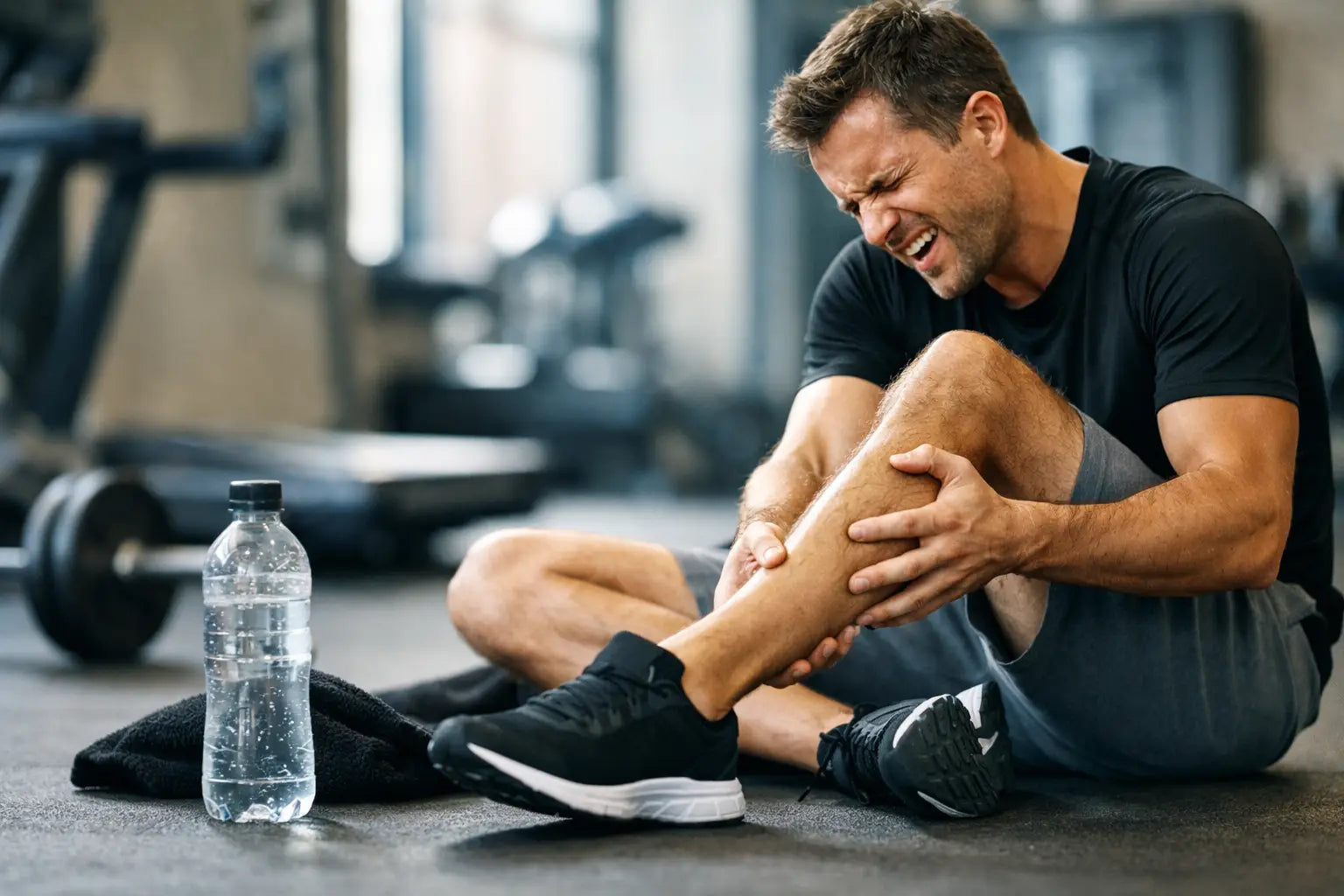
A calf cramp at mile 18, a seized hamstring in the fourth quarter, or a foot that locks up the moment you get into bed can feel like your body has hit the emergency brake. So, can dehydration cause muscle cramps? It can be part of the picture, especially when you have lost substantial fluid through sweat. But dehydration is not the automatic explanation, and drinking more water alone is not a guaranteed way to stop a cramp that is already taking over.
That distinction matters. If every cramp gets blamed on hydration, athletes can spend the whole race chasing fluids while overlooking the factors that are actually pushing their muscles past their limit: fatigue, intensity, conditioning, heat, nerve signaling, or a sudden jump in training load.
Can Dehydration Cause Muscle Cramps? Sometimes.
Dehydration happens when fluid losses exceed fluid intake. During hard exercise, particularly in heat or humidity, that can reduce blood volume, raise body temperature, and make the body work harder to keep moving. Severe fluid loss may leave you feeling thirsty, dizzy, unusually tired, headachy, or less able to perform.
Those conditions can make cramping more likely for some people. When you are hot, exhausted, and sweating heavily, muscles and nerves are operating under more strain. If you also have not replaced enough sodium during prolonged sweating, the risk may rise further.
But the presence of a cramp does not prove you are dehydrated. Plenty of well-hydrated athletes cramp. Plenty of dehydrated athletes do not. Research and real-world competition both point to a more complicated answer: exercise-associated muscle cramps often occur when a working muscle becomes fatigued and its nerve control becomes overly excitable.
Think about where cramps usually strike. They tend to happen in muscles that are doing the most work - calves on hills, hamstrings late in a sprint, quads during a long ride. That pattern is hard to explain with water loss alone. It makes more sense when you consider local muscular fatigue and the nerve signals controlling contraction and relaxation.
Why a Muscle Can Cramp Even When You Drank Enough
A cramp is a sudden, involuntary, painful contraction. The muscle does not simply need a sip of water. It needs the abnormal contraction signal to settle down.
Exercise can make that signal more likely when the demand exceeds what the muscle is prepared to handle. A runner who adds speed work too quickly, a tennis player competing in the heat after a light training week, or a lifter pushing repeated max-effort sets may all be vulnerable, even with a hydration plan in place.
Common contributors include inadequate conditioning for the event, hard efforts in unfamiliar terrain, muscle fatigue, poor pacing, heat stress, and a history of cramping. Sleep disruption, certain medications, pregnancy, circulation concerns, and some medical conditions can also affect cramp risk, particularly with nighttime leg cramps.
This does not make hydration irrelevant. It puts it in its proper place. Fluids support performance, temperature control, and recovery. They are one piece of cramp prevention, not the entire game plan.
Hydrate for the Conditions, Not Out of Fear
The goal is not to force down as much water as possible. Overdrinking plain water can be dangerous, particularly during long events, because it can dilute blood sodium. A smart hydration strategy reflects your body size, sweat rate, workout length, weather, and access to fluids.
Start training and competition reasonably hydrated. Pale yellow urine is often a practical sign that you are generally well hydrated, though it is not a perfect test. Drink to thirst during most routine sessions, then pay closer attention during long, hot, or high-sweat efforts.
For endurance events or prolonged heat exposure, replacing fluids and sodium may be useful. The right amount varies widely. Some athletes are salty sweaters who finish with white salt marks on their clothes. Others lose far less. Test your approach in training rather than experimenting on race day.
Hydration becomes more urgent when cramps come with signs of significant heat illness or dehydration, such as confusion, fainting, vomiting, a racing heartbeat, severe weakness, or inability to keep fluids down. Stop activity, cool down, and seek urgent medical care when symptoms are severe or worsening.
What to Do When a Cramp Hits Mid-Workout
When a muscle locks up, forcing your way through it can turn one bad moment into a strained muscle and a longer recovery. Back off. Stop the movement that triggered the cramp, then gently stretch the affected muscle in the opposite direction of the contraction.
For a calf cramp, straighten the knee and bring the toes toward the shin. For a hamstring cramp, gently extend the knee and hinge forward only as far as is comfortable. Light massage and easy movement after the spasm releases may help the muscle settle.
Take small sips of fluid if you have been sweating heavily, but do not expect a drink to switch off the cramp on contact. Rehydration takes time. The immediate need is to calm the muscle's overactive nerve-muscle response while protecting the area from further overload.
That is why CrampsAWAY Sport/PRO focuses on Neuromuscular Efficiency (NME™), a food-grade approach designed to support the nerve signals involved in cramping rather than asking athletes to wait for hydration or electrolytes to catch up. For competitors, that difference can mean less time sidelined and more confidence when the pace gets hard.
Build a Cramp-Resistant Training Plan
The strongest prevention strategy starts well before an event. Progress your workload gradually enough that muscles can adapt to the speed, distance, hills, heat, or repeated explosive effort you are asking of them. If you cramp at the end of a race, look closely at the last several weeks of training, not just what was in your bottle that morning.
Practice your race pace under realistic conditions. If your target event will be hot, train safely in warmth when possible. If it includes climbs, build climbing into your preparation. If cramps happen during long games, use conditioning that reflects repeated accelerations and short recoveries.
Recovery matters, too. Tired muscles are more likely to lose control when they are asked to produce one more hard effort. Adequate sleep, enough total food, sensible recovery days, and a plan that does not stack maximal sessions back-to-back all help protect performance.
For night cramps, gentle calf and hamstring stretching before bed may help some people. Review whether a new medication, unusually hard activity, or long periods of sitting have changed your routine. Recurrent nighttime cramps deserve a conversation with a clinician, especially if they come with swelling, numbness, weakness, or pain that continues during the day.
When Cramps Need Medical Attention
Most isolated exercise cramps improve with rest and gentle stretching. Persistent or frequent cramps are different. Get medical advice if cramps are severe, regularly disrupt sleep, began after starting a medication, occur without exercise, or are paired with muscle weakness, numbness, swelling, redness, or dark urine.
A clinician can help rule out conditions that should not be managed as a simple hydration issue. That is especially important for older adults, people with diabetes or kidney disease, and anyone taking diuretics or other medications that can affect fluid and mineral balance.
Your next cramp does not have to dictate the finish line. Prepare your muscles for the work, hydrate with purpose, respect fatigue, and use a fast plan that addresses the cramp when it starts. Comfort, control, and a stronger finish are worth training for.

Share:
NSAIDs Versus Period Relief: What Works Faster?
NSF Certified Cramp Supplements for Athletes