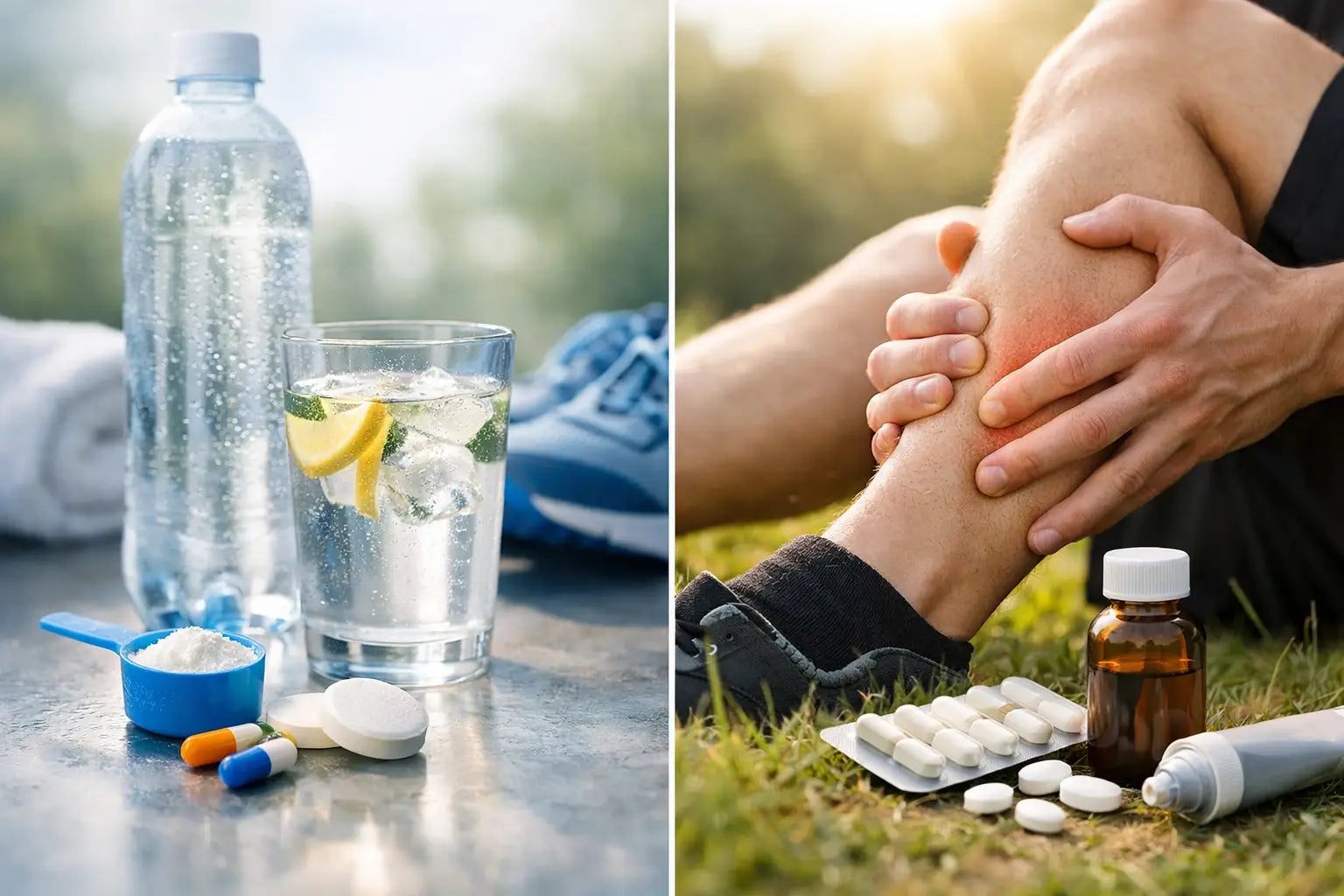
A cramp does not wait for the end of your race, practice, shift, class, or family dinner. It can seize a calf in the final mile, wake you at 2 a.m., or flatten your plans on day one of your period. That is why the question of electrolytes versus cramp relief matters: hydration can support your body, but it may not be the fast answer when a cramp is already in control.
For years, cramping has been reduced to one simple explanation: drink more water and add electrolytes. Sometimes that is useful advice. But it is incomplete. Many people cramp despite drinking fluids, following a nutrition plan, and taking electrolyte products regularly. If your body has the fuel and fluids it needs but your muscles still lock up, it is time to look beyond the bottle.
Electrolytes Versus Cramp Relief: The Key Difference
Electrolytes are minerals, including sodium, potassium, magnesium, and calcium, that help your body manage fluid balance and support normal muscle and nerve function. They matter, especially when you are sweating heavily, exercising in heat, recovering from illness, or replacing fluids over a long event.
But electrolytes are not an on-demand switch for every cramp. Replenishing them takes time to digest, absorb, and circulate. That makes an electrolyte drink a smart part of preparation and recovery, not necessarily a dependable way to stop an active cramp in its tracks.
Cramp relief is a different goal. When a muscle suddenly tightens and will not release, the immediate need is to interrupt the signal driving that contraction. Research increasingly points to many exercise-associated cramps as a neuromuscular control issue, particularly when muscles are fatigued, pushed beyond their current conditioning, or working hard in unfamiliar conditions.
Menstrual cramps have a different origin, but the practical reality is similar: they are not proof that you forgot to drink water. Uterine contractions and inflammatory processes can create intense pain even in someone who is well hydrated and well nourished. A sports drink cannot be expected to solve every kind of cramp simply because minerals are involved in normal muscle function.
When Electrolytes Actually Help
Electrolytes still deserve a place in a strong cramp strategy. If you are training for hours, competing in high heat, sweating heavily, or losing fluids through vomiting or diarrhea, replacing fluids and sodium can support hydration and overall performance. Athletes who start an event dehydrated may feel worse, fatigue earlier, and struggle to recover.
The trade-off is timing. Electrolytes work best as part of a plan you use before, during, and after demanding activity. They are not designed as emergency relief for the sudden calf cramp that hits while you are climbing a hill or making a late-game sprint.
Also, more is not always better. Taking excessive electrolyte supplements, especially potassium, can be risky for some people and may interact with medications or health conditions. Choose a hydration plan that matches your sweat rate, climate, activity duration, and guidance from a qualified clinician or sports professional when needed.
Why a Well-Hydrated Athlete Can Still Cramp
Picture the athlete who has a water bottle in hand all day, uses an electrolyte mix, and still grabs their hamstring late in competition. That experience is frustrating, but it is not unusual.
A hard-working muscle can cramp when fatigue changes the conversation between the nerves and the muscle. Long duration, high intensity, heat, inadequate conditioning for the effort, prior cramping, and altered pacing can all raise the risk. Hydration may be one piece of the performance picture, but it cannot always correct an overexcited neuromuscular signal at the moment it matters.
That is where a nerve-focused approach changes the conversation. Instead of waiting for hydration to be processed, CrampsAWAY is designed to support Neuromuscular Efficiency (NME™) through a food-grade oral formula that begins working upon contact with the tongue. The goal is direct: help interrupt the nerve signals associated with cramping so you can relax the muscle, reset, and keep moving.
For competitive athletes, that speed matters. You do not get a timeout in the middle of a marathon. You cannot always step off the field, stretch for ten minutes, and hope the cramp stays gone. A portable option that is made for rapid, drug-free support can protect momentum when your performance is on the line.
Period Cramps Need More Than Hydration Advice
“Drink more water” can sound dismissive when menstrual cramps are making it hard to stand upright, attend class, focus at work, or train. Hydration supports general wellness, and some people feel better when they are consistently hydrated. But hydration is not a complete period-pain plan.
Menstrual cramps occur as the uterus contracts. For some people, those contractions are manageable. For others, they are powerful enough to cause missed obligations, disrupted sleep, nausea, and a monthly sense of losing control over their own schedule. That deserves real support, not a vague promise that another glass of water will fix it.
Fast, hormone-free, food-grade relief can be especially valuable for people who want options beyond conventional pain medication or hormonal contraceptives. The right approach should fit into real life: in a backpack before an exam, in a desk drawer before a presentation, or in a gym bag before training. Relief should help you stay present for the life you planned.
Build a Cramp Plan That Matches the Moment
The strongest strategy is not choosing hydration or relief. It is knowing what each tool is built to do.
Use hydration and electrolytes proactively when your circumstances call for them. Prepare for heat, long practices, endurance events, and heavy sweat loss with fluids, food, and an electrolyte plan you have tested before race day. Build conditioning progressively, warm up well, and respect the difference between a challenging effort and an unsustainable one.
Then carry a rapid-response option for the cramp that arrives anyway. A formula designed around Neuromuscular Efficiency (NME™) addresses the immediate need differently from a drink that must move through digestion first. For athletes, that can mean fewer interruptions between you and the finish. For period pain and nighttime cramps, it can mean a faster path back to rest, movement, and control.
Pay attention to patterns, too. Repeated cramps in the same muscle, cramps that worsen despite sensible training adjustments, or cramps accompanied by weakness, swelling, numbness, dark urine, fever, or severe pain deserve medical attention. Likewise, severe or changing menstrual pain should be discussed with a healthcare professional. Fast relief and thoughtful evaluation can work together.
Stop Treating Every Cramp Like a Hydration Problem
Electrolytes support performance. They can be valuable preparation for sweat, heat, and endurance. But when the cramp is happening now, relief requires a response built for now.
Do not let outdated advice convince you that you have to wait, suffer, or sit out. Keep hydration in your routine, train intelligently, and have nerve-focused support ready for the moments your body needs to release and reset. Your plans, your sleep, and your finish line are worth protecting.

Share:
Heat Cramps Prevention for Stronger Training
Period Pain Medication Alternatives That Work