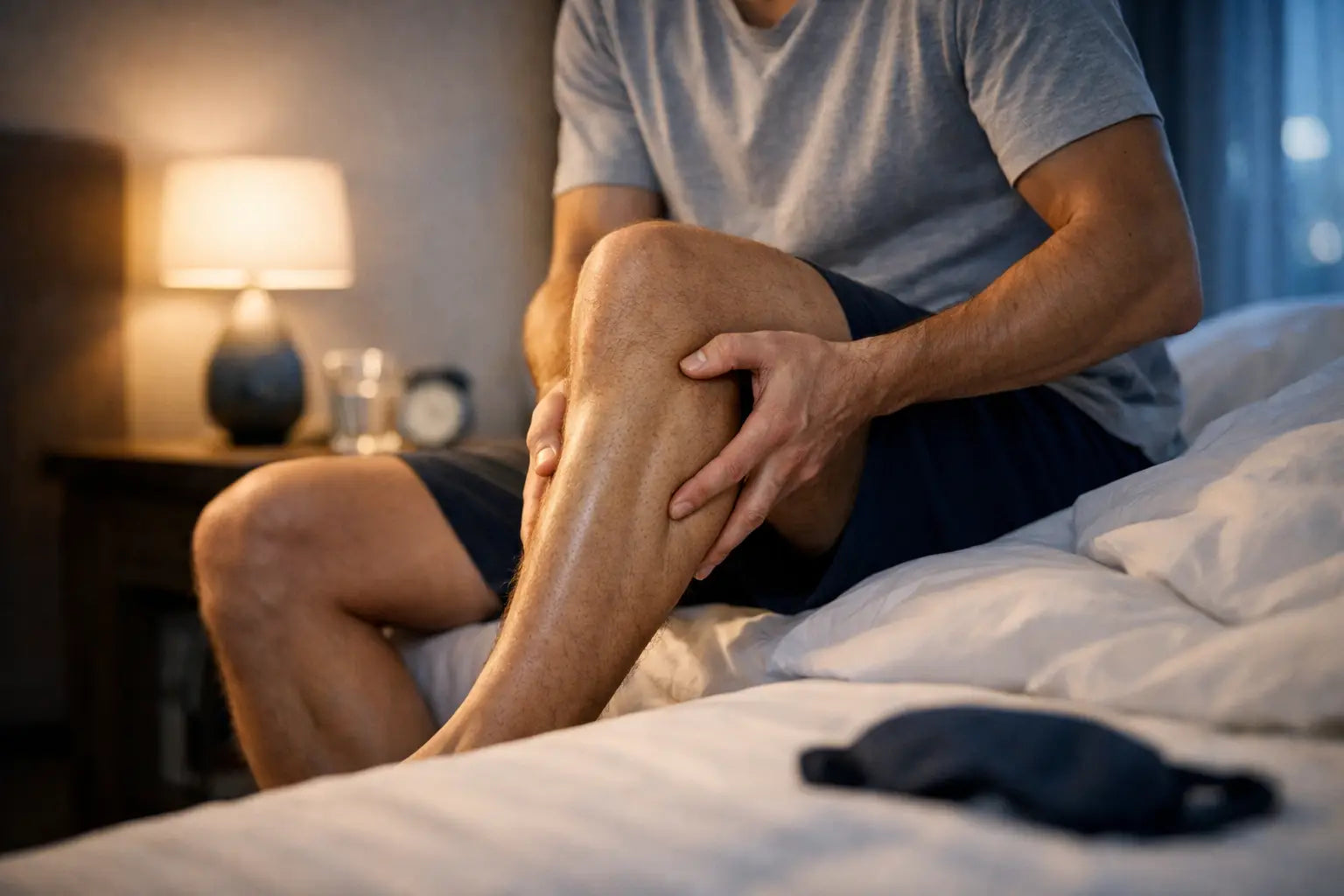
A calf cramp at 2 a.m. does not just hurt. It snaps you awake, locks your foot in place, and can leave the muscle sore enough to make you dread going back to sleep. If you are searching for how to stop leg cramps at night, start with a simple goal: relax the cramped muscle safely, then identify what may be making your nerves and muscles more likely to misfire after dark.
Night leg cramps are common, especially as we get older, during periods of heavy training, pregnancy, or after long days on your feet. They are usually not dangerous, but “common” does not mean you have to accept interrupted sleep. Fast action and a smarter prevention routine can help you take back the night.
How to Stop Leg Cramps at Night in the Moment
When a cramp hits, resist the urge to forcefully massage or aggressively stretch through sharp pain. The muscle is contracting involuntarily. Your job is to send it a clear signal to lengthen and calm down.
Straighten the leg and pull the toes upward
For the classic calf cramp, sit up or stand if you feel steady. Straighten the affected leg and gently pull your toes toward your shin. Keep the heel down if you are standing. Hold the stretch for 20 to 30 seconds, release briefly, then repeat until the muscle lets go.
If the cramp is in the front of the thigh, bend the knee and carefully bring the heel toward your buttock while holding onto something stable. For a hamstring cramp, straighten the leg and hinge forward slightly with a long spine. Slow, controlled stretching works better than bouncing.
Get moving once the spasm releases
A few careful steps around the room can help restore normal muscle movement. Put weight on the leg only when you feel stable. If the cramp has fully released but leaves a tight, tender feeling, gentle walking is often more useful than staying frozen in bed.
Use warmth for tightness, cold for lingering soreness
A warm shower, heating pad, or warm towel can relax a muscle that remains tense after a cramp. If the area feels sore or irritated the next day, a cold pack wrapped in a cloth may feel better. There is no single right choice here - use the option that brings relief without irritating your skin.
Do not chase a cramp with random supplements
It is tempting to reach for electrolyte packets, magnesium, pickle juice, or whatever is closest in the cabinet. Hydration and nutrition matter for overall health, especially after sweating, but nighttime cramps are not always a simple electrolyte problem. Research increasingly points to altered nerve-to-muscle signaling as a major driver of many exercise-associated cramps. That means pounding water or supplements after every cramp may not solve the reason it keeps happening.
For fast, portable support, CrampsAWAY Sport/PRO is designed to work upon contact with the tongue, supporting Neuromuscular Efficiency (NME™) to address the nerve signals involved in muscle cramping. It is a food-grade, hormone-free option for people who want a cramp-response tool without relying on slow-acting traditional remedies.
Why Leg Cramps Show Up After Dark
Most night cramps happen in the calf, foot, or thigh. They can last seconds or several painful minutes, followed by residual soreness. Sometimes there is a clear trigger. Other times, it is a combination of factors rather than one obvious mistake.
Muscle fatigue is a frequent culprit. A hard workout, a long shift standing, hill walking, or an unfamiliar activity can leave the neuromuscular system more excitable later that night. Athletes often notice this after racing, training in heat, or increasing mileage too quickly. The body may be hydrated and still cramp because fatigue changes how nerves communicate with muscle.
Long periods of sitting or sleeping with toes pointed can also shorten the calf muscle and make a spasm more likely. Pregnancy, aging, and certain medical conditions can raise the odds as well. Some medications, including certain diuretics, asthma medicines, cholesterol-lowering drugs, and blood pressure drugs, may contribute in some people. Never stop a prescribed medication on your own, but do bring recurring cramps to the clinician who manages it.
Build a Nighttime Routine That Reduces Cramps
Prevention is not about perfection. It is about removing the most likely triggers and giving tired muscles a better chance to recover.
Start with your daytime movement. If you sit for hours, break up long stretches of inactivity with short walks and ankle movements. If you train, build intensity gradually and take recovery seriously after hard sessions. The best cramp-prevention plan for a marathoner may look very different from the right plan for someone whose cramps began after a long day at work.
Before bed, give calves, feet, hamstrings, and quads a few minutes of gentle attention. A slow calf stretch against the wall, easy ankle circles, and a short walk around the house can be enough. Do not turn your evening routine into a painful flexibility test. The goal is relaxed range of motion, not forcing your body farther than it wants to go.
Hydrate consistently throughout the day rather than trying to make up for it with a large glass of water at bedtime. If you sweat heavily, exercise in heat, or have been ill with vomiting or diarrhea, restoring fluids and electrolytes can be particularly relevant. But more is not always better. Excessive fluid intake can be unsafe for some people, particularly those with heart, kidney, or liver conditions. Follow the guidance you have been given for your health needs.
Your sleep position can matter, too. If you wake with calves cramped and your feet pointed downward, try loosening tucked-in sheets and blankets that push the toes into that position. Some people benefit from sleeping with their feet in a more neutral position. A pillow placement change may help, but it depends on your preferred sleep posture and whether it leaves you comfortable enough to stay asleep.
When Recurring Cramps Need a Medical Check-In
Occasional leg cramps are usually manageable at home. Repeated cramps deserve a closer look, especially if they are new, severe, or disrupting sleep several nights each week. A clinician can review medications, activity changes, circulation, nerve health, and whether blood work is appropriate.
Seek prompt medical care if leg pain comes with swelling, redness, warmth, skin color changes, weakness, numbness, or pain that does not act like a typical brief cramp. Get urgent help for chest pain, shortness of breath, or a suddenly swollen leg. Those symptoms may signal something more serious than a nighttime muscle spasm.
It is also worth speaking up if cramps are making you avoid walking, exercise, travel, or sleep. You should not have to organize your life around the fear of your calf seizing in the middle of the night.
Make Your Plan Before the Next Cramp
Keep the response simple: stretch the muscle into a lengthened position, move carefully once it releases, and use warmth or cold based on what feels right afterward. Then look at patterns. Did cramps follow a hard training day, hours of inactivity, a new medication, poor recovery, or a change in sleep position?
Track those clues for a week or two instead of guessing. Small adjustments can make a meaningful difference, and a reliable fast-relief option can help you stay calm when a cramp does break through. The goal is not merely to survive the next wake-up call. It is to protect your recovery, your confidence, and the uninterrupted sleep your body needs to perform tomorrow.

Share:
How to Manage Period Pain at Work Without Pausing
Why Do Athletes Get Muscle Cramps During Exercise?