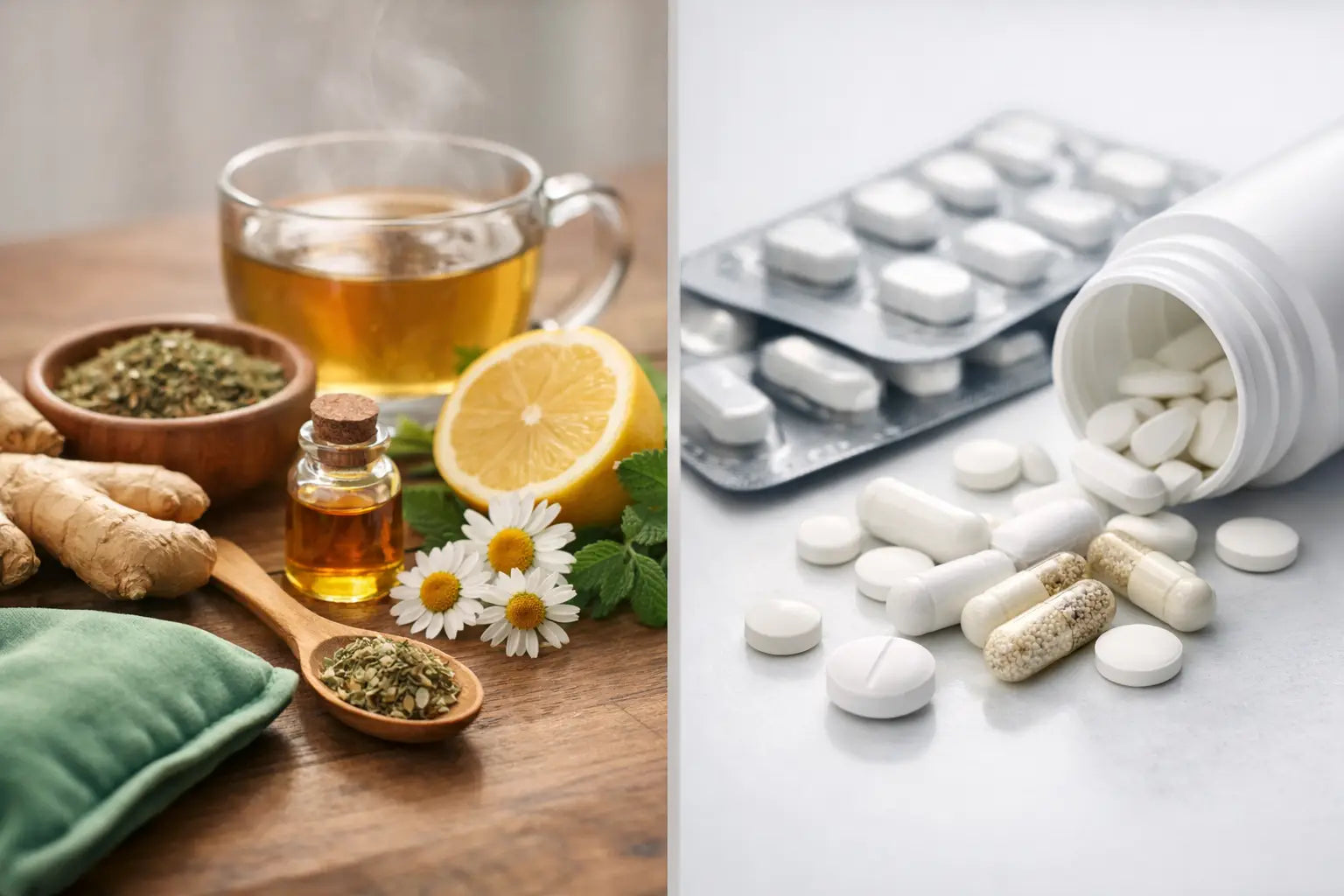
A cramp does not wait for a convenient moment. It can hit halfway through a work presentation, at mile 18, during a hard-earned night of sleep, or on the first day of your period when your calendar is already full. In the debate over cramp remedies versus painkillers, the real question is not which option is most familiar. It is which one helps you get control back quickly, with trade-offs you are willing to accept.
Painkillers have a role, especially when pain is significant. But many people are tired of treating every cramp with another pill, then managing drowsiness, stomach irritation, brain fog, or the worry of taking too much. Cramp-specific approaches aim at a different target: the nerve-to-muscle signals involved in the cramp itself.
Cramp Remedies Versus Painkillers: The Core Difference
Painkillers generally work by reducing how strongly the body experiences pain or by lowering inflammation. Common over-the-counter options may be useful for menstrual pain, muscle soreness, headaches, and other discomfort. They can be a reasonable choice when used as directed, but they do not necessarily stop the muscle contraction causing the cramp in the moment.
Cramp remedies are a broader category. They can include stretching, heat, massage, hydration, electrolyte drinks, magnesium, rest, and oral formulas designed for rapid cramp response. Their usefulness depends heavily on the cause and type of cramp. Some support recovery or prevention over time. Others are built for the moment a muscle seizes and you need to move again.
That distinction matters. A runner with a calf locked in a painful contraction has a different need than someone with lingering post-workout soreness. A student with menstrual cramps may want dependable relief without missing class or feeling dulled for the afternoon. A person waking with recurring night cramps may need an option that does not turn the next morning into a groggy one.
Where Painkillers Can Fall Short
Painkillers can help reduce pain, but they are not consequence-free. Nonsteroidal anti-inflammatory drugs, often called NSAIDs, may irritate the stomach and can be unsafe for some people with kidney disease, ulcers, bleeding risks, certain heart conditions, or medication interactions. Acetaminophen has different risks, including liver damage when taken above recommended amounts or combined with alcohol.
For menstrual cramps, anti-inflammatory medication may work best when taken early, sometimes before pain peaks. That requires planning and may not suit someone who wants a more immediate, on-the-go option. For exercise-induced cramps, painkillers may also be a poor fit during a competition because pain relief does not automatically restore muscle control or performance.
There is another practical issue: masking pain can make it harder to read what your body is telling you. That does not mean pain relief is wrong. It means the right response should match the problem. A cramp is often a signal that requires more than turning down the volume.
Why Traditional Cramp Remedies Do Not Always Act Fast
Stretching a cramped muscle can help release it. Gentle movement, massage, and heat may also be valuable, particularly for menstrual and nighttime cramps. Hydration is essential for overall health, and electrolyte replacement can matter after prolonged sweating or illness.
Still, these approaches are not instant fixes in every scenario. Electrolytes and fluids need time to absorb, and many exercise cramps occur even in athletes who have hydrated responsibly. Research increasingly points to altered neuromuscular control and fatigue as major contributors to exercise-associated muscle cramping, rather than a simple lack of water or salt.
Magnesium is another popular answer, but it is not a universal cramp stopper. It may help people with a confirmed deficiency or specific clinical needs, yet it does not reliably provide rapid relief for every kind of cramp. Taking it after a cramp begins is unlikely to be the answer when you need relief in seconds.
Traditional remedies are still worth having in your toolkit. The mistake is expecting a slow, preventive strategy to perform like an immediate response tool.
A Faster Target: Neuromuscular Signaling
Cramps happen when muscle activity and the nervous system's signaling fall out of balance. The muscle keeps contracting when it should release. This is why the best cramp strategy is not always the one that simply dulls pain.
CrampsAWAY uses a patented, food-grade oral formula designed to activate on contact with the tongue. Its approach, Neuromuscular Efficiency (NME™), is designed to support the nerve signals behind cramping so the body can release the muscle response rather than merely mask the discomfort. The formula is hormone-free, portable, and intended to work rapidly when a cramp threatens your day, sleep, or performance.
For athletes, that difference can be decisive. A cramp in the final minutes is not a minor inconvenience. It can change your stride, compromise your form, and end a race, shift, match, or training session early. A fast, cramp-focused response helps protect the output you trained for.
For menstrual cramp sufferers, speed is just as personal. Relief is not only about lowering a pain score. It is about being able to sit through a lecture, drive comfortably, finish a meeting, train without hesitation, and keep plans you did not want to cancel.
Choosing the Right Response for Your Type of Cramp
The smartest choice depends on what is happening, how often it happens, and your health history. For a one-off cramp after an unusually hard workout, gentle stretching, recovery nutrition, and a rapid cramp formula may be enough. For recurring night cramps, reviewing medications, hydration habits, training load, and underlying health factors can reveal useful clues.
Menstrual cramps deserve the same thoughtful approach. Heat, movement, sleep, and stress management may reduce the overall burden across a cycle. Some people benefit from painkillers, while others prefer to limit medication use or need options that fit around school, work, athletics, or sensitive stomachs. A non-hormonal, cramp-specific solution can give them another way to respond without committing to a daily medication routine.
Painkillers may still make sense when pain is severe, inflammation is part of the problem, or a clinician has recommended a specific treatment plan. Follow the package directions, avoid doubling up on medications with similar ingredients, and speak with a healthcare professional if you are pregnant, managing a chronic condition, or taking other prescriptions.
Seek medical care promptly for cramps that are sudden and severe, occur with swelling, redness, weakness, fever, heavy or unusual bleeding, chest pain, or shortness of breath. Repeated cramps that disrupt sleep, training, or daily life also deserve a real conversation with a clinician. Fast relief is powerful, but knowing why cramps keep happening is protective.
Build a Cramp Plan That Keeps You Moving
Do not wait until a cramp steals your momentum to decide what you will do. Keep a rapid-response option where cramps tend to find you: in your gym bag, desk, travel kit, or bedside drawer. Use sensible prevention habits, including progressive training, recovery, regular meals, and hydration matched to your activity and environment.
Then choose your tools with clear eyes. Painkillers can reduce pain, but may bring side effects and may not address the contraction itself. Slow remedies can support the bigger picture, but cannot always meet an urgent moment. A cramp-specific response built around NME™ gives you a third path: act fast, stay clear-headed, and keep your day, your sleep, or your finish line from being decided by a cramp.

Share:
What a Menstrual Cramp Supplement Should Do
How to Prevent Running Cramps Before They Start