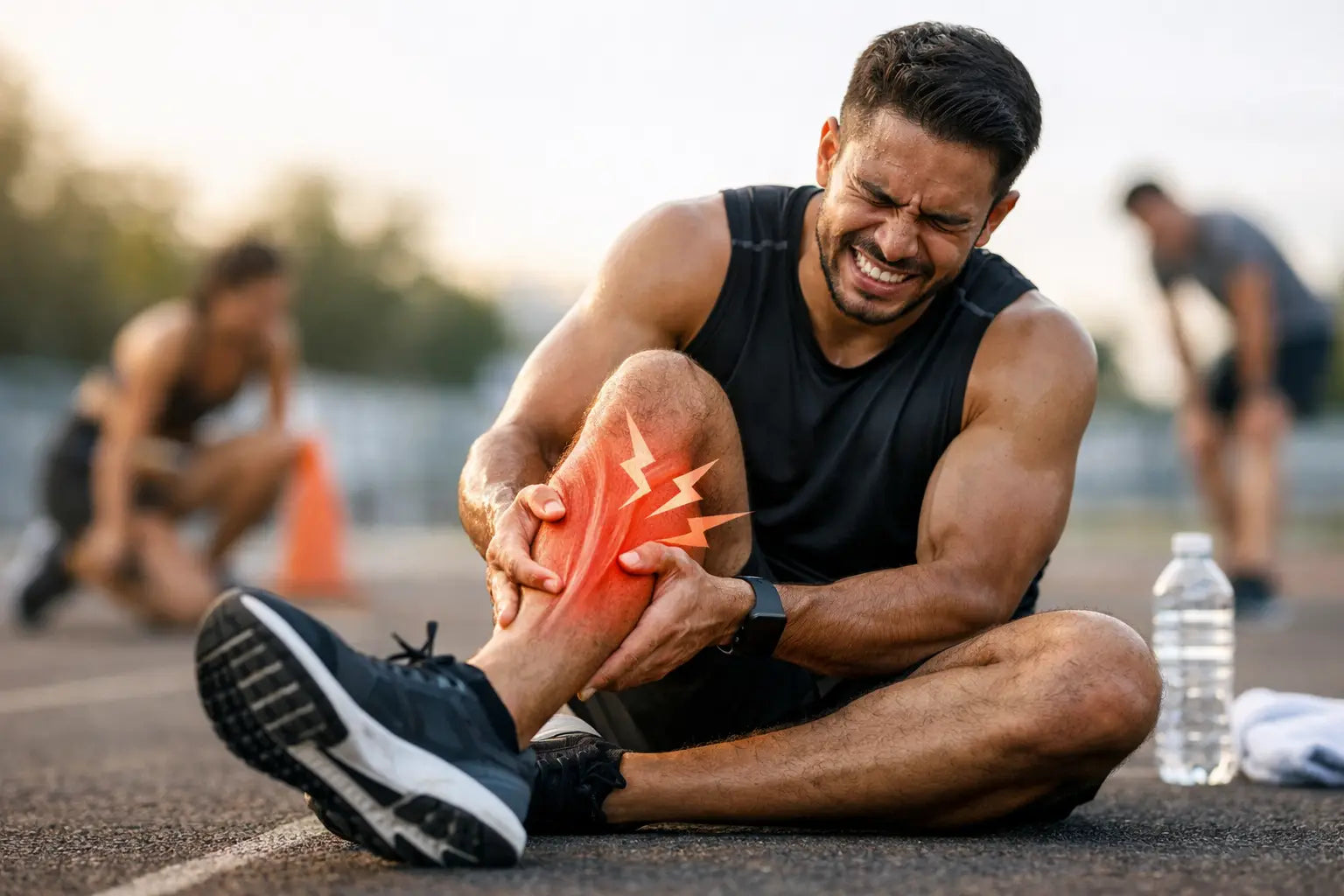
A calf locks up at mile 22. A hamstring grabs during the final sprint. A swimmer’s foot turns into a knot halfway through a race. Why do athletes get muscle cramps when the stakes are highest? Usually, it is not because they suddenly ran out of water or electrolytes. Exercise-associated muscle cramps are often a sign that the working muscle and the nervous system controlling it have reached their limit.
That distinction matters. When you understand what is driving the cramp, you can make smarter choices before training, during competition, and in recovery. You do not have to accept cramping as the price of pushing hard.
Why Do Athletes Get Muscle Cramps?
A muscle cramp is a sudden, painful, involuntary contraction that will not release when you want it to. During sport, the most common trigger is neuromuscular fatigue: the communication between the nerve and the muscle becomes less controlled as the muscle is stressed.
Think of your nervous system as the command center for every stride, pedal stroke, jump, and swing. It tells a muscle when to contract and when to relax. As fatigue builds, the signals that encourage contraction can become more excitable while the signals that help the muscle relax become less effective. The result can be a muscle that fires hard and stays there.
That is why cramps often hit late in an event, on hills, in hot races, after repeated explosive efforts, or when you push beyond your current conditioning. The calf that cramps is not necessarily thirsty. It may be overloaded, underprepared for the demand, or working in a position it has not practiced enough.
Fatigue is the usual starting point
A cramp-prone athlete is often asking one muscle group to do more than it can currently tolerate. A runner who adds speed work too fast may cramp in the calves. A cyclist who attacks climbs without enough climbing-specific training may cramp in the quads. A tennis player may cramp in the forearm after serving harder and longer than usual.
This is not a lack of toughness. It is a mismatch between the task and the muscle’s conditioning. Fatigue can come from high intensity, long duration, accumulated training stress, poor recovery, or a race-day effort that exceeds what you rehearsed.
Muscle length also plays a role. Cramps are more likely when a muscle is repeatedly contracting in a shortened position. That is one reason calves, hamstrings, feet, and quadriceps are frequent targets. Your form changes as you tire, and a small shift in mechanics can put even more demand on an already stressed muscle.
Heat and hydration can add stress - but they are not the whole story
Heat, heavy sweating, and dehydration can make exercise feel harder. They can raise cardiovascular strain and speed up fatigue, creating conditions where cramps are more likely. If you begin a long event dehydrated, ignore fluids in extreme heat, or lose a large amount of sweat, performance can suffer.
But hydration alone does not explain every cramp. Plenty of well-hydrated athletes cramp, while plenty of athletes with imperfect hydration do not. The same is true for electrolytes. Sodium matters for fluid balance and can be especially relevant for long events, hot environments, and athletes with high sweat sodium losses. Yet taking electrolytes after a cramp starts may not solve a nerve-muscle issue fast enough to change the moment.
The smarter approach is not to dismiss hydration or chase it as the only answer. Build a fluid and fueling plan for your event, then address the training, pacing, and neuromuscular factors that often sit underneath exercise cramping.
Pacing mistakes can bring on a cramp fast
Many athletes cramp after a surge they did not prepare for. Maybe you start a half marathon at a pace you can only hold for 5K. Maybe you race the first quarter too aggressively because adrenaline feels like fitness. Maybe you join a fast break late in a game after your legs are already cooked.
A cramp can be your body’s loudest warning that the output is no longer sustainable. That does not mean you should never race aggressively. It means your race strategy should match the work you have trained to do. Specific preparation gives your nervous system and muscles a chance to adapt to race pace, terrain, duration, and intensity before the finish line is on the line.
Previous cramping raises the odds
If you have cramped in the same calf three races in a row, pay attention. A history of cramps is one of the clearest clues that something in your preparation needs to change. It could be strength, mobility, workload, technique, recovery, or an old injury that has altered how you move.
Do not just stretch the spot and hope for a different result. Review the pattern. When did the cramp start? What was the intensity? Was it hot? Were you racing, climbing, sprinting, or changing direction? Did it occur only after poor sleep, hard training blocks, or long travel days? Details turn a random disaster into a problem you can solve.
What to Do When a Muscle Cramp Hits
First, reduce the demand on the cramping muscle. Stop or slow down if you can do so safely. Gentle, sustained stretching can help a cramped muscle release, especially when you move it in the opposite direction of the contraction. For a calf cramp, that often means bringing the toes toward the shin. Avoid bouncing or forcing the stretch.
Then give the muscle a moment. Light massage and easy movement may help once the intense contraction begins to ease. If you are in a race, trying to blast through a full cramp can turn a short interruption into a strain or a major loss of form.
Fluids and electrolytes may be appropriate if you have been sweating heavily, racing in the heat, or going long. Just do not assume they will immediately stop the cramp. The cramp may be driven primarily by fatigued nerve-muscle signaling, even if heat and fluid loss helped push you toward that threshold.
For athletes who need a portable response designed around the nerve signals involved in cramping, CrampsAWAY Sport/PRO is a food-grade oral formula formulated to support Neuromuscular Efficiency (NME™) upon contact with the tongue. It is NSF Certified for Sport, a meaningful consideration for competitive athletes who need confidence that a product is screened for banned substances.
Train So Your Muscles Are Ready for the Demand
The best cramp plan starts weeks before race day. Train specifically for the circumstances that have triggered cramps in the past. If hills bring on calf cramps, include progressive hill work. If the final miles of long runs are the problem, build controlled fatigue sessions rather than only running easy miles. If repeated sprints trigger hamstring cramps, develop sprint exposure gradually and improve strength through the range of motion you use in sport.
Strength work deserves a place here. Calf raises, hamstring work, single-leg training, and sport-specific resistance exercises can increase local muscular endurance. The right plan depends on your sport and injury history, so more is not automatically better. A hard leg session added to an already overloaded week can create more fatigue, not more resilience.
Practice your fueling and hydration plan in training too. Long races are not the place to discover that your stomach cannot handle a drink, gel, or salt strategy. Learn your sweat rate, account for weather, and adjust based on duration and intensity. You are building confidence as much as physiology.
When a Cramp Needs More Than a Race-Day Fix
Most exercise cramps are temporary and tied to exertion. But cramps that occur regularly at rest, wake you at night, come with swelling or weakness, or persist after activity deserve medical attention. The same is true if you take medications that may affect fluid balance or muscle function, have a medical condition, or experience unexplained cramping that is getting worse.
A sports medicine clinician, physician, or qualified athletic trainer can help identify whether an injury, medication, nerve issue, or other health concern is contributing. Protecting performance also means knowing when not to self-diagnose.
Your next cramp does not have to steal the finish, the win, or the confidence you worked for. Prepare for the demands of your sport, respect the signals your body gives you, and bring a plan that helps you stay composed when the pressure rises.

Share:
How to Stop Leg Cramps at Night and Sleep Better
How to Beat Muscle Cramps During a Marathon Race