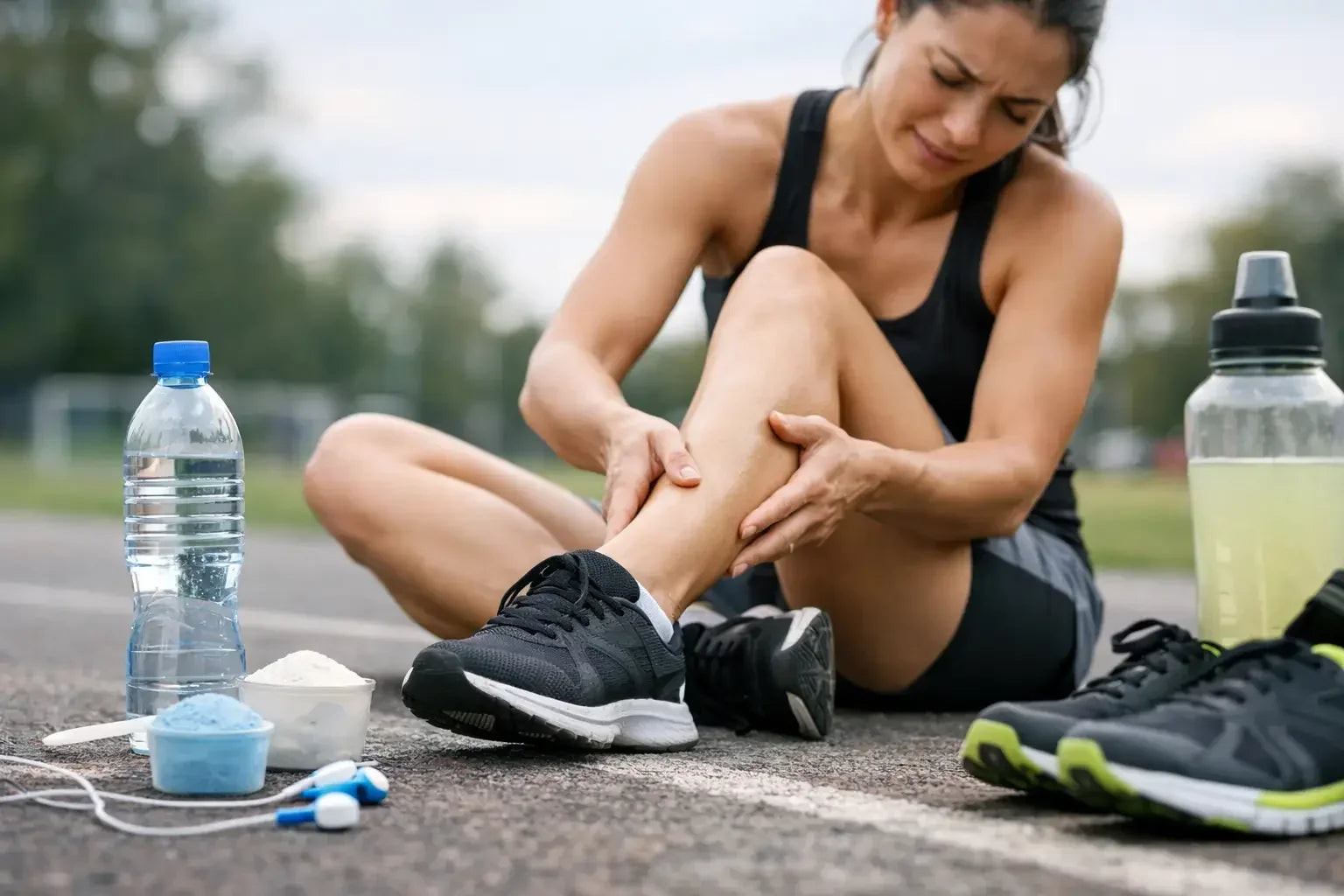
A calf locks up at mile 18. Your foot seizes in the pool. A hamstring starts to knot when the game is on the line. The usual move is to grab an electrolyte drink, but do electrolytes prevent cramps in the moment? Not reliably. Hydration and electrolytes support your body, especially during long, hot, high-sweat efforts. But they are not a guaranteed force field against a cramp.
That distinction matters when you need to keep moving. If you treat every cramp like an electrolyte emergency, you may spend precious minutes sipping, waiting, and hoping while the muscle stays locked. A better plan starts with understanding what is actually happening.
Do Electrolytes Prevent Cramps During Exercise?
Electrolytes are minerals that help manage fluid balance and support normal nerve and muscle function. Sodium, potassium, magnesium, calcium, and chloride all play useful roles in the body. When you sweat heavily, particularly in heat or over a long event, replacing fluids and sodium can be a smart part of performance preparation.
But exercise-associated muscle cramps do not always happen because an athlete is short on electrolytes. Plenty of well-hydrated athletes cramp. Plenty of athletes cramp in cool weather, early in an event, or in one overworked muscle while the rest of the body feels fine. Those patterns point to something more than simple dehydration.
Current thinking increasingly recognizes the role of neuromuscular fatigue. Put simply, when a muscle is pushed beyond what it is prepared to handle, the communication between nerves and muscle can become overexcited. The muscle may contract hard and struggle to release. That can happen after a hard hill, an unexpected sprint, repeated explosive efforts, a new training load, or fatigue late in competition.
Electrolytes can be useful support. They cannot always correct an active nerve-to-muscle signaling problem fast enough to stop a cramp already in progress.
Why a Sports Drink Can Help - But Still Not Stop the Cramp
There is a reason athletes carry electrolyte mixes, salt capsules, and sports drinks. Fluid and sodium losses are real. If you are training for hours, competing in intense heat, or you know you are a salty sweater, a hydration strategy can help you maintain energy, fluid balance, and performance.
The trade-off is timing. Drinking electrolytes works through digestion and absorption. That is helpful before activity and across a long session, but it is not designed as an instant response when your calf is balled up or your quad is refusing to let go.
It also depends on the athlete. A runner who starts a race under-fueled and under-hydrated may benefit significantly from a better fluid-and-sodium plan. A basketball player who cramps after repeated all-out bursts may need more recovery, progressive conditioning, and a faster way to address neuromuscular fatigue. Both athletes can use electrolytes. Neither should assume electrolytes are the whole answer.
The cramp pattern gives you clues
Think about when and where cramps occur. Cramps that show up after a major jump in mileage, during the final minutes of a game, or in a muscle you have heavily loaded often suggest fatigue and conditioning are major drivers. Cramps paired with excessive sweating, prolonged heat exposure, thirst, or poor fluid intake make hydration more relevant.
Night cramps can be different, too. They may be connected to muscle fatigue, prolonged positions, aging, certain medications, or medical conditions. A sports drink before bed is not a universal fix. Frequent, severe, new, or unexplained cramps deserve a conversation with a clinician, especially if they come with swelling, weakness, numbness, or changes in skin color.
Build a Prevention Plan That Matches the Cause
The strongest approach is not choosing between electrolytes and muscle readiness. It is covering both.
Start by preparing for the demands of your sport. Build volume, speed, heat exposure, and strength progressively instead of making sudden leaps. If your calves cramp during hills, train hills and calf endurance before race day. If your hamstrings cramp during late-game sprints, include fatigue-resistant sprint work and recovery in your program. Specific preparation gives your muscles a better chance of handling the exact demand that usually triggers the problem.
Then make hydration practical. Begin workouts reasonably hydrated rather than trying to catch up once you are already depleted. For long or hot sessions, bring fluids and use sodium in an amount that fits your sweat rate, duration, weather, and personal tolerance. Avoid turning hydration into a contest. Overdrinking plain water can create its own problems, and loading up on electrolyte products without a reason is not automatically better.
Fuel matters as well. Going deep into a workout under-fueled can accelerate fatigue, which may raise cramp risk. Adequate carbohydrates during longer endurance efforts, enough overall calories, and consistent recovery can make a meaningful difference.
Sleep and recovery belong in this conversation. Muscles that are repeatedly asked to perform at maximum output without enough recovery are more likely to protest. The solution is not always another drink mix. Sometimes it is a rest day, a more gradual build, or a training plan that respects the load you are carrying.
What to Do When a Cramp Hits
When a cramp arrives, stop forcing the muscle through it. Ease off the effort, gently lengthen the cramped muscle, and use controlled breathing until it releases. If it is safe to do so, light movement after the spasm eases can help you assess whether you can continue.
At that point, taking in fluid and electrolytes may still be appropriate if you have been sweating heavily or are in a long event. Just do not expect a drink to act like a switch. Your immediate need is to calm the cramping muscle and the nerve signals driving it.
That is why CrampsAWAY Sport/PRO is built around NME™ rather than relying on hydration alone. Its food-grade oral formula is designed to work upon contact with the tongue, supporting the neuromuscular response behind exercise-related cramping. For athletes who cannot afford to wait for a beverage to digest, that difference is the point: address the cramp fast, then get back to the work, the race, or the finish line.
Electrolytes Are Support, Not a Guarantee
The most useful answer to “do electrolytes prevent cramps” is: sometimes they can help reduce risk, particularly when sweat losses, heat, and long-duration exertion are part of the picture. But they do not prevent every cramp, and they are not proof that a cramp is caused by a mineral shortage.
Treat electrolytes as one tool in a complete performance plan. Train for the demands ahead. Hydrate with purpose. Fuel adequately. Recover seriously. And carry a fast response for the moment fatigue tries to take control of your muscle.
You do not need to accept cramping as the price of pushing hard. Learn your pattern, prepare for it, and keep your momentum when the pressure rises.

Share:
Sports Hydration Myths That Cost You a Finish
Hormone-Free Versus Hormonal Period Care