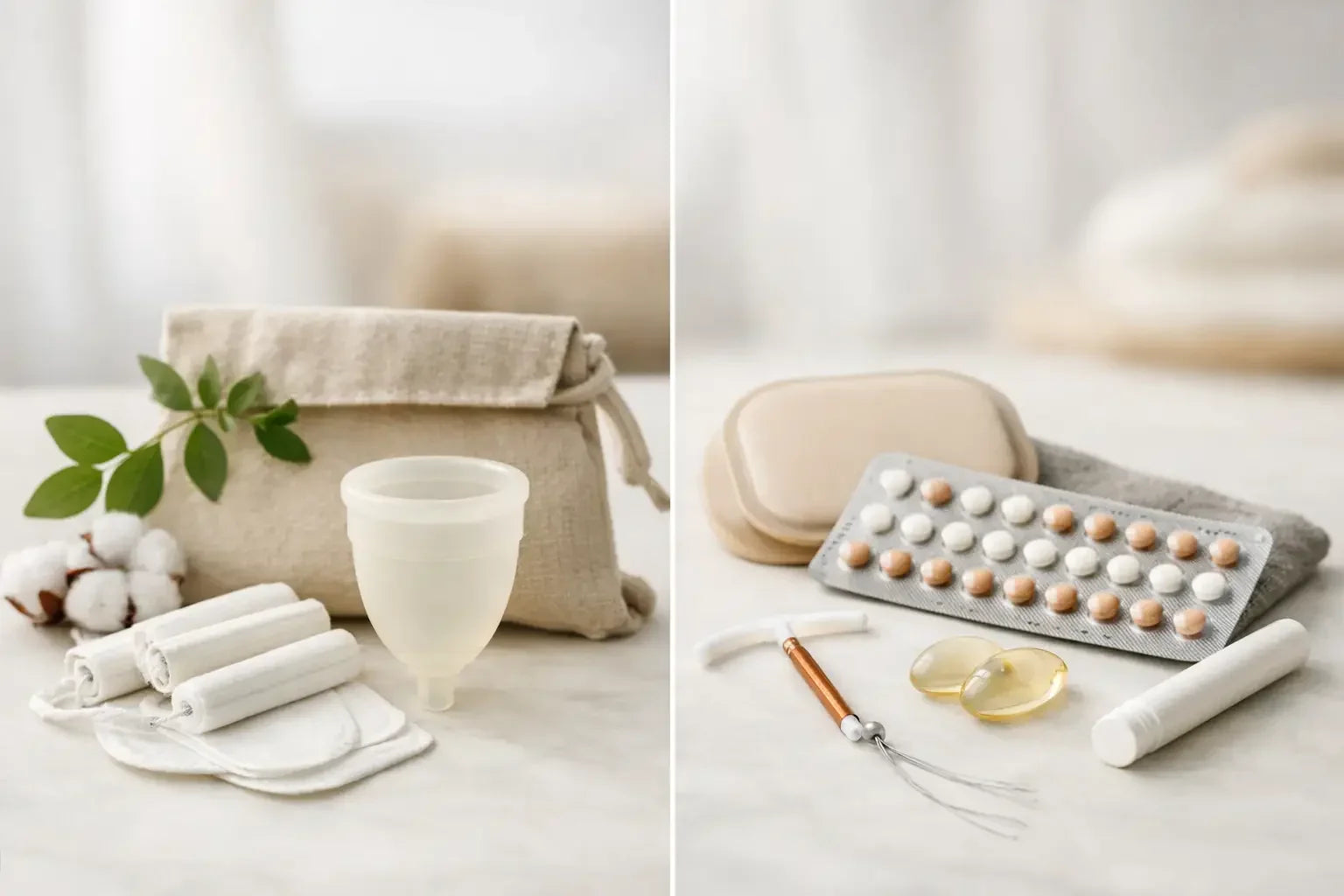
A painful period can turn a normal Tuesday into a canceled workout, a missed class, or hours spent trying to look fine at your desk. When cramps keep interrupting your life, the question is not whether you deserve relief. It is which type of relief supports your body, goals, and priorities. That is where hormone free versus hormonal period care becomes a meaningful choice.
Hormonal options can be effective for some people, especially when period symptoms are tied to conditions that need medical treatment or when pregnancy prevention is also a priority. But hormones are not the only path forward. Hormone-free care gives many people a way to target period-cramp discomfort while keeping their natural cycle intact and avoiding hormone-related trade-offs.
Hormone-Free Versus Hormonal Period Care: The Core Difference
Hormonal period care changes hormonal signals in the body. Birth control pills, patches, rings, shots, implants, and hormonal IUDs may prevent ovulation, thin the uterine lining, or alter the timing and intensity of bleeding. For some people, that can mean lighter periods, fewer periods, or less cramping over time.
Hormone-free period care does not alter reproductive hormones or act as contraception. Instead, it focuses on managing symptoms in the moment or supporting the factors that can influence how a period feels. Depending on the approach, that may include heat, movement, sleep, nutrition, stress management, anti-inflammatory medication, or non-hormonal cramp-relief products.
Neither category is automatically “better.” The right choice depends on what you need from your care. Do you want pregnancy prevention? Are your periods unusually heavy or irregular? Do you want an option that works quickly when cramps hit without changing your cycle? Those answers matter more than a one-size-fits-all recommendation.
When Hormonal Care May Make Sense
Hormonal contraception is often discussed as period care because it can reduce symptoms for many users. A clinician may recommend it for severe cramps, heavy bleeding, suspected endometriosis, polycystic ovary syndrome, acne, or cycle irregularity. It can also be practical for someone who wants both symptom management and reliable contraception in one plan.
The benefit is often consistency. Rather than treating each month as a separate event, hormonal methods may change the cycle pattern itself. Some people find that transformative, particularly if their bleeding is heavy, their pain is persistent, or their symptoms make work, school, and training difficult.
Still, hormones are not a casual decision for everyone. Side effects vary by method and by person. Some users experience nausea, breast tenderness, headaches, mood changes, spotting, reduced libido, or changes in appetite. Others have no meaningful side effects at all. Certain health histories can also affect which hormonal methods are appropriate, which is why a conversation with a qualified clinician matters.
Hormonal care can be a strong tool. It just should be a choice you make because it fits your needs, not because you were told cramps are something you simply have to medicate or suppress.
Why Some People Choose Hormone-Free Period Care
A hormone-free plan is especially appealing when you want symptom relief without altering your menstrual cycle. You may be sensitive to hormonal side effects, unable to use certain hormonal methods, trying to understand your natural cycle, preparing for pregnancy, or simply uninterested in taking hormones for pain relief.
There is also a timing issue. Hormonal methods often require time to settle into the body, and the path to the right prescription can involve trial and error. That does not help much when a cramp hits during a presentation, on the drive to practice, or halfway through a long shift.
Hormone-free options can give you more immediate control. A heating pad may relax tense muscles. Light movement can help some people feel less stiff and more mobile. Over-the-counter pain relievers may reduce inflammation and pain when used as directed. Hydration, regular meals, and adequate sleep are useful foundations, even though they are not instant fixes for every cramp.
For people who want fast, portable support, CrampsAWAY For Her is a food-grade, hormone-free option designed to work on the nerve signals involved in cramping through Neuromuscular Efficiency (NME™). The goal is simple: help you respond when cramps threaten your momentum, without relying on synthetic hormones or waiting around for your day to improve.
Relief Now Versus Cycle Control Over Time
The biggest practical difference in hormone-free versus hormonal period care is often the goal.
Hormonal methods are generally about cycle management over time. They may change when you bleed, how much you bleed, and how intensely you feel period symptoms. That can be valuable if your symptoms are chronic, severe, or connected to a diagnosed condition.
Hormone-free approaches are generally about preserving your cycle while managing what you feel. They can fit people who do not need contraception, do not want hormone exposure, or need a reliable backup for breakthrough discomfort. They can also complement a broader care plan. Being on hormonal birth control does not mean you will never need immediate cramp support.
Think of it this way: cycle control and symptom control are related, but they are not identical. One may reduce the chance of cramps over time. The other helps you handle the cramp that is already trying to take over your afternoon.
The Trade-Offs Worth Considering
The best period-care decision is informed, personal, and realistic. Hormonal care may offer major benefits, but it may also come with side effects, prescriptions, follow-up visits, or an adjustment period. Hormone-free care avoids changing reproductive hormones, but not every non-hormonal option addresses the cause of unusually severe symptoms.
If your cramps are getting worse, interfere with daily activities, cause vomiting or fainting, occur outside your period, or do not improve with your usual strategies, it is time to talk with a healthcare professional. Severe period pain is not something you should be expected to power through without answers. Conditions such as endometriosis, fibroids, adenomyosis, or pelvic inflammatory disease may need evaluation and targeted care.
It also helps to separate marketing promises from your own experience. Track your symptoms for two or three cycles: when pain starts, where it occurs, how long it lasts, how heavy your flow is, and what actually helps. That record can make appointments more productive and help you identify whether your cramps follow a predictable pattern.
Build a Period Plan That Protects Your Momentum
Your period-care plan does not have to be all or nothing. You can work with a clinician on long-term cycle concerns and still keep hormone-free tools available for the moments when pain shows up fast. You can choose hormonal contraception for pregnancy prevention and use non-hormonal strategies for comfort. You can decide hormones are not right for you and create a focused plan around immediate relief, recovery, and routine.
The most useful plan is the one you can actually use on your hardest days. Keep what helps accessible at school, at work, in your gym bag, and while traveling. Treat rest as a performance tool when your body asks for it, but do not surrender every plan to cramps by default.
You deserve period care that respects your choices and your schedule. Whether you choose hormonal support, hormone-free relief, or a combination guided by your healthcare provider, the standard should be the same: less disruption, more confidence, and a body that does not get to call the shots on your day.

Share:
Do Electrolytes Prevent Cramps? The Real Answer
Athletic Cramp Guide for Finishing Strong