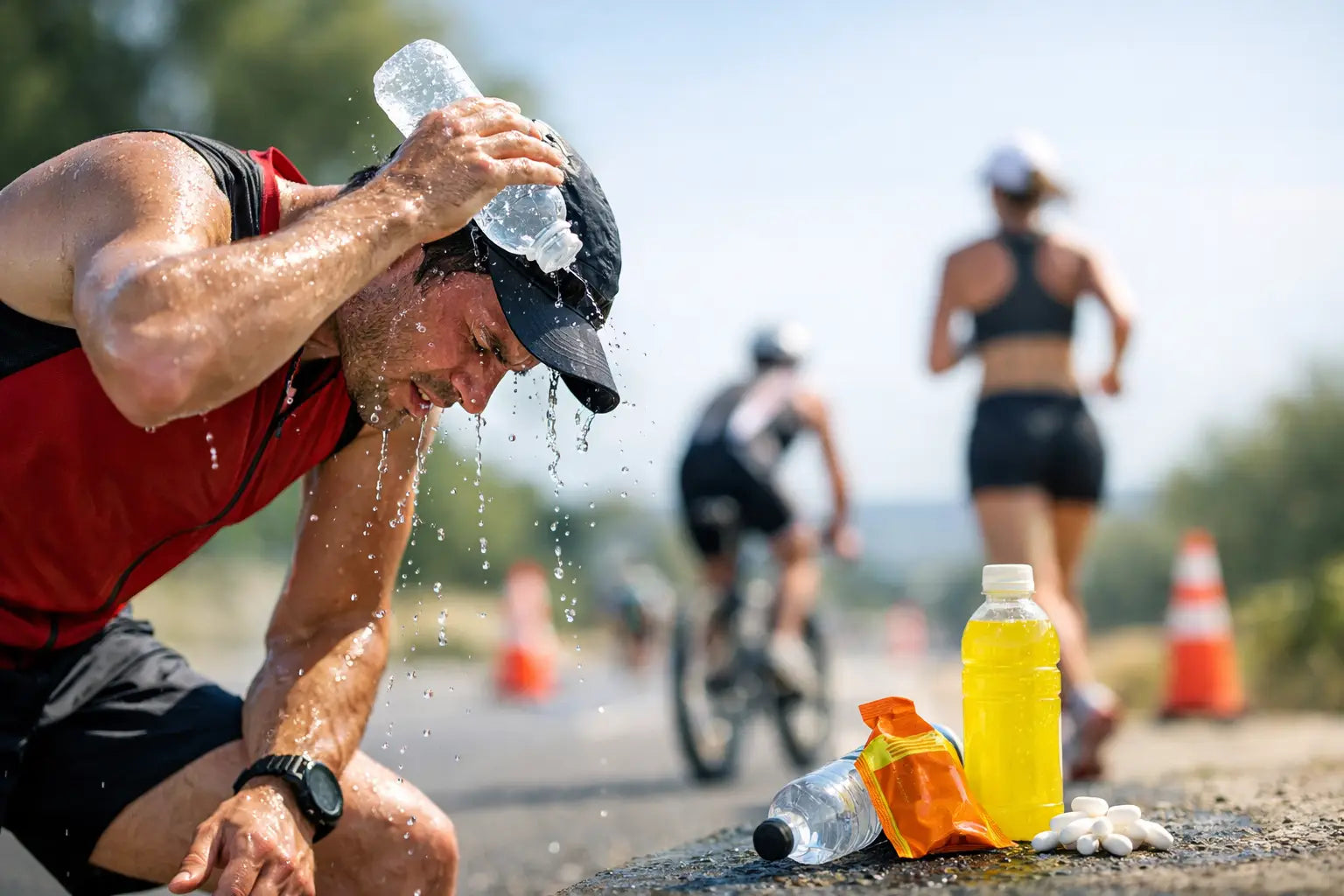
You can do everything the old playbook says: carry a giant bottle, add electrolytes to every drink, and sip until your stomach sloshes. Then, in the final miles or final quarter, your calf locks up anyway. That is the problem with sports hydration myths. They make athletes chase more fluid when the real performance answer may be pacing, fueling, heat preparation, or the nerve signals driving a cramp.
Hydration matters. No serious athlete should treat it as optional. But drinking more is not automatically smarter, and electrolytes are not a universal off switch for muscle cramps. When your goal is to finish strong, you need a plan built around your body, your event, and the conditions - not panic drinking.
Sports Hydration Myths That Keep Athletes Guessing
Myth 1: Every cramp means you are dehydrated
A cramp can happen when you are dehydrated, especially in prolonged heat or after heavy sweat loss. But that does not mean dehydration is the only cause, or even the main cause, every time a muscle seizes.
Exercise-associated muscle cramps are often tied to neuromuscular fatigue. Put simply, a hard-working muscle and the nerves controlling it can become overstimulated when intensity, fatigue, terrain, or training load push past what your body is prepared to handle. That is why a runner can cramp on a cool day with a full hydration pack, or a basketball player can cramp late in a game despite drinking throughout the day.
Treating every cramp as a water problem can cost valuable time. Take hydration seriously, but also look at the bigger picture: Did you start too fast? Are you undertrained for the distance? Did hills, heat, or repeated sprints demand more than your conditioning could support?
Myth 2: If you cramp, take more electrolytes immediately
Sodium, potassium, magnesium, and other electrolytes help support normal fluid balance and muscle function. They are useful tools, particularly for athletes who sweat heavily, train for long periods, or compete in high heat. The mistake is expecting a drink or capsule to instantly correct a cramp that has already started.
Electrolyte replacement works through digestion and absorption. It can support your broader hydration strategy, but it is not designed to immediately change the nerve activity behind a sudden, painful contraction. This matters when you are standing on the side of the course, watching a lead disappear.
For a fast cramp response, athletes need an approach that addresses the neuromuscular side of the problem. CrampsAWAY Sport/PRO uses food-grade ingredients and NME™ to help target the nerve signals involved in cramping upon contact with the tongue. It is designed for athletes who need to respond in seconds, not wait for a traditional hydration product to work its way through the body.
Myth 3: Clear urine means you are perfectly hydrated
Urine color can offer a rough clue, but it is not a performance dashboard. A clear bathroom trip after you have been aggressively drinking may simply mean you drank a lot of water. It does not prove that your hydration status, sodium needs, fueling plan, and race readiness are all dialed in.
Aim for practical consistency instead. Start key sessions and events normally hydrated, drink based on thirst and conditions, and learn your personal sweat patterns. If you regularly finish long sessions much lighter, deeply fatigued, dizzy, or with a pounding headache, your fluid plan may need work. If you are constantly forcing fluid and feeling bloated or nauseated, more may not be better.
The best data comes from your own training. Weigh yourself before and after selected sessions, noting how much you drank, the weather, duration, and how you felt. Over time, that can reveal whether you tend to lose substantial fluid or whether you are simply following a generic rule that does not fit you.
Myth 4: You should drink as much as possible before and during exercise
Overdrinking is a real risk. Taking in far more fluid than you lose can dilute sodium in the blood, a dangerous condition called hyponatremia. Symptoms can include headache, nausea, confusion, swelling, and worsening fatigue. Severe symptoms require urgent medical care.
This is not a reason to fear water. It is a reason to stop treating every event like a drinking contest. Thirst, expected sweat loss, weather, duration, and access to fluids all matter. A short morning workout does not need the same plan as a hot marathon, a long tournament day, or an ultra-endurance event.
During long or hot sessions, a drink containing sodium and carbohydrates may make sense. During shorter, lower-intensity training, water may be enough. The winning strategy is appropriate intake, not maximum intake.
Myth 5: Sports drinks solve every performance problem
Sports drinks can be convenient. They can provide fluid, carbohydrates, and sodium in one bottle, which is valuable when you are exercising long enough or hard enough to need all three. But no bottle can replace fitness, pacing, sleep, heat acclimation, or adequate pre-event fuel.
If you fade late in training, ask whether the issue is actually energy. Low carbohydrate availability can make effort feel harder and can accelerate fatigue. If you cramp at the same point in every event, look at your pacing strategy and the demands of the course. If cramps appear after a sudden jump in training volume, your muscles may be telling you that adaptation has not caught up with ambition.
Hydration supports performance. It does not erase the consequences of an unsustainable plan.
Build a Hydration Plan That Matches the Event
Start with the basics: arrive hydrated, eat enough before demanding sessions, and avoid trying a brand-new drink, gel, or supplement on competition day. Practice your fluid and fueling plan under conditions that resemble the real event, including heat when possible.
For longer training and competition, consider your individual sweat rate, the availability of aid stations, your tolerance for carbohydrates, and how salty your sweat tends to be. Athletes with visible salt residue on clothing or a history of heavy sweat loss may benefit from more deliberate sodium planning. That is not a universal prescription. It is a reason to test, observe, and personalize.
Also separate prevention from rescue. A well-practiced hydration plan can reduce avoidable stress on the body. It cannot guarantee you will never cramp, because cramping can still emerge from fatigue and altered nerve-muscle control. Carrying a fast, portable cramp option gives you another layer of readiness when the moment gets hard.
What to Do When a Cramp Hits Mid-Event
First, back off the intensity if you can. Continuing to sprint through a tightening muscle can turn a warning into a full stop. Gently lengthen the affected muscle, control your breathing, and assess whether heat, pacing, or fatigue is driving the problem.
Do not automatically chug a large volume of water. Take fluid according to your plan and thirst, especially if you have been sweating heavily for a long time. If symptoms are severe, unusual, or paired with confusion, fainting, chest pain, significant swelling, or persistent vomiting, stop and seek medical attention.
Then address the cramp itself with a solution designed for speed. The goal is not just to make it to the next aid station. It is to regain control, protect your confidence, and get back to your effort.
Your hydration plan should help you perform, not leave you guessing at mile 18 or late in the fourth quarter. Train it. Test it. Respect the heat. And when your muscles start sending the wrong signal, be ready to answer fast and keep moving toward the finish.

Share:
Why Do Periods Cause Cramps? The Real Reason
Do Electrolytes Prevent Cramps? The Real Answer