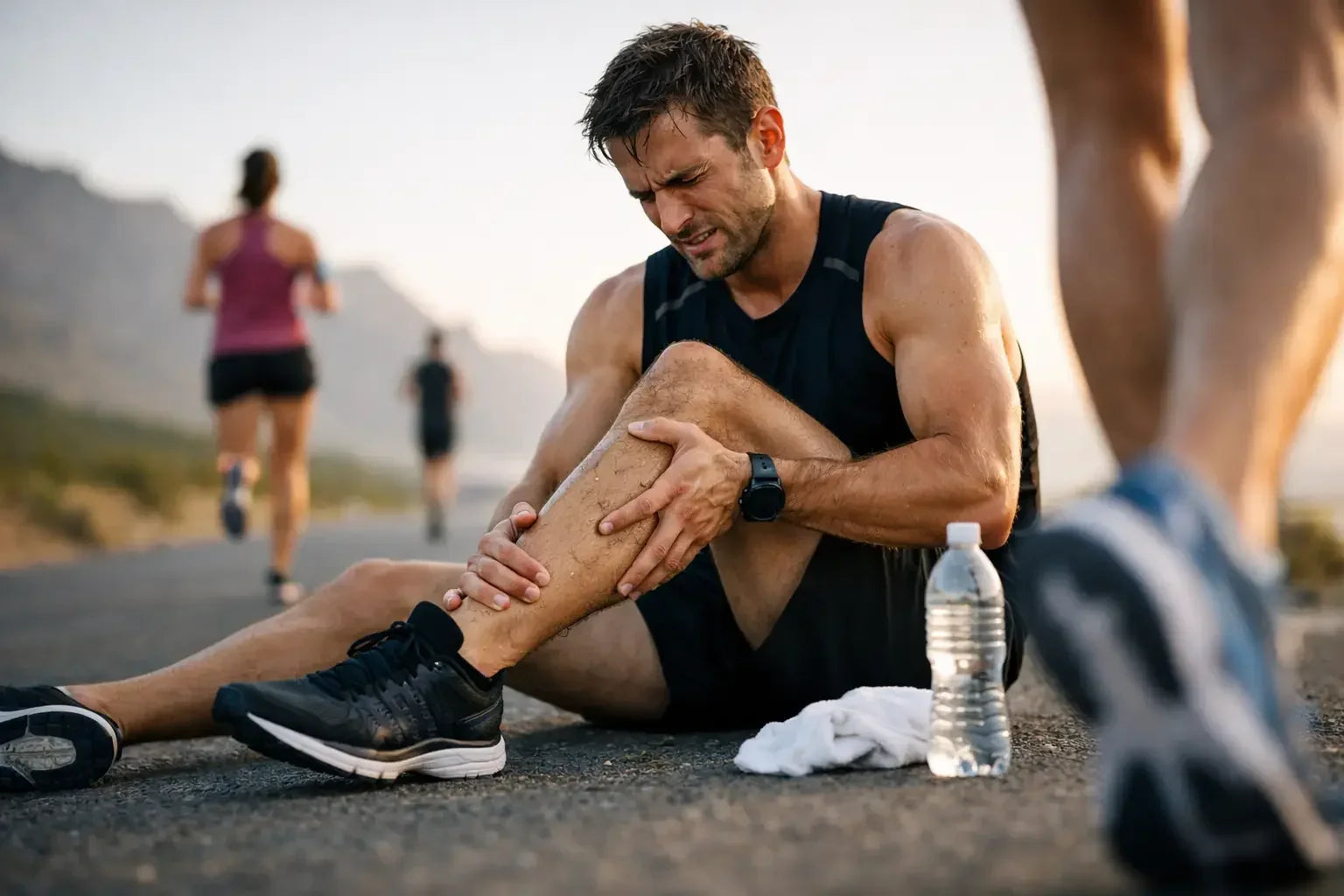
A calf locks up halfway through a race. Your hamstring knots during the final drive. Your foot cramps when the game is on the line. In those moments, an athletic cramp is not a minor inconvenience. It can take away your pace, your power, and the work you put in to get there.
This athletic cramp guide is built for athletes who are done treating cramps as inevitable. Learn what can trigger exercise-related cramping, how to respond without panicking, and how to create a smarter plan for training, competition, heat, and recovery.
Why Athletic Cramps Can Stop a Strong Performance
A muscle cramp is a sudden, painful, involuntary contraction. It often hits the calves, hamstrings, quads, feet, or hands, and it can make the affected muscle feel hard and impossible to control. The pain may fade quickly, but the disruption can linger. A cramp can change your stride, limit your range of motion, and leave you hesitant to push when you need to.
For years, athletes were told that cramps always meant they had not had enough water or electrolytes. Hydration and sodium matter, especially during long events in heat or when sweat losses are high. But they do not explain every cramp, and drinking more in the middle of a severe cramp is rarely an instant solution.
Many exercise-associated cramps appear connected to neuromuscular fatigue. Put simply, a hard-working muscle and its nerve signals can lose efficient control when intensity, duration, heat, conditioning, or muscle overload outruns your preparation. That is why a well-hydrated athlete can still cramp late in a race, during a hard hill, or after a burst of effort they have not trained for.
Your personal cramp pattern may also reflect pacing, sleep, prior muscle damage, changes in footwear, inadequate recovery, or a sudden jump in volume. There is no single explanation that fits every athlete. The winning approach is to identify the pressure points in your own performance.
What to Do When a Cramp Hits Mid-Event
First, do not try to power blindly through a full cramp. Forcing a locked muscle to keep producing force can worsen the strain and turn one rough minute into a longer setback. Back off just enough to regain control.
Gently lengthen the cramped muscle. If your calf cramps, straighten the knee if possible and pull the toes toward the shin. If your hamstring cramps, carefully straighten the leg and hinge forward only as far as you can without sharp pain. Slow, controlled movement is the goal. Aggressive bouncing or forcing a stretch can make a fatigued muscle more angry.
Then breathe, reset, and assess. A few deep breaths can help you resist the panic that causes athletes to tense everything else. Once the contraction eases, walk or move lightly before deciding whether you can return to intensity. If the muscle remains weak, painful, or unstable, protect the rest of your event rather than gambling on a bigger injury.
A fast-acting cramp strategy belongs in your race belt, gym bag, or sideline kit. CrampsAWAY Sport/PRO is a portable, food-grade oral formula designed to support NME™ through contact with the tongue, targeting the nerve signals involved in cramping rather than relying on slow digestion. Its NSF Certified for Sport status also gives competitive athletes and teams added confidence that it is free from banned substances.
Athletic Cramp Guide: Build Prevention Into Training
The best prevention plan is not a random pile of powders. It is training that prepares your body for the exact demands that usually trigger your cramps.
Train the intensity that causes trouble
If your calves cramp during the final miles of a race, easy mileage alone may not be enough. Your plan likely needs race-pace work, hills, and fatigue-resistance sessions that progressively teach those muscles to handle the workload. If your quads seize after repeated sprints, build exposure to repeated high-output efforts instead of expecting one weekly max session to cover it.
Progress is the key word. Sudden spikes in distance, heat exposure, lifting volume, or training intensity are common cramp invitations. Increase demands gradually, especially after time off, injury, travel, or a change in sport.
Practice pacing, not just fitness
Even fit athletes cramp when they race beyond their current conditioning. The start of an event can feel easy because adrenaline is high and fatigue has not arrived yet. An opening pace that is only slightly too aggressive can create a major problem later.
Practice your target pace in training. Learn what your breathing, cadence, and muscle tension feel like before you cross the line from controlled effort into unsustainable effort. A smart first half often protects a powerful finish.
Respect recovery signals
Poor sleep, accumulated fatigue, heavy soreness, and back-to-back hard sessions can reduce your margin for error. Recovery is not soft. It is performance preparation.
Use rest days, easier sessions, and sleep as tools to restore the capacity that keeps movement efficient under pressure. Warm up before explosive work, but do not confuse a long static stretching routine with a complete cramp-prevention program. Dynamic preparation, progressive loading, and sport-specific conditioning generally matter more.
Hydration and Electrolytes Still Have a Role
The fact that not every cramp is caused by dehydration does not mean hydration is irrelevant. A long summer tournament, an endurance event, or a double-session training day can create meaningful fluid and sodium losses. Starting depleted makes hard work harder.
Build your hydration plan around the length of the event, weather, your sweat rate, and what your stomach tolerates. Drink consistently during the day rather than attempting to rescue poor preparation with an oversized bottle right before the start. For prolonged, high-sweat efforts, use a practical sodium plan that you have tested in training.
Avoid the opposite mistake: overdrinking plain water. More is not always better, particularly during long events. Your plan should be individualized, realistic, and based on conditions, not copied from the athlete next to you.
Fuel matters too. Low carbohydrate availability can accelerate fatigue and make late-event form harder to hold. For endurance athletes, a practiced fueling strategy may help preserve the muscle control needed to keep moving efficiently when the race gets difficult.
Make a Cramp Plan Before Competition Day
Athletes perform better under stress when decisions are already made. Before your next event, identify the muscle that usually cramps, the point in the workout or race when it happens, and the conditions surrounding it. Is it heat? A late surge? Hills? A hard stop-and-start sport? The day after heavy lifting?
Keep a short record for several weeks. Note training load, sleep, weather, pre-event meals, fluid intake, pacing, and exactly when symptoms start. Patterns often become clear faster than expected.
Your competition plan should include a warm-up that matches the event, pacing guardrails, familiar hydration and fuel, and a rapid-response option carried where you can reach it. Do not wait until the biggest event of the season to test any new routine. Train your plan until it feels automatic.
When Cramping Needs Medical Attention
Most exercise cramps ease with rest and a thoughtful adjustment to training. But frequent, severe, or unexplained cramps deserve a conversation with a qualified healthcare professional. Get prompt medical care for cramping with marked swelling, muscle weakness, dark urine, fever, chest pain, fainting, or symptoms that do not improve after stopping activity.
Also speak with a clinician if cramps began after a medication change, occur regularly at rest, wake you frequently at night, or are becoming more intense. Athletic ambition should never mean ignoring warning signs.
Your next cramp does not have to decide the outcome. Prepare for the demands of your sport, respond quickly when the muscle starts to revolt, and give yourself every chance to keep moving when others have to stop.

Share:
Hormone-Free Versus Hormonal Period Care
Night Cramp Relief Options That Work Fast