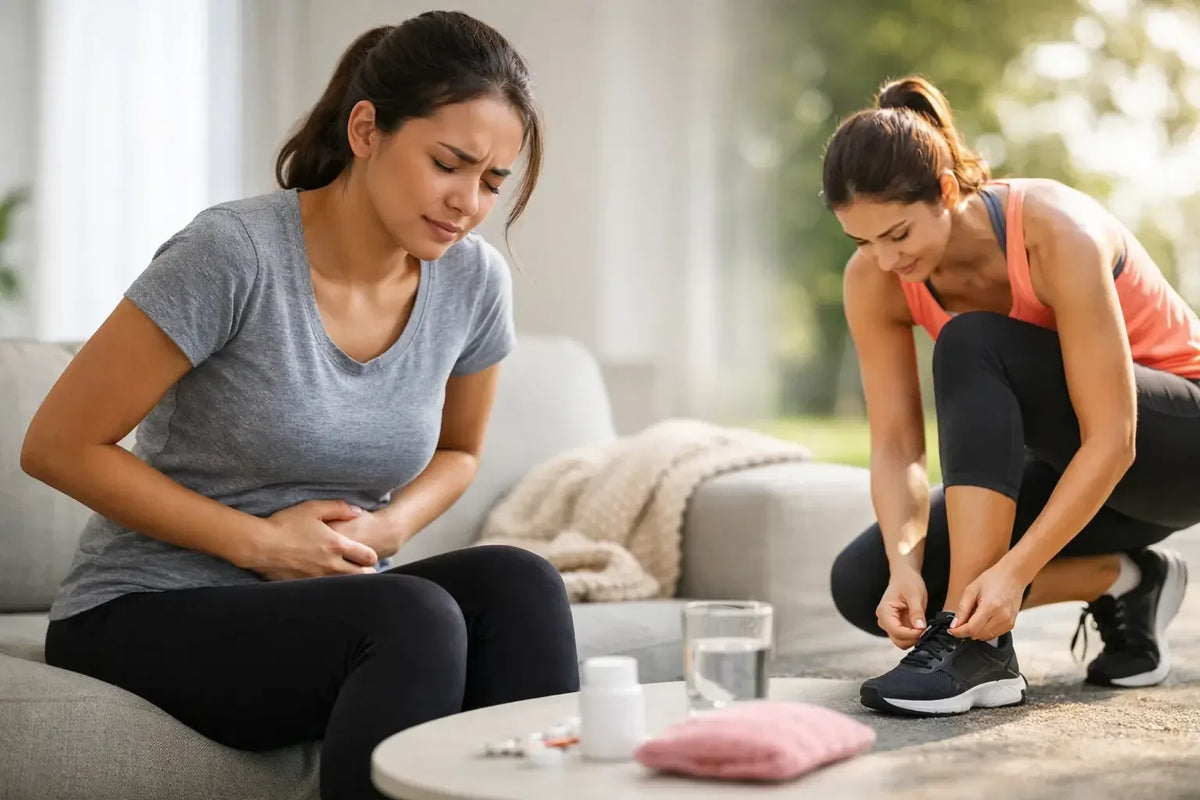
A cramp should not get to decide whether you make the presentation, sit through class, finish a workout, or cancel plans you were looking forward to. Learning how to ease menstrual discomfort is less about finding one perfect fix and more about building a fast, reliable response for your body - before pain takes over your day.
Menstrual discomfort can include lower-abdominal cramping, low-back pain, fatigue, nausea, headaches, bloating, and that heavy, drained feeling that makes normal tasks feel harder than they should. Your period may be a monthly reality. Losing your momentum to it does not have to be.
Why menstrual cramps can feel so intense
During your period, the uterus contracts to shed its lining. Prostaglandins, hormone-like chemicals involved in inflammation and muscle contraction, help drive that process. Higher prostaglandin activity is often associated with stronger contractions and more painful cramps.
That is why period pain can be more than a minor inconvenience. A powerful cramp can affect your sleep, concentration, appetite, mood, and ability to move comfortably. It can also create a frustrating cycle: pain makes you tense up, tension makes movement less appealing, and staying still for too long can leave your body feeling even more stiff and uncomfortable.
The goal is not to power through misery for a gold star. The goal is to reduce the disruption early and give your body the support it needs to settle down.
How to ease menstrual discomfort when it starts
Use heat strategically
Heat is one of the most accessible options for period cramping. A heating pad, heat wrap, warm bath, or hot water bottle placed over the lower abdomen or lower back can help relax tight muscles and create a calming signal when cramps are escalating.
Try heat for 15 to 20 minutes at a time, with a barrier between your skin and the heat source. If you use an electric heating pad, do not sleep with it on. Heat may not erase severe pain by itself, but it can make a meaningful difference when paired with rest, gentle movement, or other relief methods.
Keep movement small and realistic
A hard workout is not the assignment when you are doubled over. But gentle movement can help some people feel less stiff and more in control. Think a slow walk, easy mobility work, light stretching, or a few minutes of relaxed yoga positions that feel good to you.
Start with five minutes. If movement increases sharp pain, dizziness, or heavy bleeding, stop and rest. The point is circulation and comfort, not pushing through a performance goal when your body is asking for a lower gear.
Eat and hydrate for steady energy
Dehydration, skipped meals, and big blood-sugar swings can make a difficult period feel even worse. Keep water nearby and aim for regular meals or snacks with protein, fiber-rich carbohydrates, and fats that keep you satisfied. A bowl of oatmeal with fruit and nut butter, eggs with toast, or rice and chicken with vegetables can be more useful than trying to run on coffee alone.
There is no universal "period diet," and one food will not solve cramping. Still, paying attention to what leaves you energized versus bloated, nauseated, or jittery can help you prepare for future cycles. If caffeine seems to make you anxious, disrupt sleep, or worsen discomfort, consider reducing it during your toughest days rather than quitting it automatically.
Consider over-the-counter pain relief carefully
For many people, nonsteroidal anti-inflammatory drugs, or NSAIDs, are a standard option for menstrual cramps because they can reduce prostaglandin-related pain. They tend to work best when taken early, ideally as cramping begins or when you know your period is about to start.
They are not right for everyone. NSAIDs can irritate the stomach and may be unsafe for people with certain kidney conditions, ulcers, bleeding disorders, heart disease, medication interactions, or pregnancy concerns. Follow the product label, avoid doubling up on similar medicines, and ask a clinician or pharmacist what is appropriate for you. If pain medicine leaves you foggy, nauseated, or unable to function at your best, that trade-off matters.
Choose portable, hormone-free cramp support
When you need relief at your desk, in a locker room, on a plane, or halfway through a packed day, convenience counts. CrampsAWAY For Her is a food-grade, hormone-free oral formula designed to support relief upon contact with the tongue through Neuromuscular Efficiency (NME™), which targets the nerve signals involved in cramping rather than simply asking you to wait for a pill to kick in.
For people who want a non-hormonal option without the drowsiness, stomach upset, or brain fog they associate with some conventional approaches, having fast support within reach can change the entire period plan. Keep your preferred tools where real life happens: your work bag, backpack, car, gym bag, or bedside table.
Build a plan before your period arrives
The strongest period-relief strategy is often the one you can use before discomfort peaks. If your cycle is fairly predictable, note when cramps usually begin, how long they last, what symptoms show up, and what actually helps. A simple note in your phone is enough.
Use that pattern to prepare. Stock heat wraps, easy meals, comfortable clothing, hydration, and the relief options you trust. If your first day is usually difficult, protect your schedule where possible. That might mean avoiding a late-night commitment before an early meeting, packing support for a commute, or planning a shorter training session instead of forcing a personal record attempt.
This is not weakness or overplanning. It is performance-minded self-advocacy. You would not show up to a demanding day without charging your phone, checking the weather, or packing what you need. Your period deserves the same practical preparation.
When menstrual discomfort deserves medical attention
Common does not always mean normal for you. Talk with a healthcare professional if cramps regularly force you to miss work, school, training, or social life; if pain gets worse over time; or if your usual relief methods stop helping. Severe menstrual pain can sometimes be associated with conditions such as endometriosis, fibroids, adenomyosis, pelvic inflammatory disease, or other concerns that need individualized care.
Seek urgent medical help for sudden severe pelvic pain, fainting, fever, vomiting that will not stop, unusually heavy bleeding, possible pregnancy, or pain accompanied by symptoms that feel dramatically different from your typical period. Trust a meaningful change in your body. You do not need to prove that your pain is bad enough before asking for answers.
Give yourself permission to expect more
There is no prize for white-knuckling through every cycle. Some months may call for heat and an early night. Others may call for gentle movement, timely medication, or portable support that helps you stay present for the day you planned. It depends on your symptoms, health history, and what your body responds to.
Keep testing a thoughtful combination of tools, track what works, and speak up when it does not. Relief is not indulgent. It is how you protect your energy, your confidence, and your ability to keep moving on your terms.

Share:
Muscle Cramps: Why They Hit and How to Stop Them
Menstrual Cramps Shouldn't Control Your Day