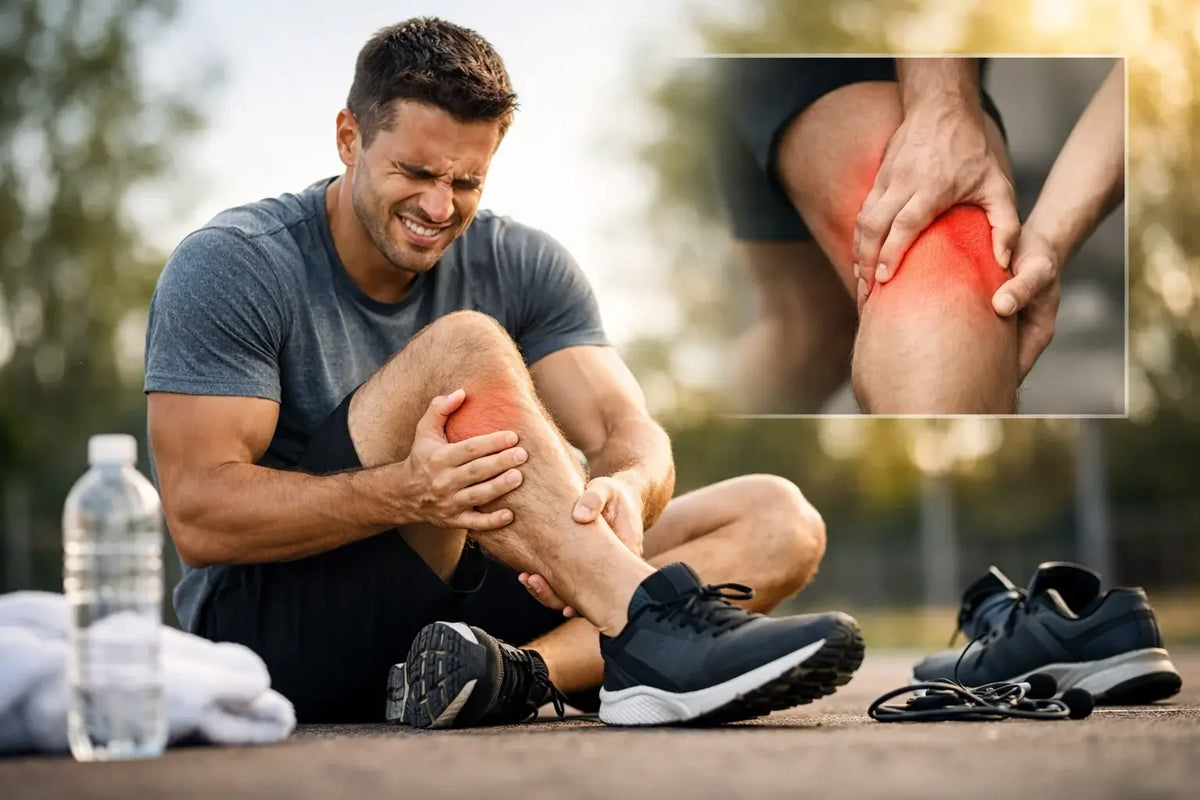
A calf locks up halfway through a race. Your hamstring knots during the final minutes of a game. Or a foot cramp snaps you awake just as your body needs recovery. Muscle cramps do not wait for a convenient moment, and treating every cramp as a hydration problem can leave you stuck on the sideline.
For athletes, active adults, and anyone losing sleep to nighttime cramping, the goal is simple: stop the spasm, get control back, and reduce the chance it steals the next workout, competition, or night of rest.
What muscle cramps actually are
A muscle cramp is a sudden, involuntary, often painful contraction of a muscle. It can last seconds or several minutes, and the muscle may stay tender afterward. Calves, feet, thighs, hamstrings, hands, and abdominal muscles are common targets.
The familiar advice is to drink more water or take electrolytes. Hydration matters, particularly during long sessions in heat, heavy sweating, vomiting, diarrhea, or illness. But it is not the whole story. Plenty of well-hydrated athletes still cramp, while others cramp at night when they have not been exercising at all.
Current thinking points to a neuromuscular issue in many exercise-associated cramps. When fatigue, intensity, unfamiliar movement, or prolonged effort disrupts communication between nerves and muscle fibers, the muscle can become overexcited and contract when it should relax. That is why simply waiting for a sports drink to digest may not be the answer when a cramp is already taking over.
Why muscle cramps hit at the worst time
Cramps are rarely random. Usually, there is a trigger, or several triggers working together. A runner who increases hill work too quickly, a tennis player competing in high heat, and a senior waking with repeated calf cramps may all experience the same sharp symptom for different reasons.
Fatigue and intensity
The harder a muscle works, the more demanding its nerve-muscle coordination becomes. Late-race cramps, fourth-quarter cramps, and spasms during a final set often show up when output is high and fatigue has accumulated. Conditioning can help, but even highly trained athletes can cramp when the pace, terrain, duration, or heat exceeds what their body is prepared to handle.
A sudden change in training
New shoes, a longer run, more sprint work, extra hill repeats, a return after time off, or a hard tournament weekend can all raise cramp risk. The muscle may be strong enough to complete the work but not conditioned for that exact demand. Progression matters because it gives the neuromuscular system time to adapt, not just the muscles themselves.
Heat, sweat, and fluid losses
Heavy sweating can contribute to cramping, especially when fluid and sodium losses are substantial. This is where hydration and electrolyte planning have a real role. Still, it depends on the person, environment, duration, and sweat rate. Drinking excessive plain water without a plan is not a performance strategy, and it does not guarantee cramp prevention.
Nighttime and everyday factors
Night cramps can be more common with age and may be associated with prolonged standing, sitting in one position, pregnancy, some medications, nerve irritation, or certain health conditions. Sometimes there is no clear reason. That uncertainty is frustrating, but frequent nighttime cramps deserve more attention than a quick stretch and a shrug.
What to do when a cramp starts
When a muscle seizes, do not try to power through it. Continuing to sprint, climb, lift, or push off hard can intensify the contraction and increase the chance of a strain.
First, stop or reduce the activity. Gently lengthen the cramped muscle without bouncing. For a calf cramp, straighten the knee if possible and pull the toes toward the shin. For a hamstring cramp, carefully straighten the leg and hinge forward only as comfort allows. Light massage can help, and once the spasm releases, easy walking may restore normal movement.
Avoid aggressive stretching into sharp pain. A cramp is not a challenge to win by forcing range of motion. The target is to tell the muscle it is safe to release, then assess whether you can return to activity without changing your mechanics.
If you are thirsty, overheated, or have been sweating heavily, drink fluids and use an electrolyte plan that matches the session. Just recognize the timing trade-off: hydration supports the bigger picture, while a swallowed drink or supplement is not designed to act on the cramp in the next few seconds.
For rapid support during training, racing, or nighttime episodes, CrampsAWAY Sport/PRO is a portable, food-grade oral formula designed to work upon contact with the tongue. Its NME™ approach is built around the nerve signals behind cramping, helping the body restore muscle relaxation without relying on slow digestion, drowsy medication, or a last-minute electrolyte gamble. PRO is also NSF Certified for Sport, a meaningful safeguard for athletes who are accountable for every ingredient they use.
Build a smarter prevention plan
The strongest cramp plan is not one habit. It is a practical combination of preparation, pacing, and fast action when your body sends a warning.
Start by looking at the pattern. Do cramps happen only at the end of long runs? During hot practices? After increasing mileage? In one specific muscle? Keep brief notes for two or three weeks, including training duration, intensity, weather, sleep, meals, fluids, and where the cramp occurs. Patterns turn vague frustration into useful decisions.
Then train for the event you actually face. If your cramping starts on steep climbs, include gradual hill exposure. If it happens in the last 20 minutes of a match, build late-session work progressively. If calves repeatedly cramp, targeted calf strength, mobility, and recovery may help, but loading must be realistic. Doing too much corrective work too fast can create another fatigue problem.
Hydrate consistently rather than attempting to catch up at the starting line. For long or hot sessions, consider your individual sweat losses and whether sodium replacement makes sense. The best approach is personal, not copied from the teammate who barely sweats or the influencer with a one-size-fits-all routine.
Sleep and recovery count, too. A body running on inadequate rest, hard training, and poor fueling has less margin for error. That does not mean every cramp is your fault or proof you are unprepared. It means recovery belongs in the same performance conversation as intervals, strength work, and race strategy.
When frequent muscle cramps need medical attention
Most isolated cramps settle with rest, gentle stretching, and a better plan for the next session. But recurring or severe cramps should not be ignored, especially if they interrupt sleep, limit training, or appear without a clear trigger.
Talk with a healthcare professional if cramps are frequent, progressively worse, associated with weakness, numbness, swelling, redness, or muscle wasting, or if they begin after a medication change. Seek prompt medical care for severe pain with significant swelling, a hot or discolored limb, chest pain, trouble breathing, or symptoms of heat illness such as confusion, fainting, or persistent vomiting.
Athletes should also be careful not to label every tight or painful muscle as a cramp. A strain, tendon issue, circulation problem, or nerve condition needs a different response. Getting the cause right protects both performance and long-term health.
Cramps demand attention because they take control fast. Meet them with the same intent: prepare for the demands ahead, respond without panic, and keep a fast, trusted option close when the moment matters. Your finish line, your sleep, and your momentum are worth defending.

Share:
How Oral Cramp Relief Works for Faster Relief
How to Ease Menstrual Discomfort and Keep Moving