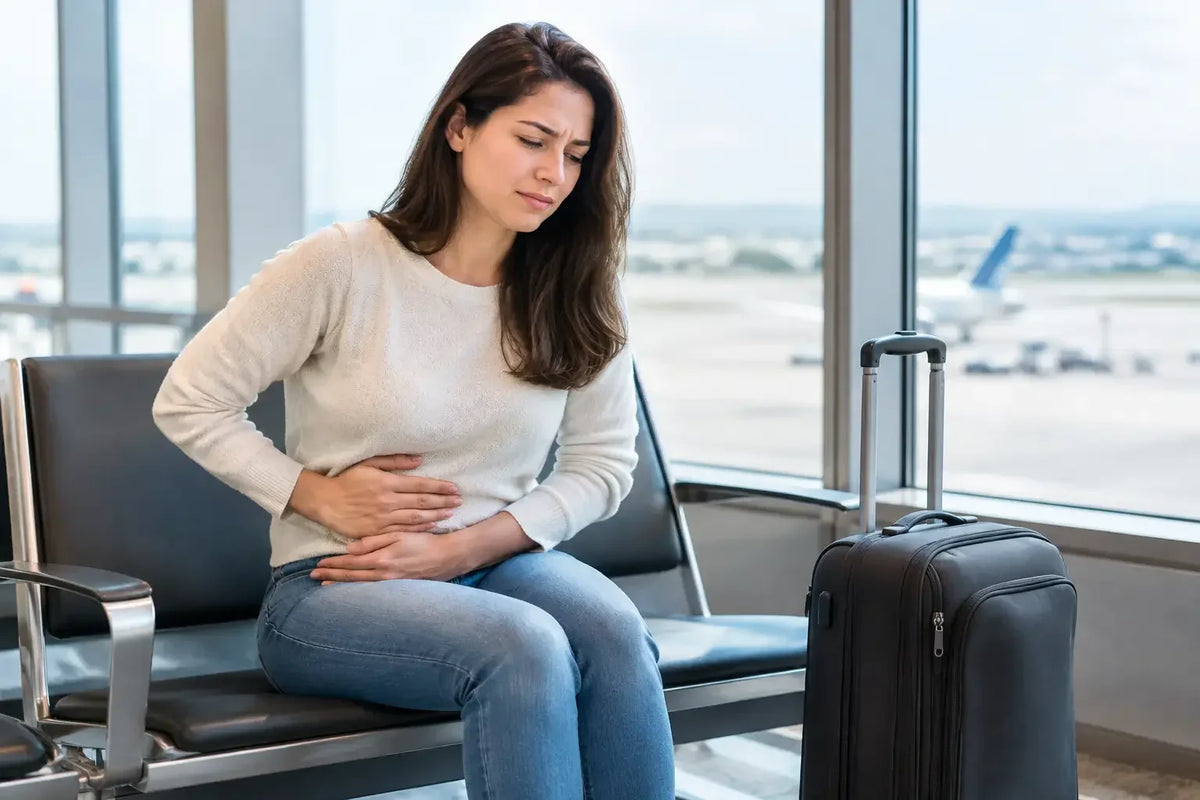
A cramp can turn a two-hour flight, a long drive, or the first mile of a destination race into a problem you cannot ignore. The goal is not to make travel perfectly predictable. It is to know how to manage cramps during travel without surrendering your plans, your performance, or your comfort to the next wave of pain.
Travel changes more than your location. It can disrupt sleep, meals, training routines, bathroom access, movement, and stress levels. Those shifts can make menstrual cramps, exercise-related muscle cramps, and night cramps feel harder to handle. A strong travel plan puts fast relief and practical prevention within reach before the cramp has a chance to take over.
Why Travel Can Make Cramps Hit Harder
Sitting still for hours is a major factor. Long flights, car rides, and train trips can leave muscles stiff and circulation sluggish. Then you stand up, rush through a terminal, climb a hotel staircase, or head straight into a workout, asking tight muscles to perform without much preparation.
For menstrual cramps, travel stress and an altered routine can make an already difficult period feel more disruptive. A delayed meal, poor sleep, dehydration, or the pressure of making a connection may not directly cause cramps, but they can reduce your ability to cope when pain arrives.
Athletes face another version of the problem. Travel days can include cramped seats, unfamiliar food, changes in altitude or temperature, and less-than-ideal recovery. If competition begins soon after arrival, the body may be asked to perform at full intensity before it has fully reset.
Hydration still matters, especially in heat or during endurance activity. But hydration and electrolytes are not always the full answer to a cramp. Muscle cramping can involve the nerve signals controlling muscle contraction. That is why drinking another bottle of water may not stop a cramp already in progress.
Build a Carry-On Plan to Manage Cramps During Travel
Do not bury your cramp essentials in checked luggage. If your suitcase is delayed, your relief plan should not be delayed with it. Keep your key items in a small pouch that stays in your personal bag, car console, or race backpack.
For period travel, that usually means your preferred menstrual products, a spare pair of underwear, a heat option if practical, water, easy snacks, and your chosen fast-acting cramp support. If you use medication, bring enough for the entire trip plus a little extra, and keep it in its original labeled container.
For muscle and night cramps, pack what supports your specific routine: water, familiar snacks, recovery clothing, a massage ball or compact mobility tool, and a cramp solution you can use immediately. The best option is the one you will actually have on hand when your calf tightens in a middle seat or your foot cramps in a hotel bed.
A useful carry-on kit has four jobs: it helps you respond quickly, keeps you comfortable, protects your clothing and sleep, and prevents a minor problem from becoming a day-changing one.
Move Before Your Body Forces the Issue
You do not need a full workout at the airport. You do need regular movement. On a long trip, stand and walk when it is safe to do so. If you are driving, build brief movement stops into the route rather than waiting until your legs feel locked up.
In your seat, gently circle your ankles, flex and point your feet, and tighten then relax your calves and glutes. Keep the range comfortable. The purpose is not aggressive stretching. It is to avoid staying in one position long enough for stiffness to build.
Before a run, competition, hike, or long sightseeing day, give yourself a real warm-up. A few minutes of easy walking, dynamic leg movement, and sport-specific activation can be more useful than jumping from a vehicle directly into hard effort. If you arrived after a red-eye flight or a six-hour drive, adjust expectations. Your body may need a longer ramp-up than usual.
Protect Sleep, Especially on Multi-Day Trips
Night cramps are particularly frustrating away from home because they can turn one bad night into a tired, painful next day. A strange mattress, extra walking, time-zone changes, and dehydration can all make sleep less restorative.
Set yourself up before bed. Take a few minutes to walk around, loosen up after sitting, and avoid going to sleep with your feet or calves tense from a full day of activity. If you know you cramp at night, keep water, a light source, and your chosen cramp support within arm's reach. Nobody wants to hunt through a suitcase at 2 a.m. with a seized calf.
If you are traveling for sport, recovery needs to be part of the itinerary, not an afterthought. Schedule food, fluids, mobility, and sleep with the same seriousness you bring to training. You do not have to be perfect. You do need a plan that works when restaurants are crowded, hotel gyms are limited, and your schedule changes.
Do Not Let Period Pain Dictate the Itinerary
Period pain can make travel feel like a series of calculations: Is there a bathroom nearby? Can I sit down? Will I make it through security, a meeting, a museum tour, or a full day on my feet? Planning ahead gives you more choices.
Choose clothing that does not add pressure to an already uncomfortable abdomen. Keep easy food nearby if you tend to feel worse when you go too long without eating. When possible, allow a few extra minutes between activities so you are not forced to sprint through an airport or walk several blocks while pain is escalating.
It also helps to know your personal pattern. If your cramps tend to start on day one, do not wait until you are in peak pain to think about support. Have what you need ready before boarding, before leaving the hotel, or before starting the day.
This is about autonomy. Your period should not automatically cancel a work trip, a college visit, a vacation, or a weekend you have been looking forward to for months.
Have a Fast Response for Muscle Cramps
When a muscle cramp starts, pause the activity if you can do so safely. Gently lengthen the affected muscle without forcing it. For a calf cramp, that may mean slowly bringing your toes toward your shin. For a hamstring cramp, straighten the leg gradually and avoid bouncing.
Then give the muscle time to release before returning to full intensity. Trying to power through a hard cramp can change your movement mechanics and increase the chance of a strain or fall. Athletes, especially, need to treat this as a performance decision: losing one minute to reset may protect the rest of the event.
For people who want an on-the-go option designed around nerve signaling, CrampsAWAY offers food-grade oral formulas that begin working upon contact with the tongue through Neuromuscular Efficiency (NME™). The approach is built for moments when a cramp is already threatening your momentum, whether that is a menstrual cramp in an airport line or a muscle cramp during travel, training, or recovery.
Know When a Cramp Needs Medical Attention
Most travel cramps are manageable, but some symptoms deserve prompt medical care. Seek help for severe or unusual pain, swelling or redness in one leg, chest pain, shortness of breath, fainting, fever, heavy bleeding, weakness, numbness, or pain that does not improve. These symptoms can point to something more serious than a typical cramp.
Talk with a clinician before travel if you have frequent unexplained cramps, a history of blood clots, circulation problems, kidney disease, heart conditions, or are pregnant. The right plan depends on your health history, medications, destination, and the type of activity you have planned.
Travel asks a lot of your body. Pack with intention, move often, respect recovery, and keep rapid support close. Your trip should be remembered for the meeting you nailed, the finish line you crossed, or the view you finally saw - not the cramp that tried to stop you.

Share:
Muscle Recovery That Keeps You Moving Strong
How to manage cramps during workouts fast