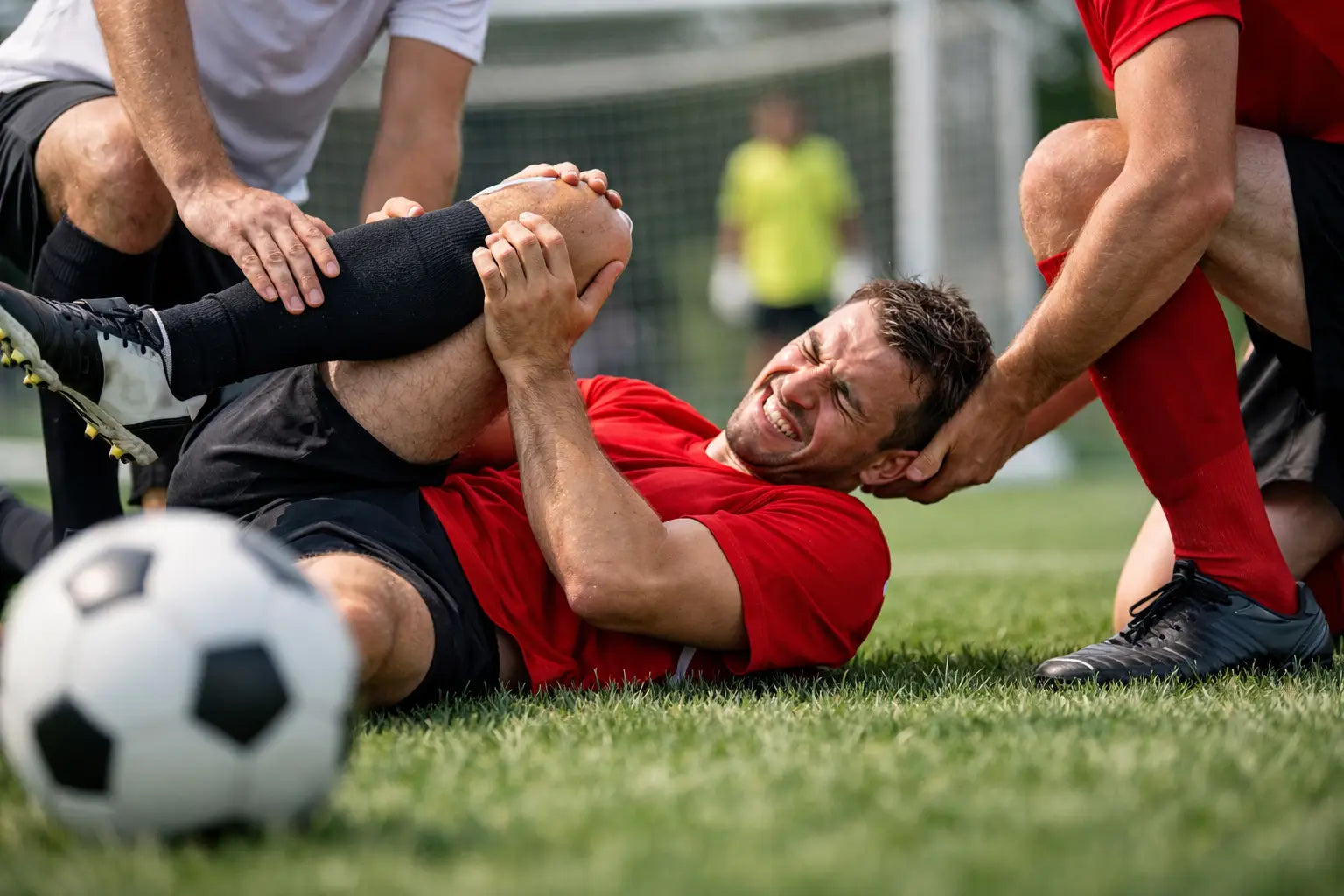
A calf locks up in the 72nd minute. You are near the box, the game is tight, and suddenly every step feels like a gamble. Cramps during a soccer game are not just painful - they can pull you off the field, change how you move, and steal the confidence you need when the match matters most.
The old answer is usually, "Drink more water." Hydration matters, especially in heat, but it is not the whole story. Many exercise-related cramps are tied to neuromuscular fatigue: the communication between your nerves and working muscles becomes overstimulated when the demands of the game exceed what your body is prepared to handle. That means the best game plan is bigger than a water bottle.
Why Cramps During Soccer Games Hit So Hard
Soccer is built for cramping conditions. You sprint, decelerate, cut, jump, tackle, and strike the ball - then repeat it for 90 minutes, often in heat. Your calves, hamstrings, quads, feet, and inner thighs must react instantly while managing fatigue.
A cramp can happen when a muscle is working near its limit and the nerve signals controlling it become disrupted. The muscle contracts hard and cannot relax normally. This is why a player can feel fine early in the match, then cramp during a final sprint when the intensity rises.
Sweat loss can contribute, particularly if you start the match underhydrated or play in hot, humid conditions. Sodium and fluid replacement can help support normal performance over time. But chugging water or taking electrolytes after a cramp starts is rarely a fast fix. Those strategies still need digestion and absorption, while the player needs relief now.
Fatigue is often the bigger trigger. A player who is under-conditioned for the match pace, returning from a break, playing extra minutes, or repeatedly making high-speed runs is more likely to cramp. The same is true when sleep, recovery, fuel, or training load has been neglected during a busy week.
What to Do When a Cramp Starts Mid-Match
First, do not try to power through a severe cramp with full-speed running. It can change your mechanics and increase the risk of a strain, especially in the hamstring or calf. Signal the sideline if you need support.
Ease out of the movement that triggered the cramp. For a calf cramp, gently straighten the knee and pull the toes toward the shin. For a hamstring cramp, carefully extend the leg and avoid bouncing. Slow, controlled stretching can help the muscle relax. Light massage may also feel useful once the sharp contraction begins to ease.
Then assess the situation honestly. If the cramp fully releases and you can jog, cut, and strike the ball without pain or altered movement, a return may be reasonable. If the muscle remains tight, weak, or painful, stay out. A cramp that will not release, repeated cramping in the same match, or pain that feels more like a tear deserves attention from an athletic trainer or medical professional.
For players who need a portable option designed for rapid cramp relief, CrampsAWAY Sport/PRO uses food-grade ingredients to support Neuromuscular Efficiency (NME™), targeting the nerve signals involved in cramping rather than waiting for fluids or electrolytes to work through the digestive system. It is also NSF Certified for Sport, a meaningful consideration for tested athletes.
Build a Better Pre-Game Plan
The most reliable way to reduce cramping is to prepare for the actual demands of your position and match environment. A center midfielder covering ground in August has different needs than a goalkeeper in cool weather. Your plan should reflect that.
Start hydrated, not overloaded
Drink fluids consistently throughout the day before training or a match. Check your urine color as one simple signal: pale yellow generally suggests you are reasonably hydrated, while very dark urine may mean you need more fluids. Avoid trying to "catch up" by flooding your stomach right before kickoff. Too much plain water at once can leave you bloated and uncomfortable.
For long sessions, high heat, or heavy sweaters, include a sports drink or salty food with your normal meals to support fluid retention. The goal is not to treat electrolytes like magic. It is to arrive prepared, then replace what you lose at a sensible pace.
Fuel the work you expect to do
A player who enters a match under-fueled is more likely to fade late. That fatigue can make cramping more likely. Eat a familiar pre-game meal with carbohydrates, some protein, and limited heavy fat a few hours before kickoff. Think rice with chicken, a turkey sandwich with fruit, or oatmeal with yogurt, depending on what sits well for you.
If the match is later in the day, use a simple snack 30 to 60 minutes beforehand, such as a banana, applesauce, toast, or a sports chew. Do not experiment with new foods on game day. Your stomach should not become another opponent.
Train for late-match intensity
If your cramps appear in the final 15 to 20 minutes, look at your conditioning before blaming your hydration. Are you training repeated sprint ability? Are you practicing hard cuts after fatigue sets in? Are you gradually building minutes after an injury, offseason, or schedule change?
Soccer fitness is not just steady running. Include game-like intervals, acceleration and deceleration work, strength training, and enough recovery between demanding sessions. Strong calves, hamstrings, glutes, and hips are better equipped to handle the explosive work that often exposes cramping.
Small Habits That Protect Your Legs
Your pre-game routine does not need to be complicated. It needs to be repeatable. Arrive early enough to warm up progressively, beginning with easy movement and building toward short sprints, cuts, and ball work. A cold muscle is not the only cause of a cramp, but going from sitting in the car to all-out intensity is a poor bet.
After the match, replenish fluids, eat a balanced meal, and prioritize sleep. Recovery is where your body adapts to the workload. If you play multiple games in a weekend, recovery between matches is especially important. Skip the idea that soreness and exhaustion are proof of a great session. They are signals to manage.
Also pay attention to your patterns. Keep a simple note on when cramps happen, which muscle is involved, the weather, your minutes played, what you ate and drank, and how you slept. A pattern may appear quickly: the same calf after hard turf games, hamstrings after back-to-back matches, or foot cramps when your boots are too tight.
When a Soccer Cramp May Be Something Else
Not every sudden leg problem is a routine exercise cramp. Stop playing and seek medical evaluation for severe swelling, bruising, a popping sensation, persistent weakness, numbness, chest pain, shortness of breath, or pain that does not improve with rest. Recurrent cramps that happen at rest, keep waking you at night, or occur despite sensible training and hydration also deserve a conversation with a clinician.
Certain medications, medical conditions, illness, and major changes in diet can affect fluid balance and muscle function. Do not self-diagnose a persistent problem as "just cramps" when your body is asking for a closer look.
The goal is not merely to survive the next cramp. It is to step onto the field prepared, respond quickly when fatigue hits, and trust your body to keep moving when the game is there to be won.

Share:
How to Beat Muscle Cramps During a Marathon Race
What a Sports Cramp Supplement Needs to Do