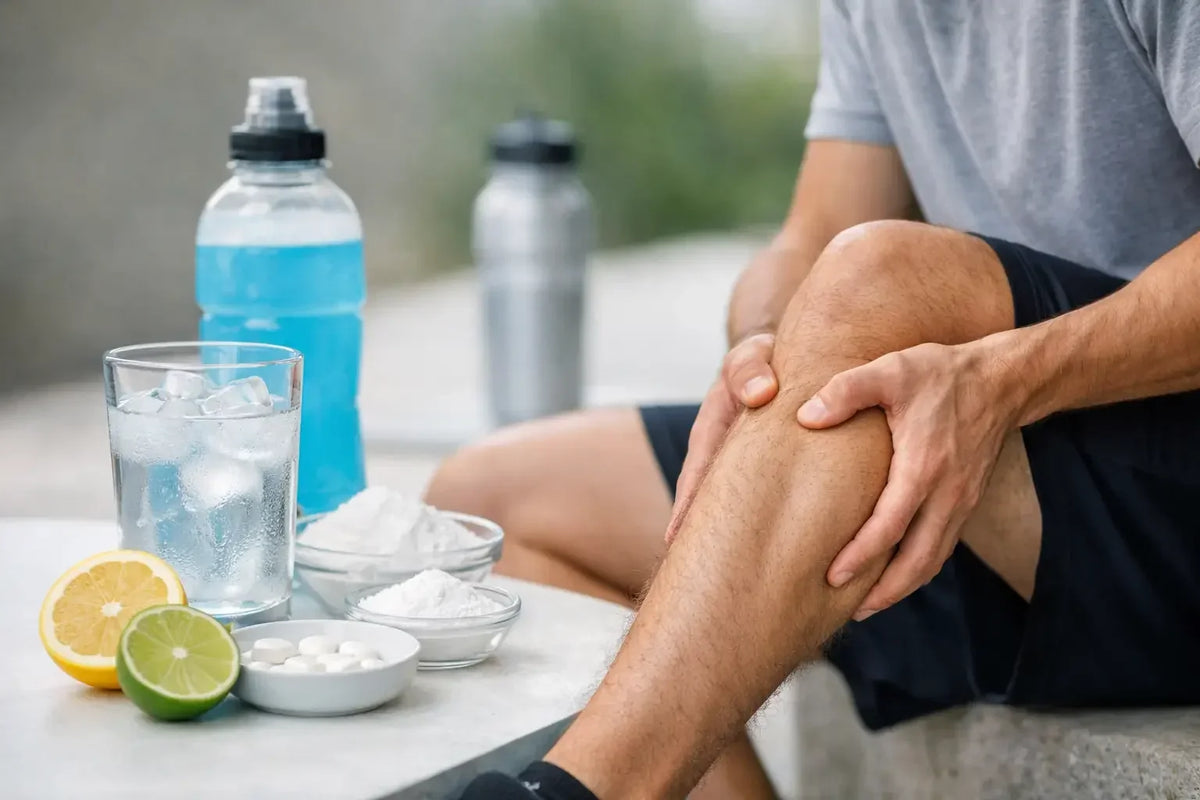
A calf seizes halfway through the final mile. Your foot locks in the pool. A hamstring grabs during a hard sprint. The usual answer is to reach for electrolytes. Muscle cramps and electrolytes are closely connected in some situations, but that connection is often oversimplified - and it can leave athletes waiting for a drink mix to solve a problem happening much faster.
Electrolytes matter for hydration, nerve signaling, and muscle function. But many exercise-associated muscle cramps are not simply a sign that you ran out of sodium, potassium, or magnesium. They can happen in well-hydrated athletes, in cool weather, and even after a careful nutrition plan. When the cramp is already stealing your stride, you need to understand what is actually driving it.
Do Electrolytes Cause Muscle Cramps?
Not having enough electrolytes does not automatically cause a cramp. Sodium, potassium, calcium, and magnesium all play real roles in fluid balance and normal muscle contraction. Heavy sweating, prolonged heat exposure, vomiting, diarrhea, restrictive eating, certain medications, or a major mismatch between fluid intake and sweat loss can disrupt that balance.
In those circumstances, replenishing fluids and electrolytes is smart. An athlete who finishes a long, hot event coated in salt, feeling unusually weak, dizzy, or headachy may need to address hydration and sodium losses. A person with repeated night cramps who has a medical condition or takes a diuretic should discuss it with a clinician rather than guessing at supplements.
But electrolyte replacement is not an instant off switch for every cramp. Your body must digest and absorb what you drink or eat. That makes hydration a preparation strategy, not always a rapid answer when your calf is already knotted and your race is still moving.
Why a Well-Hydrated Athlete Can Still Cramp
Exercise-associated cramps often point to neuromuscular fatigue. Put simply, the signals between nerves and working muscles can become overexcited when the demands of the effort exceed what the muscle is conditioned to handle.
This is why cramps often show up at the sharp end of a workout or competition: late in a race, on the last hard hill, during repeated accelerations, or when returning to training after time away. The muscle is tired, the nervous system is under pressure, and the coordination that normally controls contraction and relaxation can break down.
That does not make hydration irrelevant. Dehydration and heat can add stress, raise the difficulty of an effort, and make fatigue arrive sooner. Yet they are often contributing factors, not the sole cause. The athlete who treats every cramp as an electrolyte emergency may keep missing the training, pacing, recovery, or nerve-muscle component.
The same principle can apply to night cramps. Long periods in one position, muscle fatigue, changes in activity, and individual health factors can all contribute. A banana before bed may be harmless for many people, but it is not a universal solution to a suddenly rigid calf at 2 a.m.
When Electrolytes Can Help Muscle Cramps
Use electrolytes with purpose, especially when your situation makes substantial fluid and sodium loss likely. Long endurance sessions, double training days, outdoor tournaments, hot conditions, and athletes with visibly salty sweat are reasonable times to pay attention.
Start before the problem begins. Drink consistently around training rather than chugging a large volume only after cramps start. Include sodium in your fueling plan when sweat losses are heavy or exercise lasts for hours. The right amount depends on your body size, intensity, climate, sweat rate, food intake, and medical history.
There is a trade-off here. Drinking excessive plain water during prolonged exertion can dilute blood sodium, while loading electrolyte products without considering your actual needs can cause stomach discomfort or unnecessary intake. More is not automatically better. The goal is a practical plan you can tolerate and repeat on race day.
Food still counts. Meals and snacks containing carbohydrates, sodium, potassium, and protein support training and recovery. For many recreational athletes, a balanced diet plus sensible hydration handles normal sessions well. Sports drinks, electrolyte powders, and salt-focused fueling become more useful as duration, heat, and sweat loss rise.
What to Do When a Cramp Hits Mid-Effort
First, reduce the intensity that triggered the cramp. Trying to power through a locked calf, quad, hamstring, or foot can turn a brief interruption into a strain. Stop or slow down, then gently lengthen the cramped muscle. Do not force an aggressive stretch or bounce into it.
Use controlled pressure or light massage if it feels helpful, and give the muscle a moment to settle. Once you can move normally, restart conservatively. A cramp that fades does not mean the underlying fatigue disappeared. Ease back in, shorten your stride or reduce the load, and resist the urge to immediately make up lost time.
If you have been sweating heavily, continue your planned fluids and electrolytes. Just do not expect a bottle to work in seconds because it is labeled for cramp support. For fast relief during competition, the response needs to address the nerve-muscle signaling behind the spasm, not only the nutrients that require digestion.
CrampsAWAY Sport/PRO is a food-grade oral formula designed to support Neuromuscular Efficiency (NME™) and help stop exercise-related cramps upon contact with the tongue. It is built for athletes who need a portable, fast-acting option when a cramp threatens training, competition, or recovery. Its NSF Certified for Sport status also gives tested athletes and teams added confidence around banned-substance concerns.
Prevent the Next Cramp by Training the Weak Link
The most useful question after a cramp is not just, “What should I drink?” Ask what changed. Was the pace faster than your recent training? Did you add hills, heat, mileage, or high-rep strength work too quickly? Were you underfueled, under-recovered, or returning after an illness or break?
Build exposure gradually. If hills cramp your calves, train hills progressively. If late-race surges trigger hamstring cramps, practice race-specific fatigue in controlled sessions. Strength work, mobility, recovery sleep, fueling, and pacing all help raise the point at which the neuromuscular system starts losing control.
Keep a brief record after recurring cramps: location, workout duration, temperature, intensity, what you ate and drank, sleep quality, and when the cramp appeared. Patterns become visible quickly. A cramp at mile 18 of every long run calls for a different solution than a foot cramp during every swim turn.
When a Cramp Needs Medical Attention
Most isolated exercise cramps settle with rest and a better plan. Still, get medical advice if cramps are frequent, severe, unexplained, associated with swelling or muscle weakness, continue long after activity, or arrive with numbness, chest symptoms, confusion, or significant illness. Seek urgent care for severe symptoms after extreme heat exposure.
Persistent night cramps also deserve a closer look, particularly if they disrupt sleep repeatedly or follow a new medication. The right answer may involve more than hydration.
Your electrolyte strategy should support the work. Your cramp strategy should protect your ability to finish it. Train the demand, fuel for the conditions, and carry a fast option for the moment your body tries to hit the brakes.

Share:
Menstrual Pain Support Guide for Fast Relief
Oral Cramp Relief Product Reviews That Matter