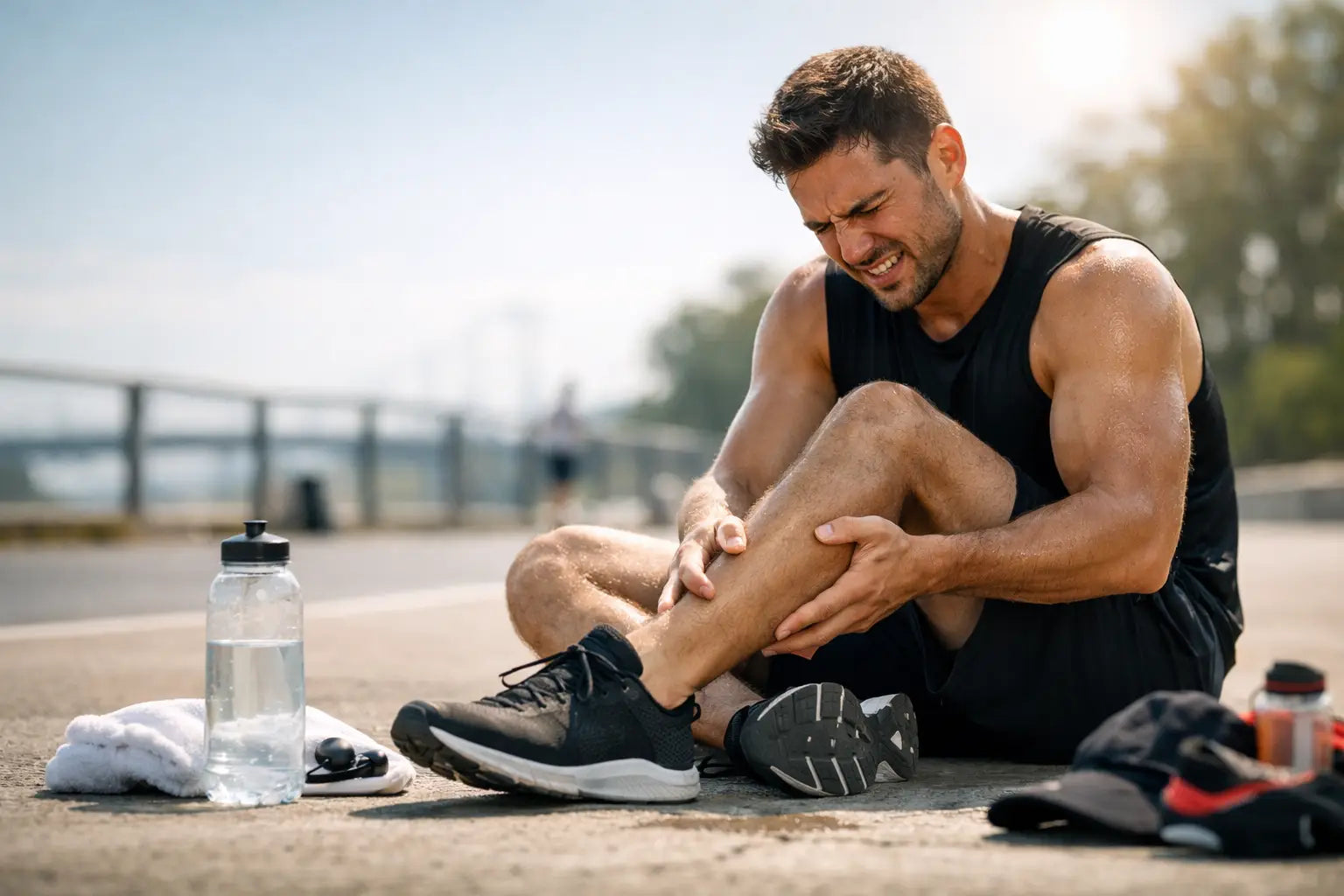
A calf that suddenly knots up in the final mile, a hamstring that locks during a hot practice, fingers that curl when you are trying to grip the bar - heat cramps can turn a strong day into an early exit. Heat cramps prevention is not about hoping you drank enough water. It is about preparing your nervous system, workload, fueling, and race-day decisions so your muscles can keep doing what you trained them to do.
Sweating heavily matters, but cramping is more complicated than a simple electrolyte shortage. Many athletes cramp despite drinking plenty of fluids and taking salt. The more useful goal is to reduce the conditions that overload the neuromuscular system, then have a fast response ready if a cramp tries to take over.
Why Heat Makes Muscles More Likely to Cramp
Heat changes the cost of exercise. Your body works harder to cool itself, blood flow is pulled toward the skin, sweat losses rise, and the same pace can feel dramatically more demanding. When you push beyond what your muscles and nervous system are conditioned to handle, the signals controlling contraction and relaxation can become unstable. That is when a familiar twitch can become a painful, hard knot.
This is why cramps often appear late in a game, near the end of a long run, during a hard climb, or after repeated sprints. The trigger may be heat, but the bigger issue is frequently fatigue layered on top of heat stress. A player who has practiced in cool weather, skipped recovery, and then goes all-out in 92-degree conditions is facing a very different challenge than a player who has built heat tolerance over time.
Hydration and sodium still deserve attention. Starting dehydrated can make heat strain worse, and substantial sweat losses can affect performance. But neither water nor electrolytes can guarantee cramp-free training. Treat them as part of the plan, not the entire plan.
Heat Cramps Prevention Starts Before Event Day
The best defense is built in the days and weeks before the hottest workout, tournament, or race. If you know a hot event is coming, give your body repeated, manageable exposure to heat. This is called heat acclimation, and it helps your body sweat more efficiently, maintain circulation, and handle rising core temperature with less strain.
You do not need to turn every session into a survival test. Begin with shorter heat exposures at an easy or moderate effort, then add duration or intensity gradually over one to two weeks. Outdoor sessions, a warmer indoor space, or carefully controlled layers can all be tools. The right approach depends on your fitness, medical history, local conditions, and how quickly temperatures are rising.
Avoid the common mistake of making your first hot session your hardest session. Heat acclimation works when it is progressive. If you feel dizzy, unusually weak, confused, chilled despite the heat, or develop a pounding headache, stop exercising, cool down, and seek medical guidance when symptoms are severe or do not improve.
Train the demands you plan to perform
Specificity matters. A distance runner needs to practice fueling and pacing under heat stress. A tennis player or soccer athlete needs repeated high-output bursts, direction changes, and late-session skill work. A lifter may need to manage rest periods and avoid stacking maximal efforts in a hot gym.
Build your tolerance at the pace and movement patterns your sport demands, but earn that intensity. Cramps are more likely when the effort on event day exceeds what your system has rehearsed. The goal is not to train timidly. It is to arrive ready to finish strong.
Recover like heat training counts
Hard heat sessions require recovery. Replace fluids according to your thirst and sweat losses, eat enough carbohydrate and protein to support the next session, and protect sleep. Under-fueling is an overlooked cramp risk because a depleted athlete reaches fatigue sooner, even if their water bottle is full.
If you repeatedly cramp during a certain phase of training, look beyond the moment it happens. Review the prior 24 to 48 hours: sleep, travel, alcohol intake, total workload, meal timing, and sudden increases in volume. The answer is often hiding in the buildup.
Make a Personal Fluid and Fuel Plan
There is no single hydration number that fits every athlete. Body size, sweat rate, exercise duration, humidity, clothing, pace, and access to drink breaks all change the equation. A useful starting point is to arrive hydrated, drink regularly when practical, and avoid both extremes: ignoring thirst for hours or forcing excessive water intake.
For longer sessions or athletes who leave visible salt on clothing and skin, a beverage or food containing sodium may be useful. Carbohydrates can also help preserve performance during extended, high-output work. What matters most is practicing your strategy in training. Race day is not the place to discover that a drink upsets your stomach or that you cannot tolerate the amount you packed.
A simple check is your post-workout body weight. If you consistently finish much lighter after training, you may need a better fluid plan. If you are gaining weight during exercise from drinking far beyond your needs, pull back and speak with a qualified sports professional. Both scenarios can create problems.
Pace for the Conditions, Not Your Ego
The heat does not care what pace you ran last month in cool weather. Use perceived effort, heart rate when relevant, and how your body is responding to set a realistic output. A slightly more controlled first half can protect your ability to close hard instead of fighting cramps in the final stretch.
Take available shade, cooling breaks, and opportunities to wet your skin or use cold towels. Wear breathable clothing that fits the conditions. These choices are not signs of weakness. They are performance decisions that reduce unnecessary heat strain.
For team sports, coaches and athletes should plan substitutions before someone is in trouble. Short, scheduled breaks can preserve power and skill far better than waiting until a player is already cramping. For endurance athletes, identify aid stations, cooling points, and the sections of the course where you will deliberately back off if the heat index climbs.
What to Do When a Cramp Hits
Stop or reduce the activity that triggered the cramp. Move to a cooler area if possible, gently lengthen the affected muscle, and avoid aggressively forcing a stretch. Light movement may help once the pain begins to release. Cool down, assess how you feel overall, and do not rush back to maximum intensity because the muscle briefly lets go.
This is also where a targeted, portable option can change the moment. CrampsAWAY Sport/PRO is designed around Neuromuscular Efficiency (NME™), a food-grade oral approach intended to support the nerve signals involved in cramping rather than asking athletes to wait for a drink, pill, or recovery break to catch up. For athletes subject to drug-testing standards, its NSF Certified for Sport status adds meaningful confidence.
That does not replace smart preparation. It gives you another tool when the stakes are high and your body needs a fast reset. Keep your cramp-response plan where you can reach it: in your race belt, gym bag, sideline kit, or pocket.
Know When It Is More Than a Typical Cramp
A painful muscle spasm after hard work is common. Severe cramping paired with confusion, fainting, vomiting, chest pain, unusual shortness of breath, hot dry skin, or symptoms that do not improve with rest and cooling needs urgent medical attention. Those signs can point to heat illness, not an ordinary exercise cramp.
Frequent cramps at rest, new cramps without an obvious training trigger, swelling, persistent weakness, or symptoms after starting a medication are worth discussing with a clinician. Athletes with heart, kidney, endocrine, or other medical conditions should get individualized advice before making major changes to fluid, salt, or heat-training habits.
Your next hot workout does not need to become a test of who can suffer longest. Build heat exposure progressively, fuel the work, respect the conditions, and carry a response you trust. That is how you give your training, your race, and your finish line a better chance to stay yours.

Share:
What Stops Cramps Immediately? Fast Relief Steps
Electrolytes Versus Cramp Relief: What Works?