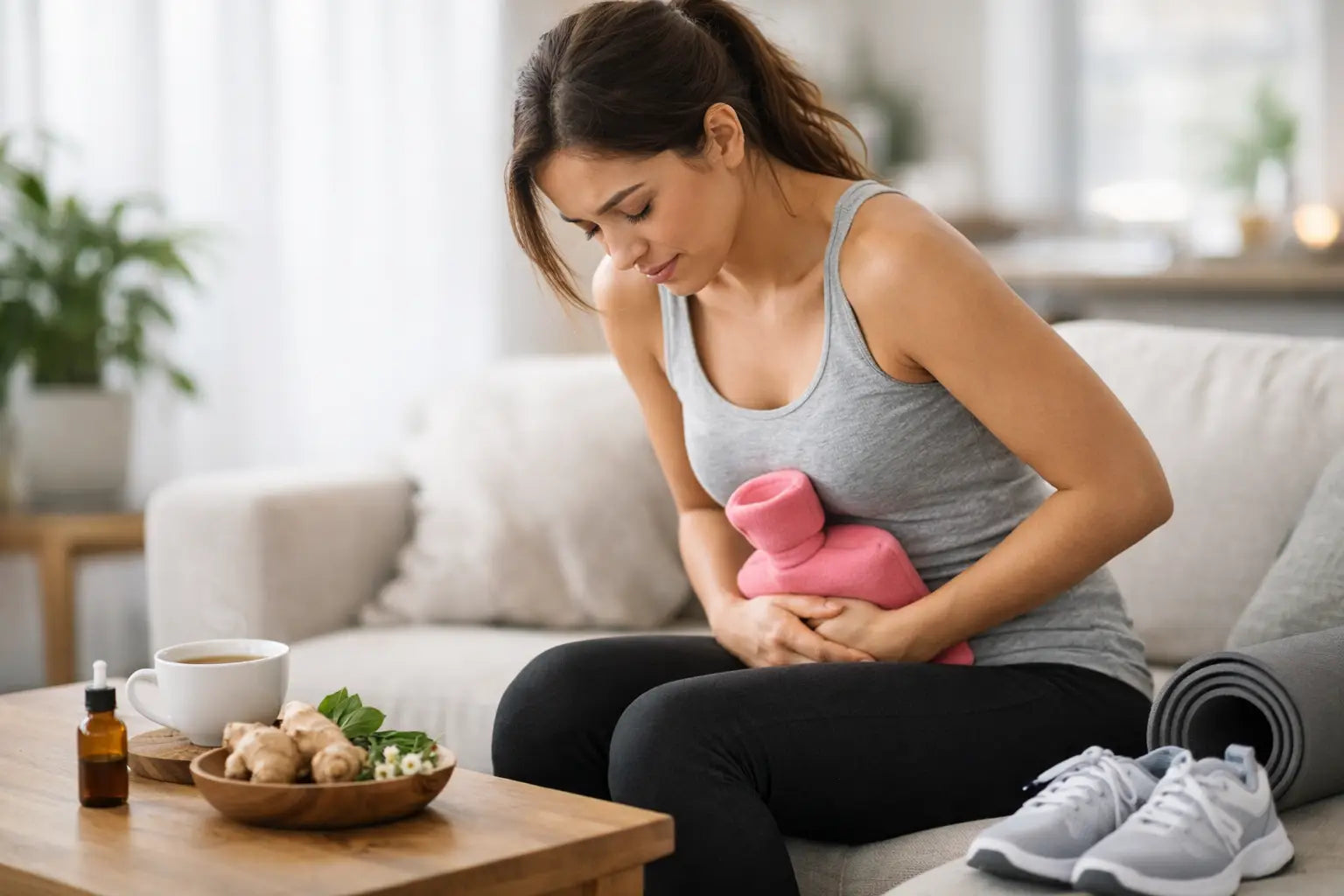
A period cramp that makes you cancel plans, miss class, or power through a workday bent over is not a small inconvenience. Natural period cramp remedies can help you regain comfort without automatically reaching for hormones or pain medication, but the best approach is not one-size-fits-all. Your body, your cycle, and the intensity of your symptoms matter.
Menstrual cramps happen when the uterus contracts to shed its lining. Chemical messengers called prostaglandins help drive those contractions. When the contractions are intense, they can temporarily reduce blood flow to the uterus and create the aching, gripping, or stabbing pain that can also come with nausea, fatigue, back pain, and bowel changes.
The goal is not to pretend cramps are normal when they are taking over your life. The goal is to build a fast, practical relief plan that supports your body and keeps your momentum intact.
Natural Period Cramp Remedies for Right Now
When cramps hit, start with options that are easy to use in the moment. You do not need a complicated wellness routine when you are trying to get through a meeting, an exam, a shift, or the first day of a trip.
Use targeted heat
Heat is one of the most reliable non-drug options for period discomfort. A heating pad, warm bath, hot water bottle, or heat wrap can relax tight muscles and increase local blood flow. For many people, 15 to 20 minutes of steady warmth over the lower abdomen or lower back makes a meaningful difference.
Keep the temperature comfortable rather than scorching, and avoid falling asleep on an electric heating pad. A portable heat wrap may be more realistic if you need to keep moving, while a bath can be the better choice when you have room to rest.
Try gentle movement, not an all-out workout
It may feel backward to move when you are cramping, but gentle activity can reduce stiffness and lift your mood. A short walk, easy cycling, slow stretching, or a few minutes of yoga may help your body release tension without asking too much of it.
This is not a command to train through severe pain. If running, lifting, or high-intensity exercise makes your cramps worse, scale back. Think mobility and circulation, not proving toughness. A few cat-cow stretches, a supported child’s pose, or a slow walk around the block can be enough.
Use breath to lower the tension response
Cramping can set off a frustrating loop: pain makes you tense, and tension makes pain feel bigger. Slow breathing will not erase the source of the cramp, but it can help interrupt that loop.
Try breathing in for four counts and out for six to eight counts for two minutes. Let your abdomen soften on the exhale instead of bracing against the pain. It is simple, discreet, and useful when you need support at your desk, in the car, or on the sidelines.
Consider ginger or peppermint carefully
Some research suggests ginger may help with menstrual pain for some people, and peppermint tea can feel soothing when cramps arrive with nausea or digestive discomfort. These are supportive tools, not guaranteed fixes, and they tend to work better as part of a broader plan than as a last-minute miracle.
If you use herbal supplements rather than tea or food, check with a clinician or pharmacist first. Herbs can interact with medications and may not be right for everyone, especially if you are pregnant, have a bleeding disorder, or take blood thinners.
Build a Prevention Routine Before Your Period Starts
The strongest natural period cramp remedies often begin before the first cramp. If your cycles are fairly predictable, use the days leading up to your period to reduce the factors that can make a hard cycle feel even harder.
Prioritize consistent sleep
Poor sleep does not cause every cramp, but it can lower your pain tolerance and make fatigue, irritability, and brain fog feel more intense. Aim for a consistent bedtime in the week before your period, and create a wind-down routine you can actually repeat. A dark room, less late-night scrolling, and a little more recovery can go further than chasing a perfect sleep score.
Eat regularly and watch your personal triggers
There is no universal “period diet.” Some people feel better when they limit alcohol, very salty meals, or large amounts of caffeine around their period. Others notice no difference. Instead of cutting out everything at once, pay attention to patterns over two or three cycles.
Regular meals with protein, fiber-rich carbohydrates, fruits or vegetables, and healthy fats can support steadier energy when your appetite and mood are shifting. If caffeine makes you jittery, nauseated, or more anxious during your period, reduce it. If your morning coffee is not a problem, there is no prize for forcing yourself to skip it.
Stay hydrated, but do not blame yourself
Drinking enough fluid supports overall well-being, especially if your period comes with diarrhea or you are exercising. But hydration is not a cure-all for menstrual cramping, and painful cramps are not proof that you failed to drink enough water.
Keep a water bottle nearby, add electrolytes when you have a clear reason to use them, and focus on what makes you feel good. More is not always better. The key is steady, sensible hydration, not panic drinking.
Track your cycle and symptoms
A simple note in your phone can give you leverage. Record when cramps begin, how long they last, where the pain is located, what relief methods you tried, and whether you had symptoms like heavy bleeding, dizziness, pain during sex, or pain between periods.
This helps you prepare with heat, meals, lighter training, and rest before a difficult day. It also gives a clinician useful information if your symptoms change or become disruptive.
Fast Relief Without the Medication Hangover
Many people want options that do not leave them drowsy, upset their stomach, or make them feel disconnected from their body. That is a reasonable standard. It is also why oral, food-grade cramp formulas have become part of some people’s on-the-go plans.
CrampsAWAY For Her is designed as a hormone-free option that works upon contact with the tongue, using NME™ to address the nerve signals involved in cramping rather than simply masking discomfort. For someone who needs a portable tool in a backpack, work bag, or gym locker, that can be a practical complement to heat, movement, and a consistent cycle routine.
No natural remedy should require you to tolerate a result that is not good enough. Track what works quickly, what helps only a little, and what fails to touch the pain. That information helps you make stronger choices each month.
When Period Pain Needs More Than Home Care
Natural support is valuable, but severe or changing pain deserves medical attention. Conditions such as endometriosis, fibroids, adenomyosis, ovarian cysts, pelvic inflammatory disease, and other health concerns can cause period pain. You do not need to diagnose yourself, and you do not need to wait until symptoms become unbearable to ask for help.
Make an appointment with a clinician if your cramps suddenly worsen, regularly force you to miss school or work, do not improve with your usual care, or come with unusually heavy bleeding. Seek urgent care for severe sudden pelvic pain, fainting, fever, vomiting that will not stop, possible pregnancy, or bleeding that soaks through a pad or tampon every hour for more than two hours.
Your pain is useful information, not a character test. You deserve to ask direct questions, request an evaluation, and keep looking for answers if the first response is to simply “deal with it.”
The best relief plan is the one that gives you more freedom on the days cramps used to control: more confidence to show up, more energy for the things you trained for, and more permission to protect your comfort without putting your life on pause.

Share:
Cramp Relief That Keeps Your Whole Day Moving
What Stops Cramps Immediately? Fast Relief Steps