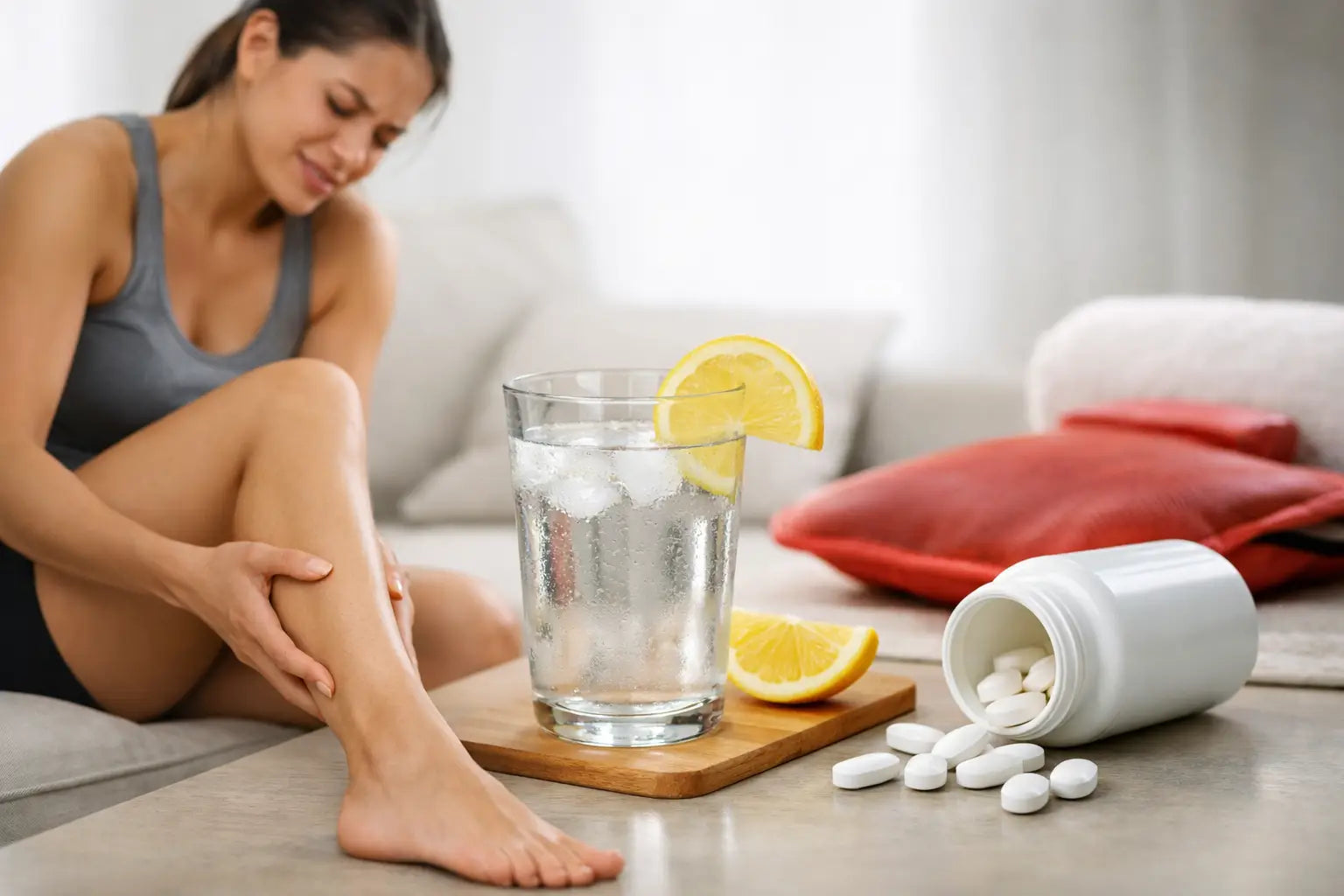
A cramp does not care that you are halfway through a race, walking into a presentation, or trying to sleep. When a muscle locks up or period pain takes over, the only useful question is: what stops cramps immediately? The fastest response depends on the kind of cramp, but the goal is the same - interrupt the contraction, calm the nerve signal driving it, and get your body moving comfortably again.
What Stops Cramps Immediately?
For a muscle cramp, stop the activity that triggered it and gently lengthen the cramped muscle. A calf cramp, for example, often responds to straightening the knee and pulling the toes toward the shin. For a hamstring cramp, slowly straighten the leg while keeping the back neutral. Do not force a hard stretch or bounce into it. A cramped muscle is already firing aggressively, and rough handling can make the spasm feel worse.
For menstrual cramps, heat, light movement, and a comfortable supported position can take the edge off while the cramp passes. Some people feel better lying on their side with knees bent; others get relief from an easy walk or a gentle hip-opening stretch. The right choice is the one that reduces tension without asking your body to push through pain.
For night cramps, get out of bed if you can do so safely. Put the foot flat on the floor, shift weight gradually into the leg, and stretch the affected muscle slowly. Standing can help reset a calf cramp, but use a wall, bedframe, or stable surface for support if balance is an issue.
These actions can help in the moment. But stretching, rubbing, and waiting are not always enough when the cramp is severe, recurring, or happening in a moment you cannot afford to lose.
Why Cramps Can Hit So Fast
Cramps are commonly blamed on dehydration or low electrolytes. Those factors can matter, especially after prolonged sweating, illness, or intense exercise. But they are not the whole story. Many exercise-related cramps happen even when an athlete has followed a hydration plan, and many people with menstrual or night cramps are not simply missing a mineral.
A cramp is often a neuromuscular control problem. Nerves signal a muscle to contract, and the normal off-switch does not kick in quickly enough. Fatigue, repeated effort, heat, unfamiliar intensity, poor recovery, and muscle overload can all make that system more likely to misfire. Menstrual cramping involves a different process, but the immediate experience is still intensely physical: involuntary contractions that can interrupt the entire day.
That distinction matters because guzzling water during an active cramp may not stop it on command. Hydration supports performance and recovery, but it is not a reliable emergency switch for every cramp. The same goes for a banana, pickle juice, or a slow-dissolving electrolyte drink. They may have a place in an overall routine, yet they may not deliver the rapid relief you need at mile 20, during class, or at 2 a.m.
Fast Relief for Muscle Cramps During Activity
When a muscle cramps mid-workout or mid-competition, the instinct is to fight through it. That can turn one cramped calf into a strained muscle, a fall, or a forced stop later. Take a short pause instead. Ease out of the movement, lengthen the muscle, and use light massage only if it feels soothing.
Then ask what changed. Did the cramp appear during a sprint finish, a hill, a heavy set, or a hot practice? That context matters. A muscle that cramps at the end of repeated high-intensity efforts may be signaling fatigue and overload more than a hydration failure. Continuing at full intensity before the muscle has released can be a poor trade-off.
A fast-acting oral formula designed to support the nerve-muscle connection can be a more practical option than waiting for a drink or pill to work through digestion. CrampsAWAY Sport/PRO uses food-grade ingredients and NME™ to support the neuromuscular response behind cramping, with relief designed to begin upon contact with the tongue. Its NSF Certified for Sport status also gives tested athletes and teams added confidence that it is free from banned substances.
That does not replace smart training. Build intensity progressively, practice in the conditions you compete in, and give heavily used muscle groups time to recover. But when a cramp hits during the performance you have trained for, immediate support can protect your momentum.
Immediate Menstrual Cramp Relief Without Losing Your Day
Menstrual cramps can make normal advice sound almost insulting. “Take it easy” is not a solution when you have an exam, a shift, a flight, a team practice, or a life you do not want to cancel.
Start with the basics that feel good right now: heat across the lower abdomen or back, a few minutes of gentle walking, and slow breathing that relaxes the pelvic floor and abdominal muscles. Avoid forcing deep stretches if movement increases pain. Some people also find that a warm shower helps their muscles let go enough to move more comfortably.
Over-the-counter pain medication may help some people, but it is not the right fit for everyone. It can cause stomach upset or other side effects, may not work quickly enough for your needs, and should always be used according to its label and your clinician's guidance. Hormonal options can be useful for some people, but they are a personal medical decision, not a universal answer to period pain.
For people looking for a hormone-free, food-grade option that does not rely on masking discomfort, a formula designed around NME™ can offer a different path. The point is not to pretend cramps are minor. It is to give your body a faster route back to school, work, training, plans, and control.
How to Stop Night Cramps and Get Back to Sleep
Night cramps are especially frustrating because they steal recovery when your body is supposed to be recharging. Once the cramp starts, slowly flex the foot toward the shin for calf cramps. Walk a few careful steps if needed, then use gentle warmth or massage after the sharp spasm has eased.
Prevention is worth taking seriously if night cramps are frequent. Review whether you have recently increased training volume, changed shoes, spent long periods on your feet, or started a new medication. Hydration throughout the day can help if you have been underhydrated, but avoid treating every night cramp as proof that you need to chug water before bed.
A consistent bedtime routine can also reduce the chaos: light calf and hamstring mobility, sensible recovery after hard sessions, and a rapid-response cramp solution kept within reach. You should not have to fully wake up, search the kitchen, and hope a slow remedy works before morning.
When a Cramp Needs Medical Attention
Most isolated cramps are not dangerous, but severe or unusual symptoms deserve more than a home fix. Seek urgent medical care for cramping with chest pain, trouble breathing, fainting, major swelling, weakness on one side of the body, or a painful leg that is red, hot, and swollen.
Make an appointment with a clinician if cramps are frequent, worsening, disrupting sleep regularly, occurring without a clear trigger, or accompanied by numbness, persistent weakness, fever, or changes in urination. For menstrual pain, get evaluated if cramps suddenly become much worse, cause missed work or school, happen outside your period, or come with unusually heavy bleeding, pain during sex, or pelvic pain that does not ease.
You deserve relief that matches the speed of the problem. Stretch when the muscle locks, use heat and gentle movement when your period pain rises, train and recover with intention, and keep a fast option close enough to use before a cramp gets to decide what happens next.

Share:
Natural Period Cramp Remedies That Keep You Moving
Heat Cramps Prevention for Stronger Training