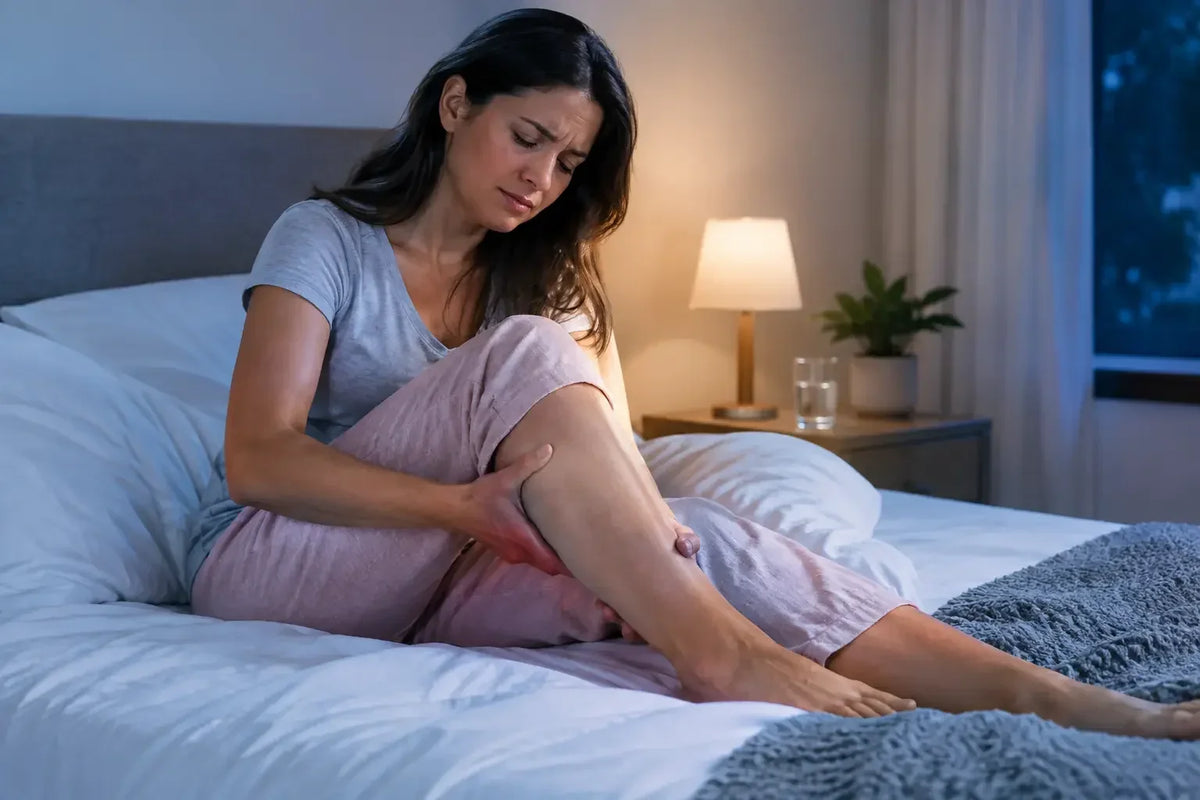
A calf cramp at 2 a.m. can feel brutally out of proportion to its size. One second you are asleep. The next, your foot is pointed, your calf is rock-hard, and getting out of bed is the only thing that seems possible. If you are asking what causes nighttime cramps, the short answer is that the muscle and the nerve controlling it have become overly excitable. The more useful answer is that several factors can push that system toward a painful, involuntary contraction.
For many people, nighttime cramps are occasional. For others - older adults, active people in hard training blocks, pregnant people, and anyone taking certain medications - they can become a repeated threat to recovery and sleep. Knowing the likely triggers helps you respond with more than wishful stretching and another glass of water.
What Causes Nighttime Cramps in the Legs?
Most nighttime cramps are called nocturnal leg cramps. They commonly strike the calf, foot, or thigh and can last from seconds to several painful minutes. The soreness afterward may linger into the next day.
A cramp is not simply a thirsty muscle. It is a sudden, intense muscle contraction driven by nerve signals. Current cramp research points to a neuromuscular issue: the motor nerves supplying a fatigued or vulnerable muscle can fire too easily, while the natural signals that help calm contraction may not keep up. That is why a cramp can happen even when you have been drinking water and taking electrolytes.
Hydration still matters, especially after heavy sweating, vomiting, diarrhea, or long periods in heat. But treating every cramp as an electrolyte emergency misses the bigger picture. Night cramps often come down to fatigue, muscle position, circulation, health conditions, medications, or several of those factors at once.
Muscle fatigue and overuse
A hard hill workout, a long shift on your feet, a weekend of yardwork, or simply doing more walking than usual can leave muscles more prone to cramping later that night. The risk rises when the activity is unfamiliar, more intense than normal, or performed in heat.
Athletes know this pattern well. A calf that stayed quiet during training may cramp when the body finally slows down. That does not mean the workout failed. It can mean the neuromuscular system is still stressed, particularly when conditioning, pacing, recovery, or heat adaptation has not caught up with the demand.
Long periods of sitting or standing
Stillness can be a trigger too. Sitting for hours with your knees bent, driving long distances, standing at work, or sleeping with your feet pointed downward can keep the calf shortened. A shortened, tired muscle has less room to tolerate a sudden nerve signal before it seizes.
This helps explain why cramps are not reserved for athletes. A sedentary day followed by an awkward sleep position can be enough to set one off.
Age-related changes
Night cramps become more common with age. Muscles may lose conditioning, tendons can become less flexible, and the nerves that control muscle contraction may be more excitable. Older adults are also more likely to take medicines or live with health conditions that raise cramp risk.
That does not mean frequent cramps are something you should simply accept. It means prevention should be realistic and consistent: daily movement, sensible training, flexible ankles and calves, and a medication review when symptoms become regular.
Pregnancy and body changes
Pregnancy, especially later in pregnancy, is a common time for nighttime leg cramps. Changes in circulation, weight, activity, sleep position, and nutrient needs can all contribute. Gentle calf stretches, regular movement, and discussing persistent cramps with an obstetric clinician can help.
People may also notice more cramps during periods of rapid changes in exercise, weight, sleep, or daily routine. The body tends to cramp when the workload changes faster than it can adapt.
Health Conditions and Medicines That Can Contribute
Sometimes nighttime cramping is part of a bigger health picture. Nerve disorders, kidney disease, thyroid conditions, diabetes, liver disease, and circulation problems can all be associated with cramping. Poor blood flow in the legs may cause pain with walking as well as symptoms at rest, though that pain is not always a true muscle cramp.
Certain medications can also contribute. Diuretics, some asthma medicines, cholesterol-lowering drugs, blood-pressure medicines, and drugs that affect nerves or fluid balance are among the possibilities. Never stop a prescribed medication because of cramps without speaking with the clinician who prescribed it. A dose change, alternative medication, or blood test may be appropriate, but that decision should be personalized.
Restless legs syndrome can also be confused with cramps, but it feels different. Restless legs creates an urge to move and uncomfortable sensations that improve with movement. A true cramp creates a sudden, tight, visibly or physically knotted muscle that hurts to stretch.
What to Do When a Cramp Hits at Night
The immediate goal is to lengthen the cramped muscle without fighting it. For a calf cramp, straighten the knee if you can and gently pull your toes toward your shin. Stand and place the affected heel on the floor, then shift your weight forward slowly. Massage can help once the muscle begins to release, but aggressive digging into a fully cramped calf can make the pain worse.
Do not bounce into a stretch. Slow, sustained tension is usually more useful. Walk carefully for a minute or two after it eases, since the muscle may want to tighten again when you lie back down.
For people who need fast, portable support, CrampsAWAY is designed to support NME™ - the nerve-to-muscle communication involved in cramping - with a food-grade oral formula that starts working on contact with the tongue. It is a practical option for keeping a cramp from taking over a night, a recovery day, or a competition.
How to Reduce Your Risk Before Bed
Prevention works best when it matches your trigger. If cramps tend to follow demanding workouts, the answer may be smarter progression and recovery rather than simply adding more supplements. If they follow inactive days, regular movement and a brief mobility routine may matter more.
Start with a few minutes of gentle calf and hamstring stretching before bed. Keep it comfortable, not intense. Try a calf stretch with your hands against a wall, one heel down behind you, and hold for 20 to 30 seconds per side. Follow it with slow ankle circles or a short walk around the house.
During the day, avoid sudden jumps in training volume, especially in heat. Build mileage, speed work, lifting volume, or hill work progressively. Replace fluid losses after hard sweating, eat regular balanced meals, and avoid treating hydration as a one-size-fits-all solution. Drinking excessive amounts of plain water can be as unhelpful as drinking too little for some people.
Your sleep position matters as well. If you wake with your toes pointed and calves tight, try keeping the feet in a more neutral position. Looser bedding at the foot of the bed may help if tucked-in sheets keep your toes pointed downward.
When Nighttime Cramps Need Medical Attention
An occasional cramp after a tough day is usually not an emergency. Get medical care promptly, however, if leg pain comes with swelling, redness, warmth, weakness, numbness, skin color changes, shortness of breath, or chest pain. Those symptoms can signal problems that need urgent evaluation rather than home cramp care.
Make a non-urgent appointment if cramps are frequent, severe, repeatedly disrupt sleep, begin after a new medication, or come with unexplained muscle weakness or weight loss. A clinician can help distinguish ordinary nocturnal cramps from circulation, nerve, metabolic, or medication-related issues.
You do not have to surrender your sleep to a muscle that decides to revolt after midnight. Pay attention to the pattern, prepare for your most likely trigger, and give your body the recovery support it needs to stay calm, capable, and ready for tomorrow.

Share:
What Menstrual Cramp Research Says About Relief
Cramp Dissolvables Versus Magnesium for Relief