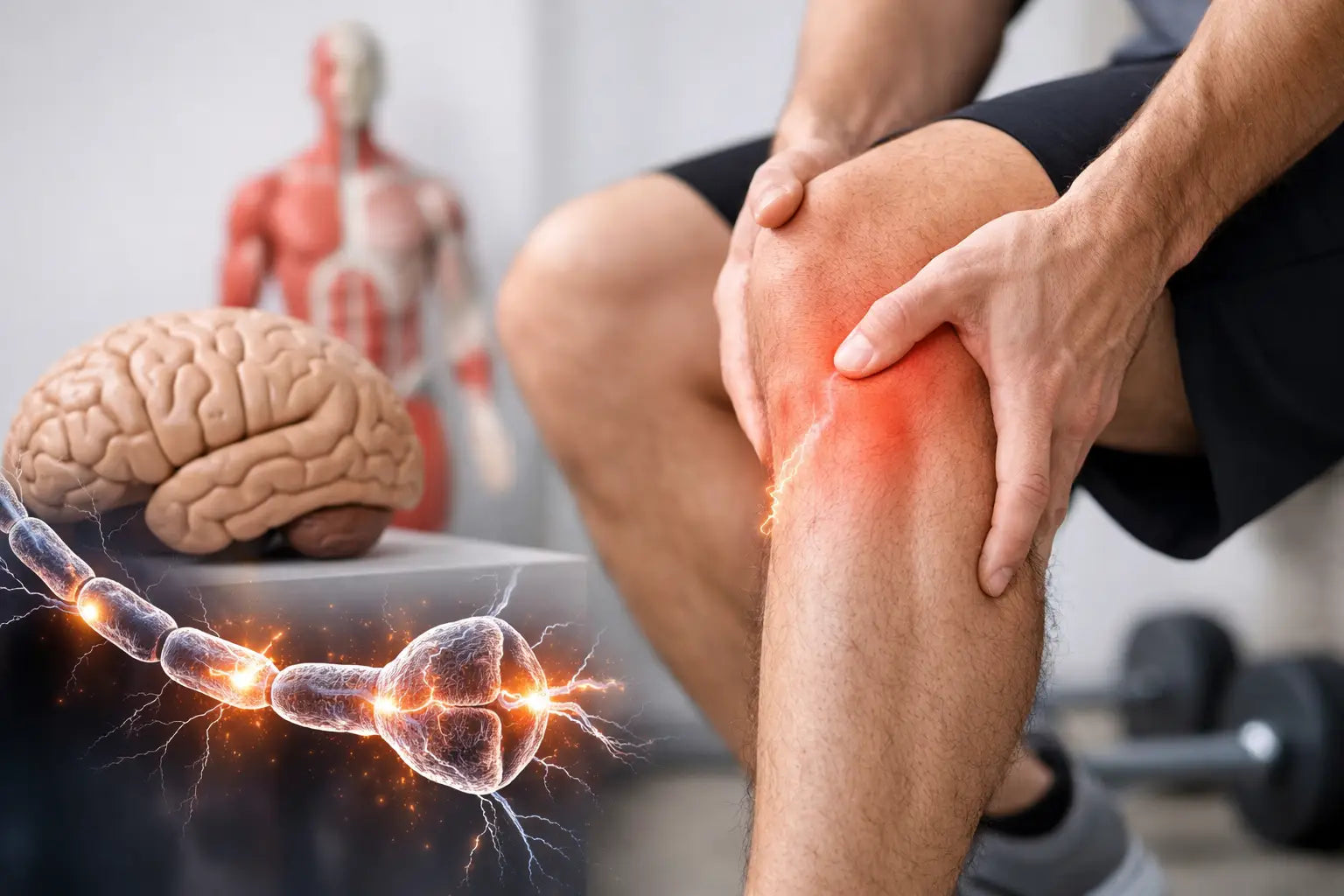
A calf locks up at mile 20. A foot curls into a painful knot at 2 a.m. Period pain makes sitting through class, a meeting, or practice feel impossible. Neuromuscular cramping science explained starts with one crucial shift: a cramp is not always a simple shortage of water, salt, or toughness. It is often a nerve-and-muscle control problem that can strike when your body is under pressure.
That distinction matters. If you only treat every cramp as dehydration, you can spend valuable time chugging fluids, stretching, or waiting for a pill to work while the signal driving the contraction is still firing. Understanding the mechanism gives you a better way to prepare, respond, and keep moving.
What happens during a cramp?
A muscle contraction begins with a message. Motor nerves carry an electrical signal to muscle fibers, telling them to contract. Normally, your nervous system balances that “go” signal with feedback that helps the muscle release. A cramp can occur when that balance shifts toward excessive excitation and too little inhibition.
The result is a sudden, involuntary, often intensely painful contraction that does not release on command. In exercise-associated muscle cramping, the affected muscle is often working hard, fatigued, shortened, or pushed beyond its usual workload. Think of a runner’s calf during a late-race hill, a swimmer’s foot during a hard kick, or a lineman’s hamstring late in the fourth quarter.
This is why a cramp can happen to an athlete who has hydrated carefully and taken electrolytes all day. Fluids and sodium matter for overall health and performance, especially in heat. But they do not fully explain why one specific muscle suddenly clamps down while the rest of the body keeps functioning.
Neuromuscular cramping science explained: the signal problem
The modern neuromuscular view focuses on the communication loop between the muscle, spinal cord, and motor nerve. As a muscle fatigues, the sensory feedback that normally helps regulate force can change. Excitatory input may rise while inhibitory input falls. The motor neuron becomes more likely to fire repeatedly, and the muscle receives a powerful command to contract.
This is sometimes described as altered neuromuscular control. It does not mean hydration and nutrition are irrelevant. It means they are only part of the performance picture.
Several factors can raise the odds of that control system becoming overloaded:
- A sudden jump in training volume, speed, hills, heat exposure, or intensity
- Local muscle fatigue, especially in a muscle that is not conditioned for a specific demand
- Holding a muscle in a shortened position for a long time, such as pointed toes in bed
- Poor pacing, inadequate recovery, or repeated high-force efforts
- Individual differences in nerve sensitivity, prior cramp history, medications, or health conditions
The practical takeaway is direct: prevention should include smarter training and recovery, not just a bigger electrolyte bottle.
Why cramps can feel so immediate
The pain is not simply the muscle “getting tight.” A forceful contraction can compress local tissue and trigger pain receptors at the same time the nervous system is sending a persistent contract signal. That is why a cramp can feel like a switch flipped without warning.
Gentle stretching may help because lengthening the cramped muscle changes sensory feedback to the nervous system. For a calf cramp, bringing the toes upward can encourage the muscle to release. It is useful first aid, but it does not always prevent another cramp minutes later if the underlying fatigue and nerve excitability remain high.
Why hydration is helpful but not the whole answer
Dehydration and substantial sodium losses can impair performance, particularly during long events in hot conditions. Athletes should still drink to a sensible plan, eat appropriately, and replace sodium when their event duration, sweat rate, and conditions call for it.
But the “just drink more water” advice has limits. Many people cramp while well hydrated. Others drink too aggressively and create new problems. More fluid is not automatically better, and loading electrolytes during a cramp will not necessarily change a nerve signal fast enough to provide immediate relief.
The better question is not, “Am I missing one magic mineral?” It is, “What demand is overwhelming this muscle and its control system?” For an athlete, that could be a pacing error, insufficient heat acclimation, or undertrained calves. For someone waking with night cramps, it may be prolonged positioning, age-related changes, activity patterns, medications, or a medical issue worth discussing with a clinician.
Menstrual cramps are different, but nerve signaling still matters
Menstrual cramps are not the same as a calf cramp. They involve the uterus, a smooth muscle, and chemical messengers called prostaglandins that can drive strong uterine contractions and inflammation. They may also bring back pain, nausea, fatigue, and headaches.
Still, the nervous system remains part of the experience. Pain signals travel from the pelvis to the brain, and the body’s sensory and motor systems influence how intensely cramps are felt and how quickly normal activity becomes difficult. This is one reason period pain deserves more than a dismissive “push through it.” Severe or worsening menstrual pain can be a sign of conditions such as endometriosis or fibroids and should be evaluated.
For people who want a hormone-free, food-grade option designed around rapid oral sensory signaling, CrampsAWAY uses its patented NME™ approach to support neuromuscular efficiency when cramping threatens the day. It is designed to be portable and fast-acting, without asking you to plan your work, school, training, or sleep around a cramp.
What to do when a muscle cramp hits
First, stop the movement that triggered the cramp. Trying to sprint, pedal, or push through a fully locked muscle can increase strain risk. Then gently stretch the affected muscle in the opposite direction of the contraction. Massage can feel good and may help the muscle relax, but avoid aggressive forcing or bouncing.
Once the acute pain eases, take stock. Were you working at an intensity you trained for? Was the event hotter or longer than usual? Did the cramped muscle fatigue first in practice? Those answers are more useful than blaming yourself for not drinking enough.
For repeat exercise cramps, build the weak link rather than merely reacting to it. A runner prone to calf cramps may benefit from progressive calf-strength work, hill exposure, pace discipline, and practice in expected race conditions. A cyclist may need more time at race cadence. A team athlete may need conditioning that reflects repeated sprints, not just steady cardio.
For night cramps, a gentle calf and hamstring mobility routine, appropriate daytime activity, and reviewing medications or health factors with a clinician can be worthwhile. Frequent, severe, one-sided, or persistent cramps deserve medical attention, especially if they occur with swelling, weakness, numbness, dark urine, fever, or a major change in symptoms.
The performance advantage is better control
Cramps do not mean you are weak. They often mean the demand exceeded the system’s current capacity. That is actionable information.
Train specifically for the conditions you expect. Build intensity gradually. Respect recovery. Hydrate and fuel with intention instead of panic. Keep a rapid-response plan within reach when a cramp threatens to take over.
Your body is built to move, compete, work, and rest without fear of the next painful lockup. Give it the preparation and support to keep the signal under control - then keep your momentum.

Share:
Period Pain Medication Alternatives That Work
NSAIDs Versus Period Relief: What Works Faster?