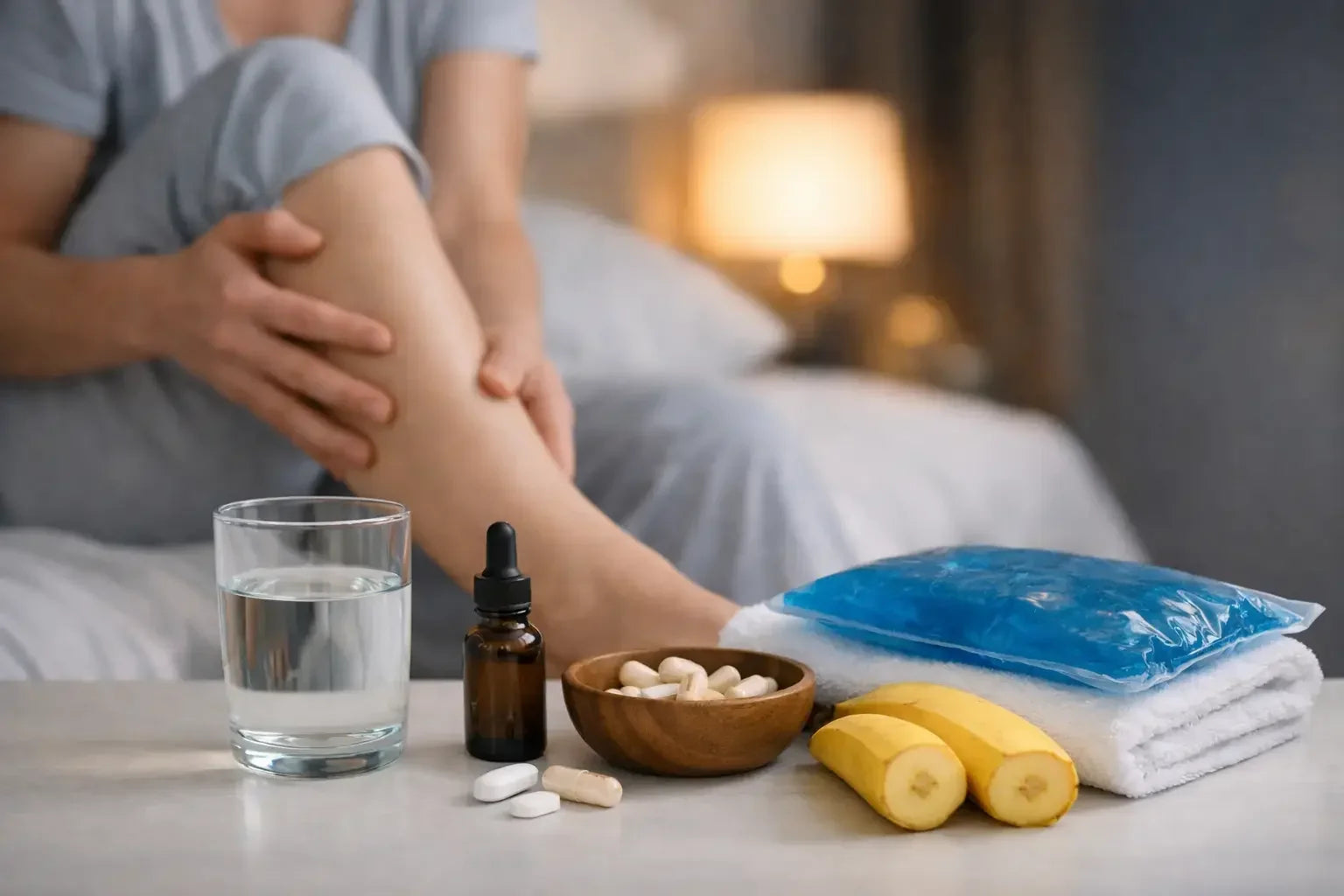
A calf cramp at 2:17 a.m. does not care about tomorrow’s meeting, your early workout, or how badly you need sleep. The best night cramp relief options give you a plan for the moment the muscle locks up, plus smarter habits that can reduce how often it steals your night.
Night cramps are common, especially in the calves, feet, and thighs. They can hit after a hard training day, during periods of lower activity, with age, or for reasons that are not always obvious. Hydration and electrolytes matter for overall health, but they are not the whole explanation for every cramp. A cramp is a sudden, involuntary muscle contraction, and lasting relief starts with responding to the muscle and the nerve signals driving it.
Fast Night Cramp Relief Options When Pain Hits
When a cramp wakes you up, your goal is simple: stop the contraction safely, restore movement, and get back to sleep without turning on every light in the house.
Start by gently lengthening the cramped muscle. For a calf cramp, straighten your leg and pull your toes toward your shin. If you can stand safely, put both feet on the floor, keep the cramped leg behind you, and press the heel down as you lean forward slightly. Hold the stretch until the muscle begins to release. Do not bounce or force it. Aggressive stretching can leave an already angry muscle more sore.
Light massage can help as the contraction eases. Use your hands to rub the tight area with steady pressure, then walk carefully for a minute or two if you feel stable. Some people find that a warm shower, heating pad, or warm compress relaxes lingering tightness. If the muscle is tender after a severe cramp, a cold pack wrapped in a cloth may feel better instead.
Drink water if you have been sweating heavily, training in heat, drinking alcohol, or simply have not had enough fluids. But do not expect a glass of water to switch off a cramp instantly. Rehydration supports recovery, while the immediate priority is relieving the contraction.
For people who want a portable, medication-free option beside the bed, CrampsAWAY is designed to begin working on contact with the tongue. Its food-grade oral formula supports Neuromuscular Efficiency (NME™), targeting the nerve signaling involved in cramping rather than relying on slow digestion or masking discomfort. That matters when you are awake in pain and want to get back to sleep, not wait around for relief.
Why Traditional Night Cramp Fixes Can Fall Short
Many people reach for a banana, sports drink, or magnesium supplement after a rough night. Those choices can have a place, particularly if your diet is lacking or your clinician has identified a deficiency. But they are not guaranteed answers for sudden nighttime cramps.
A banana cannot reliably stop a cramp already happening. Electrolyte drinks may be useful after long, sweaty activity, but cramps also occur in people who are adequately hydrated. Magnesium may help certain people, yet evidence is mixed for routine nighttime leg cramps, and supplements can cause digestive side effects or interact with medications.
Pain relievers can reduce soreness after the fact, but they do not necessarily release the muscle contraction in the moment. They can also be a poor fit for people who need to avoid stomach upset, drowsiness, or medication interactions. The right option depends on why cramps are happening, how often they strike, your health history, and how urgently you need relief.
Build a Bedtime Routine That Protects Your Sleep
The strongest prevention plan is usually boring in the best way: consistent, realistic, and easy to repeat. If your cramps tend to arrive after activity, make a short cool-down nonnegotiable. Walk for a few minutes, then gently stretch your calves, hamstrings, and feet. This is especially useful for runners, cyclists, court-sport athletes, and anyone who spends a workday standing.
If cramps appear after long periods of sitting, add movement earlier in the day. A brief walk, ankle circles, and calf raises can break up hours at a desk or in a car. For older adults, balance and mobility exercises can be particularly valuable because they support safer movement when getting out of bed during a cramp.
Review your sleeping position, too. Sleeping with toes pointed downward can keep calf muscles shortened for hours. If that sounds familiar, try loosening tightly tucked sheets or adjusting your position so your feet are not held in that pointed posture.
Nutrition and fluids deserve steady attention, not panic-level correction at bedtime. Eat regular meals with a range of nutrient-dense foods, drink to thirst throughout the day, and increase fluids around prolonged sweating or heat exposure. Extreme water intake without enough food or electrolytes is not a smarter strategy. Your body performs better with balance.
Consider What Changed Before the Cramps Started
A sudden pattern can offer useful clues. Did you increase mileage, start hill training, spend a day in the heat, or return to exercise after time off? Did you begin a new medication or change the dose of an existing one? Certain medicines can contribute to muscle cramps, so it is worth discussing the timing with a pharmacist or healthcare professional rather than stopping a prescribed medication on your own.
Pregnancy, aging, nerve conditions, circulation issues, and some medical treatments can also be associated with more frequent cramps. That does not mean every cramp signals a serious problem. It means recurring cramps deserve a clear-eyed look instead of endless trial and error.
When Night Cramps Need Medical Attention
An occasional cramp that eases with stretching is usually different from pain that keeps returning, lasts a long time, or comes with other symptoms. Schedule a conversation with a healthcare professional if cramps are frequent, worsening, regularly disrupt sleep, or do not improve with basic self-care.
Seek urgent care for leg pain accompanied by swelling, redness, warmth, shortness of breath, chest pain, new weakness, numbness, or trouble walking. Those symptoms are not something to treat as an ordinary cramp. Also get medical guidance if you have diabetes, kidney disease, circulation concerns, or are taking medications that may affect fluid balance.
Keeping a brief cramp log can make that conversation more useful. Note the time of night, the muscle involved, what you did that day, recent exercise, fluids, medications, and how long the cramp lasted. Patterns often become clearer when they are written down.
Keep Relief Within Reach
The worst time to figure out your response is while your calf is seized and you are half asleep. Set up your nightstand with water, a safe light, and the relief method you trust. If you train hard, travel often, work long shifts, or have a history of nighttime cramps, prepare before your head hits the pillow.
Your sleep is part of your recovery, your mood, and your ability to show up tomorrow. A calm stretch, a better routine, and a fast-acting option within reach can help keep one sudden muscle cramp from taking over the whole night.

Share:
Athletic Cramp Guide for Finishing Strong
Are Cramps Normal? When Pain Signals More