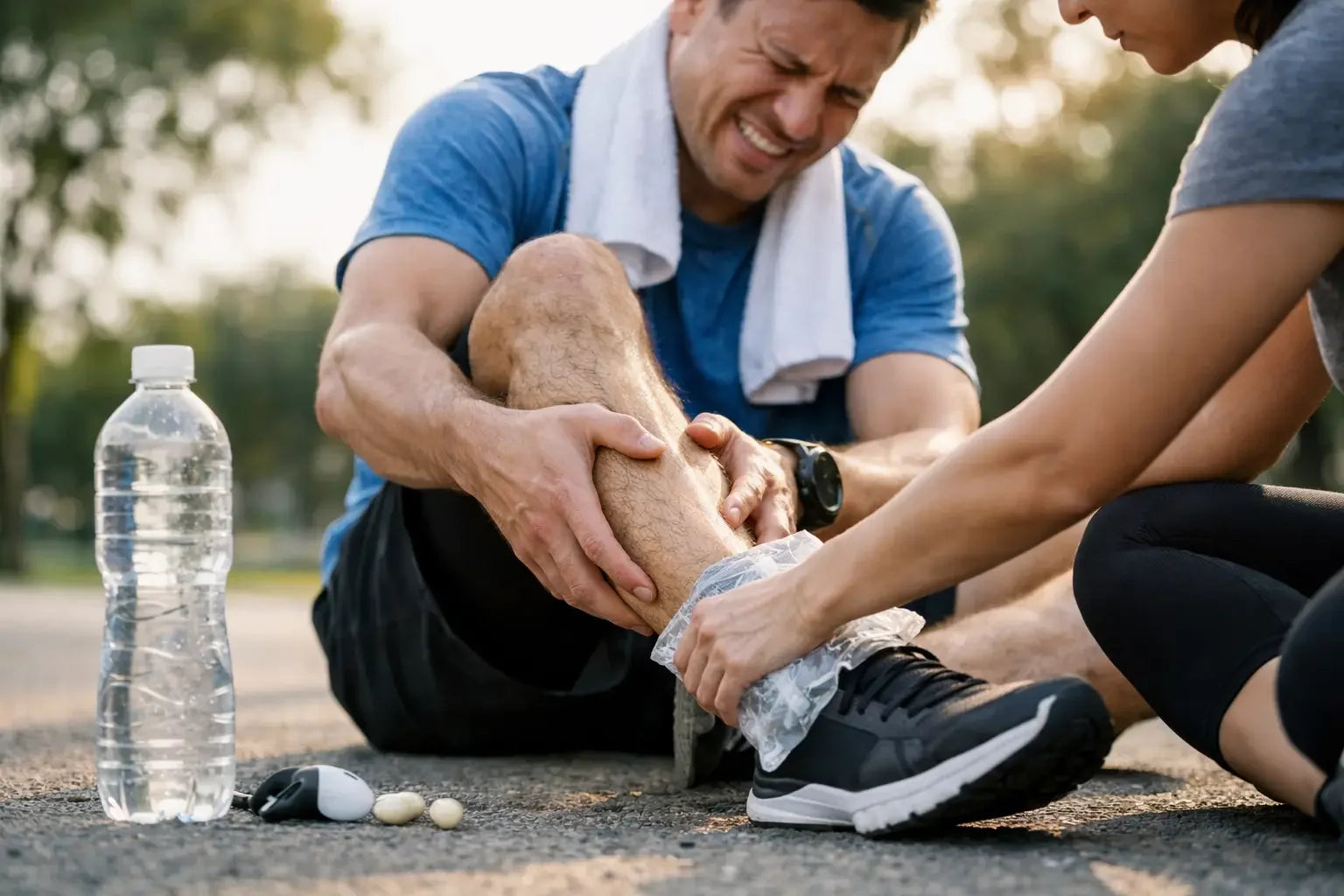
A calf locks up halfway through a long run. A hamstring knots during the final minutes of a game. Your first instinct may be to push through, pound water, or reach for an electrolyte drink. But effective heat cramp treatment starts with a better move: stop the effort, get out of the heat, and address the cramp before it turns one bad moment into a bigger problem.
Heat can expose the conditions that make cramping more likely, especially when hard effort, fatigue, and rising body temperature stack up. The goal is not to panic. It is to take control quickly, protect your body, and know the difference between an ordinary muscle cramp and a possible heat-related emergency.
Heat Cramp Treatment Starts With Stopping the Effort
When a muscle starts seizing, back off immediately. Continuing to sprint, lift, climb, or compete through a cramp can increase your risk of a strain or fall. Move to shade, an air-conditioned space, or any cooler area available. Loosen tight equipment and give your body a chance to settle.
Then gently lengthen the cramped muscle. If your calf is cramping, straighten the knee and slowly pull the toes toward your shin. If your hamstring is cramping, extend the leg gradually without bouncing. A hard stretch, aggressive massage, or forcing the muscle into position can make a sore, overworked muscle feel worse afterward. Steady pressure and slow breathing are usually the smarter play.
Once the spasm releases, do not jump straight back into full intensity. Walk easily, reassess, and allow your body temperature to come down. For athletes, the decision to return depends on how fast the cramp resolves, how you feel overall, and whether any warning signs are present.
Why Heat Can Trigger Muscle Cramps
Heat cramps are often treated as a hydration problem alone. Hydration matters, especially when you have been sweating heavily for hours, but it is not the whole story. Many cramps happen even in athletes who drink consistently and use electrolytes.
Muscle cramping is also tied to fatigue and altered communication between the nerves and muscles. When a muscle is working near its limit, especially in hot conditions, its normal control system can become more excitable. That can produce the sudden, painful contraction that stops a run, ride, match, or shift in its tracks.
This is why the best heat cramp treatment is not always another bottle of water or a wait-and-see approach. Cooling, rest, gentle stretching, and supporting normal neuromuscular control can all matter. It also explains why prevention needs to include training, pacing, recovery, and heat acclimation, not just a hydration plan.
Rehydrate With Purpose, Not Panic
If you are alert, able to drink, and experiencing an isolated muscle cramp, sip cool fluids while you recover. During long sessions with substantial sweating, a drink containing sodium may be useful. The right amount depends on your body size, sweat rate, duration of activity, food intake, medical history, and environmental conditions.
Avoid chugging huge amounts of plain water all at once. Overdrinking can create its own problems. A better approach is to drink steadily during recovery and use your thirst, urine color outside of the immediate post-workout window, and prior experience to refine your plan over time.
Food can help after the immediate situation has passed. A normal meal or snack with fluids and sodium may support recovery after a long, sweaty event. But do not expect a banana, salt packet, or sports drink to instantly switch off every cramp. The body is more complex than that.
A Fast On-the-Spot Response Plan
Use this simple sequence when a heat-related cramp hits:
1. Stop the activity and get to a cooler setting.
2. Gently stretch the cramped muscle until the contraction eases.
3. Sip fluids and consider sodium if prolonged sweating is part of the picture.
4. Cool your body with shade, airflow, cool towels, or a cool shower when available.
5. Return only when the muscle feels normal and you feel clear-headed, stable, and in control.
For competitors, keep a portable cramp strategy in your gear bag, on the sideline, or with your training partner. Waiting until a cramp takes over is not a performance plan. CrampsAWAY Sport/PRO is a food-grade oral formula designed to support Neuromuscular Efficiency (NME™) and help athletes respond when nerve-muscle signaling disrupts performance. Its NSF Certified for Sport status is especially relevant for athletes who need confidence that their product is free from banned substances.
When a Cramp Is More Than a Cramp
Do not treat every heat-related symptom as a routine cramp. A painful muscle spasm may be manageable with rest and cooling, but heat illness can escalate quickly. Stop activity and seek urgent medical help if cramping comes with confusion, fainting, seizure, severe headache, chest pain, trouble breathing, vomiting, inability to drink, hot skin, or a body temperature that remains high.
Extreme weakness, poor coordination, collapse, or unusual behavior are also red flags. These symptoms can signal heat exhaustion or heat stroke, and heat stroke is a medical emergency. Cooling should begin right away while emergency care is arranged.
You should also speak with a clinician if cramps are frequent, occur at rest, repeatedly interrupt sleep, last a long time after exercise, or come with swelling, weakness, numbness, dark urine, or significant muscle pain. Certain medications, medical conditions, and mineral imbalances can affect cramping risk. A recurring pattern deserves more than a quick sideline fix.
Build a Plan Before the Temperature Climbs
The strongest heat cramp treatment strategy starts before your next hot workout or event. Acclimate to heat gradually rather than making your first high-intensity session the hottest day of the season. Give your body one to two weeks of progressively longer heat exposure when possible, and reduce intensity when conditions are brutal.
Pacing matters. Cramps often show up when an athlete goes harder than their current conditioning supports. That does not mean you lack toughness. It means your plan needs to match the demands of the day. High humidity, poor sleep, travel, illness, heavy training blocks, and inadequate recovery all lower the margin for error.
Practice your hydration and fueling routine in training, not for the first time on race day. Notice when you tend to cramp, which muscles are involved, how long you were working, what the weather was like, and whether fatigue was building. Those details help you spot patterns and create a response that is personal rather than generic.
Do Not Let One Cramp Rewrite Your Day
A heat cramp can feel like your body has betrayed you at the worst possible time. The answer is not blind toughness or a one-size-fits-all remedy. Stop, cool down, stretch with control, rehydrate thoughtfully, and respect any signs that point to heat illness.
Then prepare for the next rep, the next mile, the next shift, or the next competition with a plan that protects your momentum. Your performance deserves more than hoping the cramp stays away.

Share:
What Neuromuscular Performance Research Shows
Does Muscle Fatigue Cause Cramping? The Real Answer