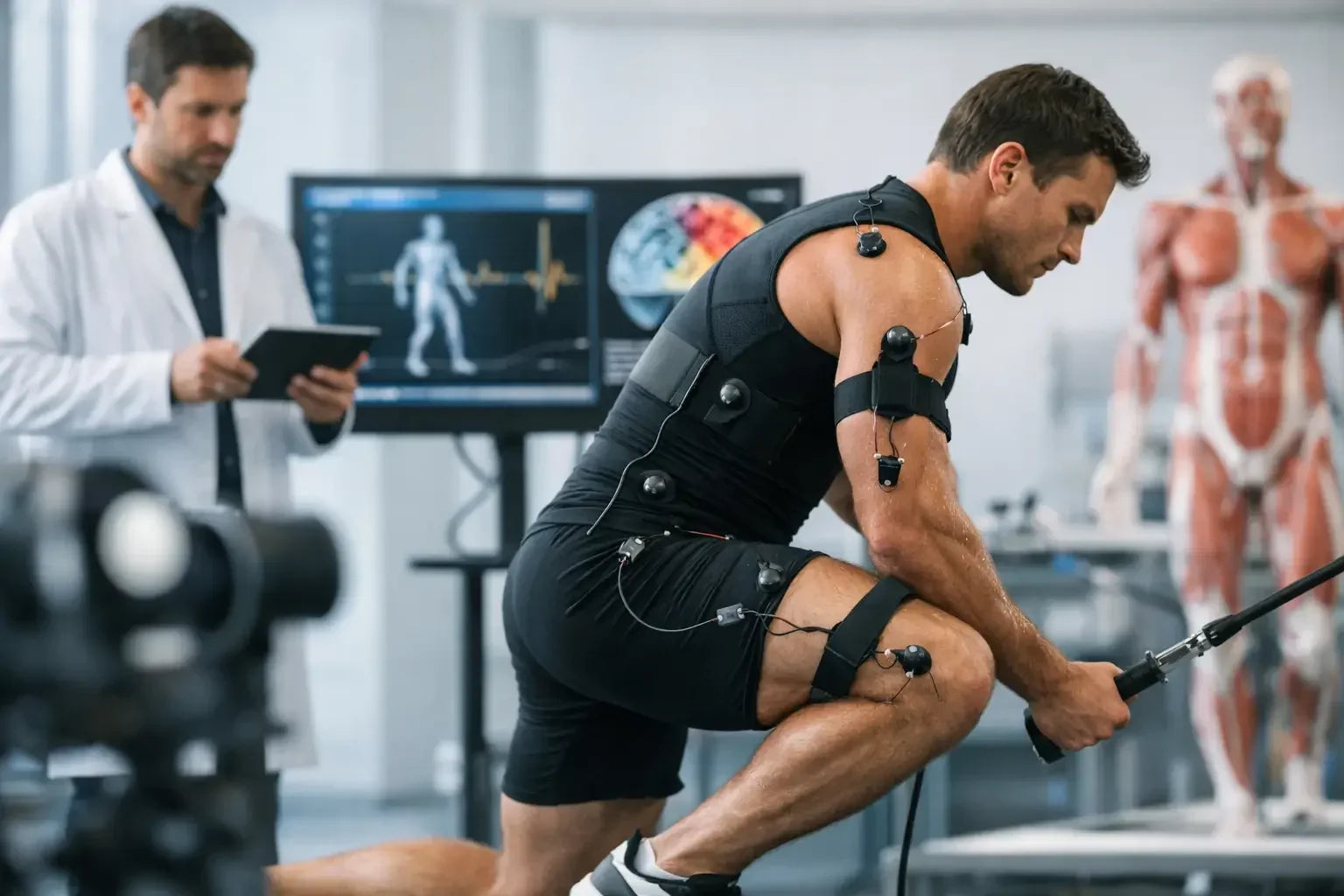
A calf locks up at mile 22. A hamstring tightens late in the fourth quarter. Period cramps hit before a presentation, practice, or long-planned night out. The disruption is immediate, and the usual advice - drink more water, take electrolytes, wait it out - can feel painfully slow. Neuromuscular performance research offers a more useful way to understand what may be happening: cramping often involves the communication between nerves and muscles, not just what is in your water bottle.
Why neuromuscular performance research matters for cramps
Your nervous system is always making fast calculations. It receives information from muscles, tendons, joints, and the environment, then adjusts the signals that tell muscles when to contract and relax. During hard exercise, fatigue, heat, unfamiliar intensity, or repeated high-force movement can change that balance.
A cramp is not simply a sore muscle. It is an involuntary, forceful contraction that can make a muscle feel seized, distorted, and impossible to use normally. For athletes, it can turn a strong race, shift, set, or ride into a fight to keep moving. For people dealing with menstrual or night cramps, the cost is just as real: missed sleep, lost concentration, canceled plans, and the feeling that your body has taken control of your day.
The key insight from neuromuscular performance research is that many cramps are better viewed as a control problem. When excitatory signals to a muscle outweigh the inhibitory signals that help it relax, the muscle may become more prone to cramping. That model helps explain why a perfectly hydrated athlete can still cramp and why someone can experience repeated cramps despite taking electrolyte products.
This does not mean hydration and electrolytes never matter. Severe fluid loss, illness, prolonged heat exposure, medication effects, and nutritional deficiencies can contribute to cramping in some people. But treating every cramp as a sodium problem misses the bigger picture - especially when cramping occurs during intense, fatigue-heavy activity or follows a predictable pattern.
The nerve-to-muscle signal is the performance issue
Muscles do not act on their own. Motor nerves activate them, while sensory feedback helps regulate how much force they produce and when they release. Under fatigue, the signals that encourage contraction can become more dominant, while the protective feedback that supports relaxation may be less effective.
That is why exercise-associated muscle cramps are often linked with pace, workload, conditioning, and muscle fatigue. A runner may cramp after increasing distance too quickly. A basketball player may cramp in overtime after repeated explosive efforts. A cyclist may be fine for hours, then cramp when pushing a climb beyond what their fatigued muscles are prepared to handle.
The practical takeaway is not that athletes should stop using basic sports nutrition. It is that sports nutrition should be matched to the problem. Water supports hydration. Carbohydrates can support prolonged work. Sodium may be useful for heavy sweaters or long, hot events. None of those strategies alone directly addresses an overactive neuromuscular signal in the moment.
That distinction matters when seconds count. If a cramp has already started, waiting for a drink or pill to be digested is rarely a satisfying game plan.
Why oral sensory stimulation gets attention
Some research has explored strong oral sensory stimulation as a way to influence the nervous system quickly. The mouth is densely supplied with sensory nerves, which is why certain food-grade ingredients can create an immediate, intense taste sensation. The idea is not that the ingredient travels to the muscle instantly. It is that sensory input from the mouth can trigger a rapid reflex response that may help reduce excessive motor activity.
This is where CrampsAWAY's NME™ approach is designed to be different from conventional cramp strategies. Its food-grade oral formulas are intended to work upon contact with the tongue, targeting the nerve signals associated with cramping rather than asking you to wait for slow digestion or masking discomfort with medication. For athletes, that means a portable option built for the moment a cramp threatens a finish, a game, or recovery.
Individual responses can vary. Cramp severity, training load, heat, medical conditions, and the cause of the cramp all matter. Still, the mechanism is meaningful because it aligns the timing of the strategy with the timing of the problem.
What this research changes in training
Neuromuscular performance research does not give athletes permission to ignore preparation. It gives them a better preparation checklist. The goal is to reduce the situations that overload the muscle-nerve system, then have an effective response available when conditions get demanding.
Start with specificity. Train the pace, terrain, duration, and movement demands that your event requires. A marathoner needs more than general fitness. A tennis player needs repeated sprint capacity. A lifter needs enough exposure to high-force sets to avoid turning competition day into a surprise stress test for the nervous system.
Next, respect fatigue. Cramps often show up when athletes push past current conditioning, not because they lack toughness, but because their muscles are working beyond the control capacity they have built. Progressive training, adequate recovery, sleep, and fueling create more room between hard effort and loss of control.
Technique also matters. A change in form late in a race can shift load to a muscle that is already nearing its limit. The same is true for a swimmer whose kick changes under fatigue or a player who repeatedly lands in an awkward position. Small movement changes can have a large effect when the system is stressed.
Finally, build a race-day plan that accounts for your personal pattern. If cramps tend to appear at a certain mileage, after a specific drill, or in hot conditions, do not rely on luck. Hydrate and fuel appropriately, pace intelligently, and keep a fast-acting, food-grade cramp strategy within reach.
Menstrual and night cramps deserve the same respect
The conversation around neuromuscular signaling is often centered on sports, but disruptive cramps are not limited to athletes. Menstrual cramps involve uterine contractions and a more complex physiology than exercise-associated skeletal muscle cramps. Night cramps can also have many possible triggers, including activity changes, certain medications, circulation issues, or underlying health conditions.
That means one explanation does not fit every cramp. It also means people deserve more than dismissive advice to simply tolerate pain or take another pill. If cramps are new, severe, frequent, worsening, associated with swelling or weakness, or interrupting sleep on a regular basis, a healthcare professional can help identify possible causes.
For many people, the immediate priority remains the same: get back to rest, movement, school, work, training, or life without waiting for discomfort to run its course. A hormone-free, food-grade option that works through oral sensory input may fit well alongside a broader plan for managing recurring cramps.
A smarter standard for cramp relief
The best cramp strategy is not a single ritual. It is a decision based on context. If you are dehydrated after a long event in extreme heat, fluids and electrolytes are relevant. If you repeatedly cramp during high-intensity, fatigue-driven efforts despite being well prepared nutritionally, nerve signaling deserves more attention. If you experience frequent cramps away from exercise, it is worth looking beyond performance factors and talking with a clinician.
The strongest athletes are not the ones who pretend cramps do not matter. They are the ones who understand the signal, prepare for the demand, and respond fast when their body asks for help. Your next hard effort should be decided by your training and determination - not by a muscle that suddenly refuses to let go.

Share:
Are Cramps Normal? When Pain Signals More
Heat Cramp Treatment That Gets You Moving Again