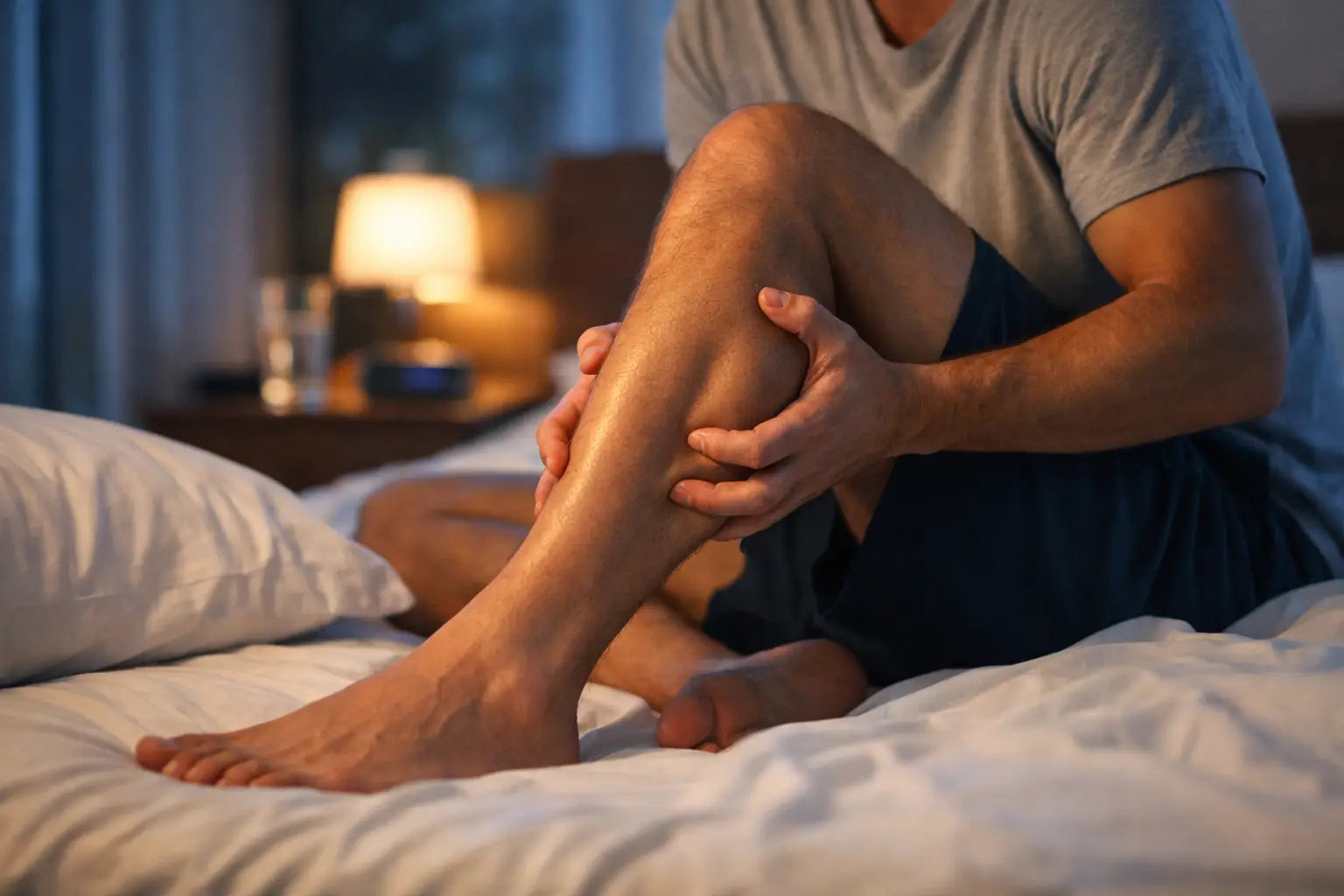
A dead-silent bedroom. A sudden, locked-up calf. Then the instinctive grab for your leg as pain pulls you fully awake. Nighttime leg cramps do more than interrupt sleep - they can leave you sore, anxious about bedtime, and short on the recovery your body needs to feel and perform its best tomorrow.
For active adults, older adults, and anyone already managing a full day, losing sleep to a cramp is not a minor inconvenience. It is a disruption. The good news: you can respond effectively in the moment, reduce common triggers, and recognize when a recurring problem deserves a clinician’s attention.
Why nighttime leg cramps hit so hard
A true leg cramp is a sudden, involuntary muscle contraction that will not release right away. It most often affects the calf, but the arch of the foot, toes, or thigh can cramp too. The muscle may feel visibly hard or knotted, and the ache can linger after the sharp pain passes.
Night cramps often appear during rest because the muscle and nervous system are not simply “off” when you are asleep. A cramp is fundamentally a neuromuscular event: nerve signals tell a muscle to contract, and the normal relax signal does not win quickly enough. That is why a cramp can strike even when you have done nothing more demanding than roll over in bed.
The exact cause is not always clear. Some people have idiopathic nighttime cramps, meaning no single medical cause is found. Others notice a pattern after hard training, prolonged standing, unfamiliar activity, long travel days, or sleeping with feet pointed downward. Age can also play a role, as can pregnancy and certain health conditions or medications.
Hydration and electrolytes get blamed for nearly every cramp, but they are not the whole story. Replacing fluids may be sensible after heavy sweating or illness, yet it does not automatically stop a cramp that is being driven by overworked muscle and nerve signaling. If you are repeatedly drinking more and still waking up in pain, it is time to look beyond the water bottle.
What to do when a leg cramp wakes you up
The goal is simple: interrupt the contraction without fighting the muscle harder. Avoid aggressively bouncing or forcing a stretch. That can leave an already irritated muscle more tender.
For a calf cramp, straighten the knee if you can and gently pull your toes toward your shin. If getting out of bed feels safe, stand and place your weight through the affected foot, keeping the heel down. A slow walk around the room may help the muscle release. For a foot cramp, gently pull the toes upward and massage the tight area with steady pressure.
Once the intense contraction eases, use gentle movement rather than collapsing immediately back into bed. A few slow ankle circles or an easy calf stretch can help. Heat may feel good on a lingering tight muscle, while a cool pack can be useful if the area feels sore after the cramp.
Do not treat severe, repeated cramps as a test of toughness. The faster you have a calm, practiced response, the less likely a wake-up call turns into an hour of tense, frustrated sleep.
Reduce the conditions that set cramps up
Prevention is less about one miracle habit and more about noticing your pattern. Start with what happened in the 24 to 48 hours before a cramp. Did you add hill repeats, play a long match, spend hours on your feet, travel, or take a new medication? A simple notes app can reveal patterns you would otherwise miss.
Train hard, but progress intelligently
Muscle fatigue is a frequent contributor, especially in people who make a sudden jump in training volume, intensity, heat exposure, or hill work. Your calves work constantly during running, walking, cycling, and sports that involve quick changes of direction. Give them time to adapt.
Build volume progressively, include recovery days, and avoid treating every session as a max-effort test. If your cramps appear after a specific workout, scaling that session back briefly is not quitting. It is a smart adjustment that keeps tomorrow’s training possible.
Give calves and feet regular attention
A short mobility routine can be worthwhile if tight calves or foot muscles are part of your pattern. Gentle calf stretching, ankle mobility, and controlled strengthening for the calves and feet can improve tolerance for everyday movement and training loads.
Consistency matters more than intensity. A punishing stretch before bed is unlikely to help. A few minutes of controlled movement after activity and before sleep is more realistic and often more useful.
Review your sleep position and daily setup
Sleeping with toes pointed down can hold the calf in a shortened position. Some people find that keeping the feet in a more neutral position helps, whether that means adjusting bedding that presses the toes downward or changing how they settle into bed.
Shoes, work surfaces, and long periods of sitting can matter too. A day in unsupportive footwear followed by a workout may create more fatigue than either factor alone. This is where prevention depends on the person. There is no single trigger for every body.
Fuel and hydrate for the conditions
Drink to support your activity, climate, and thirst, particularly around longer or hotter sessions. Eat regular, balanced meals rather than chasing individual nutrients after every cramp. If you have had substantial fluid loss from sweating, vomiting, or diarrhea, restoring fluids and electrolytes may be appropriate.
But resist the temptation to stack supplements blindly. High-dose minerals are not a universal answer, can interact with medications, and may cause side effects. Recurring nighttime cramps deserve a more complete conversation than “take more electrolytes.”
A faster response for cramp-prone nights
Stretching, pacing, and prevention habits are useful, but they do not always match the urgency of a calf that has seized at 2 a.m. People who are prone to cramps often want a portable option that supports the neuromuscular side of cramping without relying on sedating medication or waiting for a drink or supplement to digest.
CrampsAWAY is designed around NME™, a food-grade approach intended to support the nerve signals involved in muscle relaxation when cramping strikes. For people whose sleep, recovery, or next-day training is repeatedly interrupted, having a plan within arm’s reach can turn a painful scramble into a more confident response.
When nighttime leg cramps need medical attention
Most isolated cramps are not dangerous. Still, recurring cramps should not be brushed off, especially if they are worsening, disturb sleep often, or began after a medication change. A clinician can review your symptoms, medical history, medications, activity level, circulation, and possible underlying contributors.
Seek prompt medical care for leg pain with swelling, redness, warmth, skin color changes, significant weakness, numbness, chest pain, or shortness of breath. Those symptoms are not typical of a simple muscle cramp and need evaluation. Also make an appointment if pain persists between episodes, cramps are widespread, or you are losing sleep week after week.
Bring useful details: where the cramp occurs, how long it lasts, what you did that day, what relieves it, and every medication or supplement you use. Clear information helps separate a straightforward cramp pattern from another issue that needs treatment.
A cramp may be brief, but the impact can be much bigger when it keeps happening. Protect your sleep like the recovery tool it is: learn your triggers, prepare a response, and do not accept recurring nighttime pain as the price of getting older, training hard, or simply making it through the day.

Share:
How to Stop Period Cramps and Keep Your Day
Why Do Periods Cause Cramps? The Real Reason